Ten Nigerian police officers are dead. Two civilians also lost their lives. Two other policemen were wounded. At least 17 suspected bandits were initially reported killed.
But the most disturbing question emerging from the August 10 battle at Rafin Makuku in Kebbi State is not simply how many people died. It is how a police team found itself confronting a large, heavily armed motorcycle-borne force under circumstances that, according to conflicting accounts, may have involved inadequate ammunition, delayed reinforcement and a rapidly escalating tactical crisis.
The encounter has now moved from the battlefield into the national debate over Nigeria’s police preparedness, reinforcement capacity and the cost paid by officers deployed to some of the country’s most dangerous rural corridors.
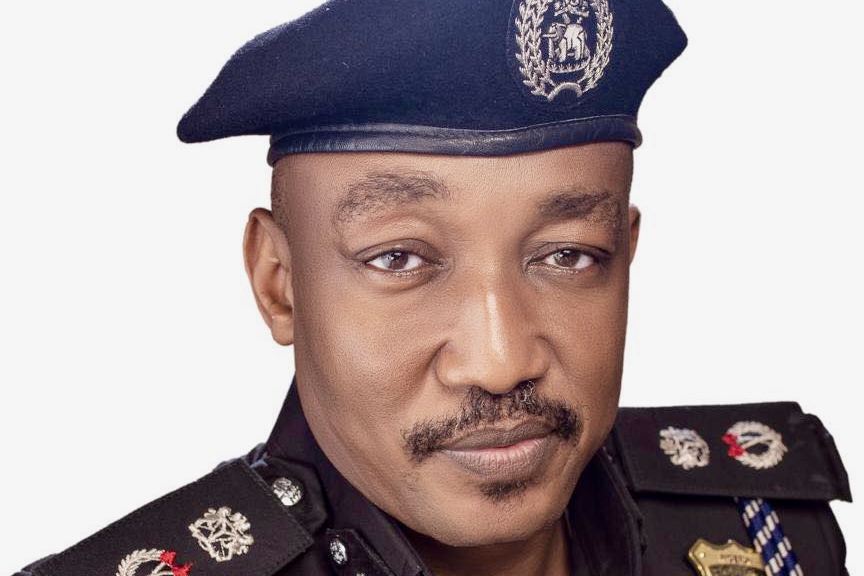
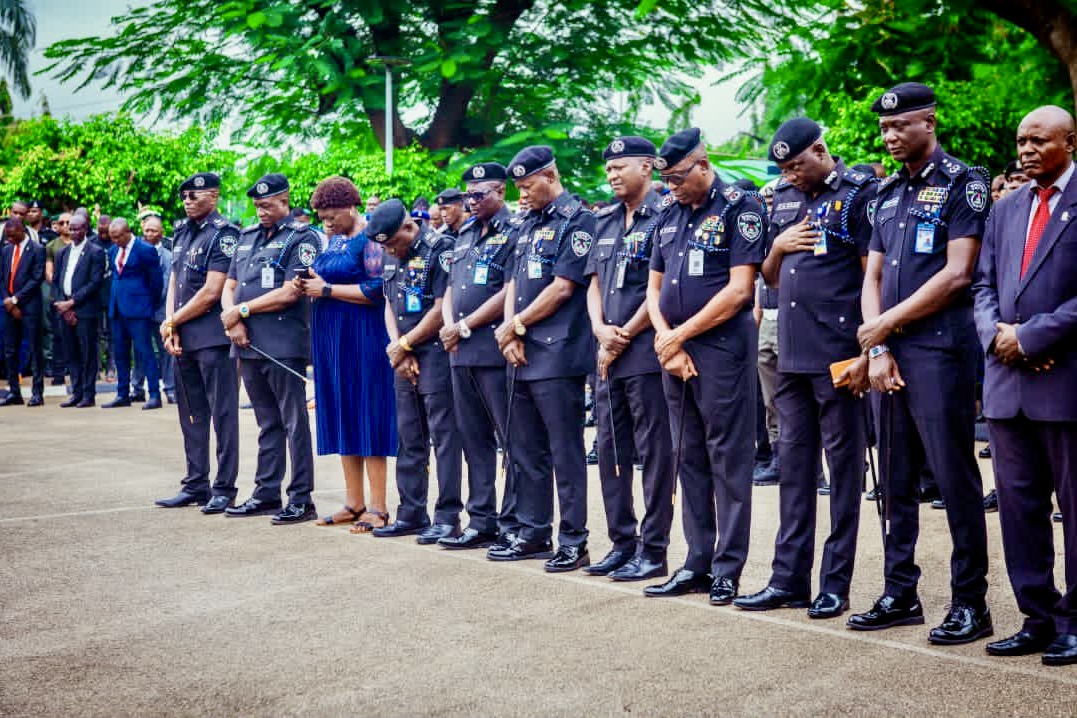
The Nigeria Police Force held a memorial service at Force Headquarters, Abuja, on August 24 for the 10 Special Intervention Squad (SIS) personnel killed during the operation. Inspector-General of Police Olatunji Rilwan Disu described the fallen officers as men who paid the supreme price in the line of duty and pledged that the Force would continue pursuing those responsible.
Yet beneath the official tributes lies a more troubling operational picture.
What happened at Makuku?
The police said their personnel intercepted a heavily armed group of suspected bandits moving between Zamfara and Kebbi States along the Rafin Makuku axis of Sakaba Local Government Area.
The force said the encounter occurred on August 10, 2026, and resulted in the deaths of 10 police officers and two civilians. Two other police personnel were injured. At least 17 suspected bandits were initially assessed to have been neutralised, while four motorcycles belonging to the attackers were destroyed.
The police account is consistent across several subsequent reports, although important details about the timing and scale of the attack remain disputed.
The Kebbi police command said the confrontation happened at about 9:25 a.m., after officers intercepted the armed group. An earlier police statement reported by The Guardian, however, put the attack on the security camp at about 6 a.m.
That discrepancy may appear minor, but in a firefight where reinforcement and air support can determine survival, a difference of several hours in the operational timeline is significant and deserves clarification.
The force of the attackers
Reports from residents and security sources describe a large armed group moving on motorcycles from the Zamfara side towards Kebbi.
One resident, Musa Sani, was quoted as estimating the group at roughly 240 bandits travelling on more than 200 motorcycles. Another account described the attackers as arriving in three formations and spending the night in a forest between Kakihum and Makuku before moving towards Maburya.
The account supplied for this report gives an even more dramatic estimate: about 250 motorcycles, with roughly three suspected bandits on each motorcycle.
That arithmetic would produce a force of about 750 attackers.
But there is an important investigative caveat.
Atlantic Post has found no independent official confirmation that 750 armed men participated in the battle. The publicly reported figures from police and local residents establish that the attackers numbered in the hundreds and that more than 200 motorcycles were involved, but the specific calculation of 250 motorcycles carrying three men each remains an allegation contained in the account rather than an independently verified casualty or force-strength figure.
That distinction matters. A responsible security report must separate what authorities have established from what witnesses, intelligence reports or subsequent assessments have estimated.
‘They stood’
The account, titled A Testament of Courage, Sacrifice and Service, presents the Makuku operation as a desperate last stand.
It says the Special Intervention Squad personnel received warning only minutes before the attackers arrived and were confronted with the choice of withdrawing or remaining in position to protect the community.
“At that moment, the SIS personnel were faced with an extremely difficult choice,” the account said.
It added:
“Instead, they chose to stand.”
The document said the officers knew they were heavily outnumbered but remained conscious of the responsibility imposed by their oath.
“Rather than abandon the people they were deployed to protect, they confronted the attackers and fought back with courage, discipline and determination,” it said.
That account broadly fits the later public description of the battle by the police leadership, which said the officers fought with courage and determination in defence of citizens and national security.
The battle reportedly became a prolonged exchange of gunfire.
The ammunition question
This is where the Makuku story becomes more than a memorial narrative.
An earlier police situation report obtained by SaharaReporters, as cited by several publications, indicated that the attackers allegedly carted away firearms belonging to the fallen personnel. Those weapons were reported to include 10 AK-47 rifles, one RPG rifle and two riot guns, together with other ammunition.
Separate reporting based on police sources also alleged that the officers ran out of ammunition while fighting the attackers and made urgent calls for air support and ground reinforcement.
One source was quoted as saying:
“They fought back but eventually ran out of ammunition.”
The source added:
“They desperately called for air support and ground reinforcements. The help they needed never came.”
The allegation is serious, but it must be treated carefully because the official police account tells a more complicated story.
According to the Nigeria Police Force, the commissioner of police immediately mobilised reinforcements after the distress call, while units of the Nigerian Army and Nigerian Air Force from Kebbi and Katsina were subsequently involved. The Force said the gun battle lasted for more than two hours.
The important unresolved issue, therefore, is not simply whether reinforcement was ordered.
It is when the reinforcement was ordered, when it arrived, what assets were actually available, and whether the assistance reached the officers while they were still capable of holding their position.
That is the part of the Makuku battle that demands a formal operational review.
Ten officers who did not return
The fallen officers were attached to police formations deployed on special duty in Kebbi. Public reports identify them as:
ASP Bala Buba, 43; Inspector Saminu Sulaiman, 40; Inspector Solomon Jatau, 39; Inspector Ayuba Hassain, 38; Inspector Umar Yahuza, 37; Inspector Auwal Sani, 38; Inspector Adamu Abdullahi, 35; Inspector Abdullahi Magaji, 43; Sergeant Jimoh Momo, 35; and Corporal Ukpong Otrukmj, 34.
Two civilians — Mohammadu Magwawara, 50, and Muhammadu Tiritiri, 45 — were also killed. Another civilian, Shehu Abubakar, 41, sustained serious gunshot injuries and was referred for further treatment in Birnin Kebbi.
The bodies of the slain police personnel were later recovered and taken to General Hospital, Dirin Daji, for confirmation.
What had been a security operation had become a mass casualty event.
The price was not measured only in body bags
At the August 24 memorial parade, IGP Disu sought to place the loss in the context of police duty.
“These gallant officers died doing what they swore an oath to do, to serve, to protect, and to defend lives and property,” he said.
He also acknowledged the human cost beyond the uniforms and casualty figures.
“Behind every fallen officer is a family that has lost a husband, father, son, brother or loved one,” Disu said.
And to the bereaved families, he said:
“We grieve with you, we stand with you, and we will not abandon you.”
The assurance will now be measured not by speeches but by what happens to those families over the coming months and years.
One family representative, Faith Bala Buba, reportedly urged the police authorities to consider employment opportunities within the Force for members of the deceased officers’ families.
That appeal highlights a wider question about police welfare: what happens financially and socially to families when an officer is killed in service?
For the families of the 10 men, the answer cannot simply be a memorial parade.
A changing assessment of the bandit casualties
The police initially said 17 suspected bandits were neutralised and four motorcycles destroyed. That figure was repeated by the IGP at the memorial service.
But the police have since hinted that the final number may be higher.
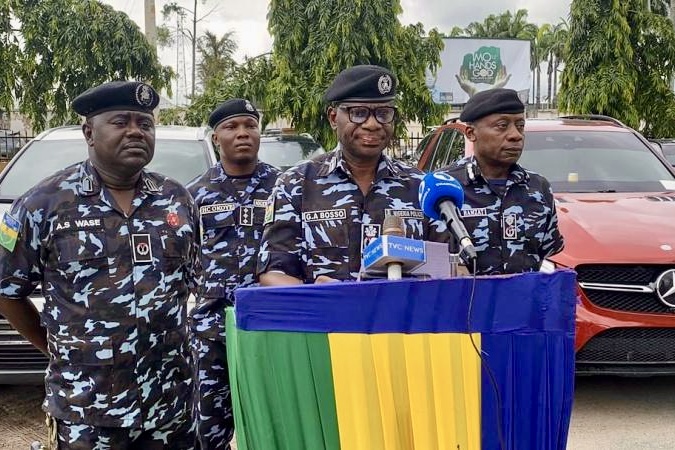
CP Abayomi Shogunle, Commander of the Special Intervention Squad, said subsequent operational assessments indicated that the losses inflicted on the attackers were “significantly higher than the initial assessment”.
That is an important development.
It suggests that the 17 figure should not necessarily be viewed as the final battlefield toll. However, as of August 26, no independently verified final figure has been publicly established.
The police therefore deserve scrutiny not only over how many suspects were killed but also over how such assessments are conducted in a hostile and difficult operating environment.
Who exactly was fighting whom?
There is another discrepancy that deserves clarification.
Some early reporting referred to the officers as personnel of the 44 Police Mobile Force (PMF), Abuja, while the current Nigeria Police Force account and the August 24 memorial service identify the fallen officers as members of the Special Intervention Squad (SIS). Other reports have linked the operation to PMF 48 and SIS Platoon 2.
These descriptions may reflect overlapping deployments or differences between the administrative and operational designations of the personnel involved.
But for a battle that killed 10 officers, the precise chain of command should not be left to conflicting newspaper descriptions.
The Force should publish, at least in an appropriately redacted form, the official operational structure of the team involved, its command authority, mission objectives and reinforcement protocol.
Makuku exposes a larger security problem
Makuku was not an isolated security incident.
The Rafin Makuku corridor sits within a broader north-western security environment where armed groups exploit difficult terrain, porous inter-state boundaries and mobility provided by motorcycles.
The August 10 attackers were reportedly moving between Zamfara and Kebbi, highlighting how criminal groups can operate across state boundaries while local police formations remain organised largely along state-command lines.
That creates a dangerous tactical mismatch.
A criminal group can move quickly across jurisdictions. A police response may require notification, mobilisation and coordination between commands and agencies.
The Makuku casualties raise the possibility that the attackers had achieved the initiative before the wider security architecture could react.
The lesson is uncomfortable: bravery can win a firefight, but bravery cannot substitute for intelligence, ammunition, mobility, rapid reinforcement, casualty evacuation and overwhelming firepower.
The questions the government must answer
The sacrifice of the 10 officers deserves respect. But respect should not replace accountability.
A proper investigation should establish exactly when intelligence about the approaching attackers was received; when the distress call was made; what ammunition the officers had when the confrontation began; when their ammunition became critical; what reinforcement was ordered; when Army and Air Force elements were alerted; what actually arrived; and why the attackers were able to remain in the area long enough to inflict such losses.
It should also determine how many weapons were recovered, how many were taken by the attackers, whether any communication equipment was lost and whether there were preventable failures in command, intelligence or logistics.
The question is not whether the officers were courageous.
Every available account suggests they were.
The question is whether the Nigerian security system gave them a realistic chance to survive.
‘The story of Makuku should not disappear’
The account supplied for this report makes perhaps the most important argument of all:
“The story of Makuku should not disappear into silence.”
That should become the standard by which the response to the incident is judged.
A memorial records grief. An investigation records lessons.
If Makuku is reduced to another list of fallen officers, another wreath-laying ceremony and another promise of support, Nigeria will lose the most valuable thing that can be salvaged from a tragedy: knowledge.
The country needs to know whether 10 officers died because they knowingly held a position to protect civilians against overwhelming odds, because reinforcement failed to reach them in time, because ammunition was insufficient, because intelligence underestimated the threat, or because several of these failures occurred simultaneously.
The answer matters because other police officers are still deployed tonight in other Makukus — remote communities where the warning may come late, reinforcements may be far away and the attackers may arrive in numbers that overwhelm a lightly equipped security team.
At the memorial parade, Disu vowed that the Force would continue to confront banditry and pursue those responsible for attacks on police personnel and civilians.
That pledge will mean little unless the operational lessons of August 10 are acted upon.
The 10 officers cannot be brought back.
But their deaths can still save lives — if the state is willing to investigate what happened at Makuku with the same determination its officers showed when they chose to stand.
The 10 fallen officers
ASP Bala Buba, 43
Inspector Saminu Sulaiman, 40
Inspector Solomon Jatau, 39
Inspector Ayuba Hassain, 38
Inspector Umar Yahuza, 37
Inspector Auwal Sani, 38
Inspector Adamu Abdullahi, 35
Inspector Abdullahi Magaji, 43
Sergeant Jimoh Momo, 35
Corporal Ukpong Otrukmj, 34
Two civilians were also killed: Mohammadu Magwawara and Mohammadu Tiritiri.
Editorial/verification note
The central casualty figures — 10 police officers, two civilians, two wounded officers and at least 17 suspected bandits initially neutralised — are supported by Nigeria Police Force statements and multiple Nigerian news reports.
However, the reported 250 motorcycles/approximately 750 attackers, the precise timing of the initial assault, and allegations that urgently requested reinforcement or air support failed to arrive in time should be treated as reported claims pending a full official operational inquiry. Public accounts contain inconsistencies on these points. This report deliberately distinguishes verified police claims from witness accounts and allegations.
Follow us on our broadcast channels today!
- WhatsApp: https://whatsapp.com/channel/0029VawZ8TbDDmFT1a1Syg46
- Telegram: https://t.me/atlanticpostchannel
- Facebook: https://www.messenger.com/channel/atlanticpostng