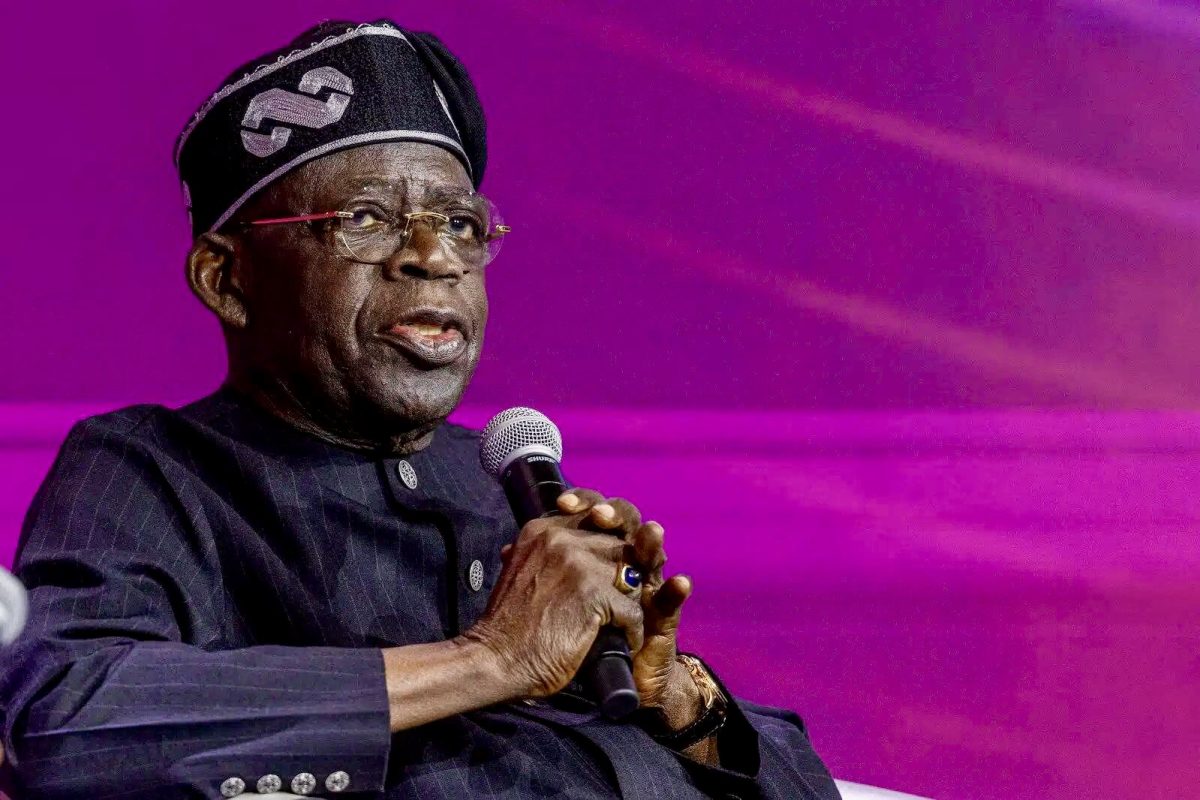
All 36 state assemblies have approved the constitutional amendment, bringing Nigeria closer to decentralised policing. But the operational framework, funding arrangements and safeguards against political interference remain critical tests.
Nigeria has moved closer to ending its decades-old monopoly on centrally controlled policing. Yet the constitutional breakthrough now confronting President Bola Tinubu raises a question that could determine whether the reform becomes a security success or another institutional failure: who will protect Nigerians if the police become answerable to the political interests of the governors they are supposed to serve?
On Wednesday, 18 November 2026, the Senate directed the Clerk to the National Assembly, Kamoru Ogunlana, to transmit the Constitution of the Federal Republic of Nigeria (Sixth Alteration) Bill, 2026, to President Tinubu for assent.
The decision followed confirmation that all 36 State Houses of Assembly had approved the proposed constitutional amendment, exceeding the minimum requirement of 24 states under Section 9(2) of the 1999 Constitution.
The development represents a significant milestone in a reform that successive Nigerian administrations have discussed but failed to implement.
However, the passage of the constitutional amendment is only one part of the process. Establishing 36 state police services without creating 36 new centres of political influence will require considerably more than legislative approval.
Tinubu receives the bill as implementation questions emerge
The Senate’s decision followed a motion sponsored by Senate Leader Opeyemi Bamidele, who recalled that the upper chamber passed the amendment on 24 June 2026, while the House of Representatives approved it on 23 July.
Both chambers secured the constitutionally required two-thirds majority before transmitting the proposal to the state legislatures.
Presenting his motion, Bamidele told senators that all 36 state assemblies had submitted their approval resolutions.
He maintained:
“The Bill has fulfilled the conditions set out in Sections 9(1) and (2) of the Constitution for a Constitutional amendment of this nature to be passed.”
He consequently requested authorisation for the Clerk to transmit the legislation to Tinubu in accordance with the Acts Authentication Act, 2004.
The Senate adopted the motion and commended the President for supporting the reform.
“We thank Mr President for taking ownership and boldly supporting the Bill throughout the process,” the lawmakers said.
The development moved beyond parliamentary approval later on Wednesday.
President Tinubu formally received the constitutional amendment from his Special Advisers on Senate and House of Representatives Matters, Senator Basheer Lado and Dr Wasiu Olanrewaju-Smart.
Chief of Staff Femi Gbajabiamila confirmed that the President would review the legislation in consultation with Attorney-General of the Federation Lateef Fagbemi before signing it at a formal ceremony.
The immediate implication is that the reform has secured overwhelming legislative backing and has entered the presidential stage.
But even after the formal signing, individual states will still have to meet the legal and institutional conditions necessary to establish operational police services.
What Nigeria’s new policing structure will change
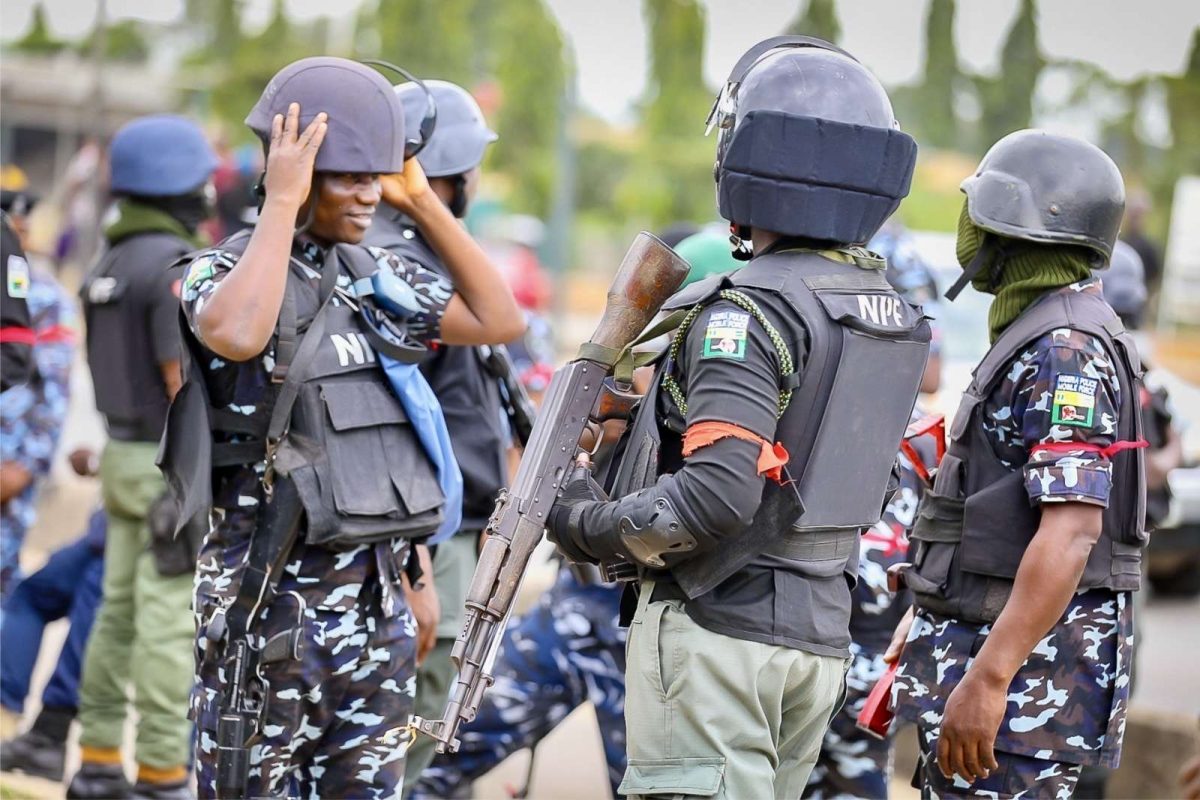
The proposed amendment seeks to replace Nigeria’s constitutionally centralised policing arrangement with a dual structure comprising a Federal Police Service and State Police Services.
Under the proposed arrangement, the Federal Police Service would retain responsibility for policing matters involving national security and federal jurisdiction.
State police services would concentrate on public safety, local law enforcement, crime prevention and the protection of lives and property within their respective jurisdictions.
The objective is to bring policing closer to the communities where crimes occur.
Nigeria’s geographical size, population distribution and diverse security threats have exposed the limitations of relying on a single centrally managed police institution to respond to every local security emergency.
Supporters argue that state police officers could develop better intelligence networks, understand local criminal patterns and respond more quickly to incidents than officers operating through distant federal command structures.
Deputy Senate President Barau Jibrin described the proposed arrangement as a historic achievement.
He stressed that state police would complement the operations of the Nigeria Police Force rather than replace it.
However, the real implications of decentralisation extend beyond the number of police formations Nigeria will have.
The amendment would fundamentally redistribute policing authority between Abuja and the states.
That redistribution makes the question of political accountability particularly important.
Governors’ powers raise the biggest democratic concern
One of the most controversial features of the proposed constitutional arrangement is the role governors will play in appointing and directing state police leadership.
Under the proposed provisions, each State Police Service would be headed by a Commissioner of Police appointed by the governor on the recommendation of the National Police Council, subject to confirmation by the State House of Assembly.
Governors would also be permitted to issue lawful written directives of a general policy nature concerning public safety and public order.
The amendment nevertheless proposes safeguards against the use of police institutions to suppress lawful political activity, violate fundamental rights or pursue partisan, ethnic, religious, sectional or personal interests.
Governors would not be permitted to order police officers to arrest, detain, investigate or deploy force against named individuals or political organisations outside the law.
The proposed framework also provides for independent State Police Service Commissions responsible for important personnel, disciplinary and accountability functions.
State police commissioners would enjoy protection against arbitrary removal, with removal requiring stated grounds, a fair hearing, a recommendation by the National Police Council and approval by a two-thirds resolution of the State House of Assembly.
These provisions are important.
Nevertheless, safeguards written into a constitution cannot guarantee institutional independence where oversight bodies themselves are vulnerable to political pressure.
Former Edo State Governor and Senator representing Edo North, Adams Oshiomhole, acknowledged the danger during the Senate debate.
Drawing on his experience as a governor, he warned that state police could become instruments for intimidating political opponents.
He said:
“We can foresee the possibility of some people misusing the police, but that should not be enough reason to abandon the idea.”
Oshiomhole called for comprehensive operational legislation to establish clear boundaries between state and federal policing authorities.
His intervention highlights a fundamental dilemma.
A state police commissioner may enjoy constitutional protections, but the effectiveness of those protections will depend on whether the National Police Council, State Houses of Assembly and the courts can resist political influence.
This concern is particularly important as Nigeria approaches another electoral cycle.
A policing institution that can be manipulated to harass opposition politicians, intimidate protesters or interfere with political organisation would represent a serious threat to democratic freedoms.
Nigeria has a troubling history with regional policing
Nigeria’s concerns about politically controlled policing are not hypothetical.
Before the centralisation of policing following the military takeover in 1966, regional and local police structures operated across parts of the country.
Those institutions became associated with allegations of political intimidation, partisan enforcement and abuses by local political authorities.
Human Rights Watch and historical studies have documented how regional police forces were accused of serving political interests and intimidating opponents.
The military government subsequently dismantled the regional structures, consolidating policing under the federal government.
That history explains why the present debate cannot be reduced to whether state governments should have their own police forces.
The deeper question is whether Nigeria has developed the democratic institutions necessary to prevent the mistakes of its earlier policing arrangements from returning in a different form.
Centralised policing has not eliminated political interference or police misconduct.
Decentralised policing will not automatically eliminate them either.
The challenge is to create institutions capable of protecting citizens against abuses regardless of which political party controls the federal or state government.
The missing National Policing Bill could determine everything
Perhaps the most important admission from Wednesday’s Senate proceedings was that constitutional approval alone would not provide the complete operational framework for state police.
The Senate urged Tinubu to forward the proposed National Policing Bill to the National Assembly for scrutiny and expedited passage.
The legislation is expected to establish national standards, define operational responsibilities, regulate recruitment and training, establish oversight mechanisms and determine how federal and state police institutions will cooperate.
Importantly, the Presidency disclosed that the draft National Policing Bill had been submitted to the Federal Ministry of Justice for legislative drafting validation.
Gbajabiamila said the Presidential Working Group would review the validated document and present it, alongside its report, to Tinubu for consideration.
This means the operational legislation had not yet reached the National Assembly for passage as of 18 November.
The government had previously outlined a framework involving national minimum standards, state readiness assessments, certification, independent oversight, human rights protections and sustainable financing.
Gbajabiamila had also stressed the importance of institutional preparedness.
“A proposed State Police Service must demonstrate that it has credible arrangements for recruitment, vetting, training, pay, pensions, equipment, custody, complaints, discipline, data, firearms control, independent oversight and financial sustainability before it begins policing,” he said.
This is a crucial condition.
Under the proposed implementation framework, states would need to establish their police services through state legislation and obtain certification that they meet national minimum requirements before commencing operational policing.
Until then, federal police would continue to perform policing duties in those states.
The reform is therefore intended to be phased rather than an immediate nationwide replacement of the existing structure.
Can all 36 states afford their own police forces?
Another major question concerns the financial sustainability of state policing.
Establishing a police service requires considerably more than recruiting officers and purchasing patrol vehicles.
States will need to provide salaries, pensions, training institutions, police stations, weapons, forensic facilities, intelligence systems, communications infrastructure and operational logistics.
They will also need sustainable funding for investigations, detention facilities, welfare and independent disciplinary institutions.
Nigeria’s states have vastly different revenue bases and fiscal capacities.
Wealthier states may be capable of financing sophisticated police services, while states with weaker internally generated revenue could struggle to maintain even basic operational standards.
The Nigerian Institute of Social and Economic Research, in its October 2026 policy brief on operationalising state police, warns that decentralisation alone cannot guarantee better security outcomes.
The institute identifies political interference, accountability gaps, fragmented institutional responsibilities and inadequate coordination as significant risks.
Its brief also uses an estimated police-to-population ratio of approximately one officer to 600 citizens to illustrate the pressure on Nigeria’s existing policing arrangements.
It recommends independent oversight, transparent recruitment, clear jurisdictional boundaries, sustainable financing and public readiness assessments.
Without these protections, decentralisation could produce a two-tier security system in which wealthy states operate relatively sophisticated police institutions while poorer states remain dependent on federal policing.
The National Policing Bill must therefore address not only how states establish their forces but also how their long-term financial obligations will be met.
Akpabio’s 70 per cent security projection needs evidence
Senate President Godswill Akpabio expressed considerable optimism about the potential benefits of state policing.
He projected that the new arrangement could address as much as 70 per cent of Nigeria’s security challenges.
“This is a legislation that will not be forgotten. It is a major achievement of the 10th National Assembly,” he said.
His projection reflects the expectations surrounding the proposed reform.
However, the 70 per cent figure should be treated as a political estimate rather than an established security forecast.
No supporting methodology or independently verifiable assessment was presented alongside the projection.
Nigeria’s insecurity involves multiple interconnected threats, including terrorism, banditry, kidnapping, organised criminal networks, communal violence, illegal arms trafficking and transnational criminal activity.
State police could improve intelligence gathering and response to local crimes.
But they cannot independently resolve all these challenges.
Federal security coordination, military intelligence, border management, criminal investigations, judicial effectiveness and cooperation between security agencies will remain essential.
Akpabio himself acknowledged the need to prevent conflicts between state and federal police authorities.
That institutional relationship will be one of the most consequential issues in the implementation legislation.
The real test begins after the signing ceremony
Nigeria’s movement towards state police represents a fundamental change in the relationship between federalism, public safety and democratic accountability.
The unanimous endorsement of the 36 state legislatures gives the proposal significant political legitimacy.
But political consensus is not the same as institutional preparedness.
The National Assembly must ensure that the National Policing Bill establishes enforceable protections against political interference, transparent funding arrangements, independent complaints mechanisms and effective judicial oversight.
State governments must demonstrate that they can recruit and train professional officers, finance their operations and maintain police institutions that serve residents rather than political patrons.
Civil society, the media and human rights organisations must also retain the freedom to investigate misconduct and demand accountability.
The most important measure of success will not be the number of commissioners appointed, police stations opened or officers recruited.
It will be whether ordinary Nigerians become safer without becoming more vulnerable to arbitrary arrest, intimidation and political persecution.
For Tinubu, signing the amendment would mark a major constitutional and political milestone.
For Nigeria, however, the harder responsibility will be ensuring that decentralising police power does not simply decentralise the opportunities for its abuse.
The country has spent decades debating who should control its police.
The next phase must answer a more fundamental question: who will hold those police officers and the politicians directing them accountable?
Follow us on our broadcast channels today!
- WhatsApp: https://whatsapp.com/channel/0029VawZ8TbDDmFT1a1Syg46
- Telegram: https://t.me/atlanticpostchannel
- Facebook: https://www.messenger.com/channel/atlanticpostng
Join the debate; let’s know your opinion.