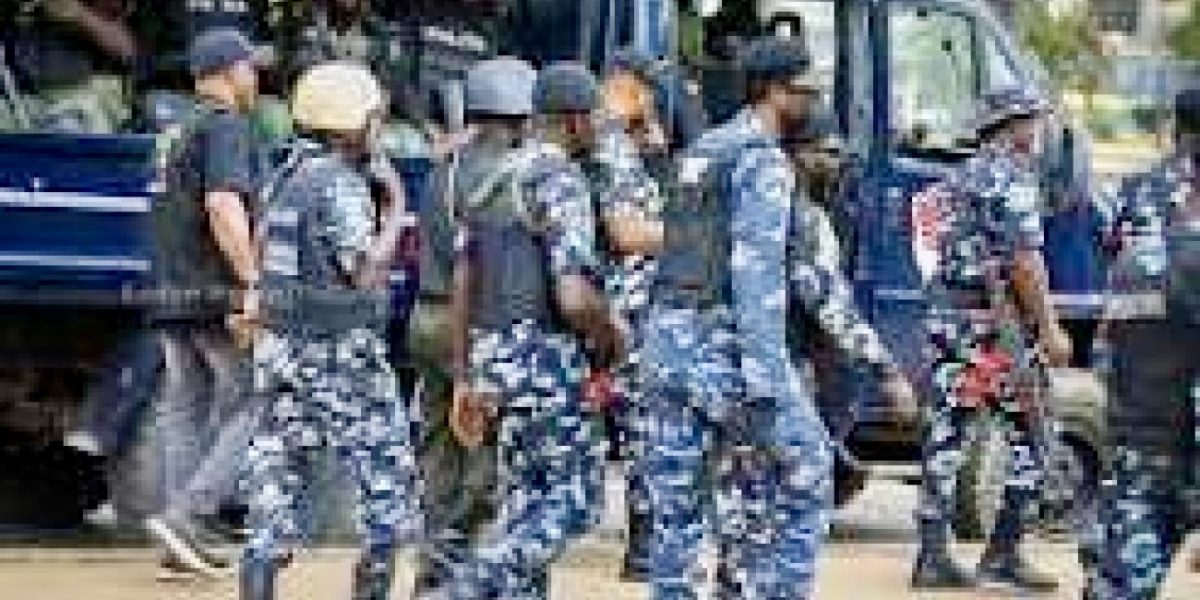
Twelve days after entertainer Yunique Oziori accused a police officer of opening fire at his vehicle in Lokoja, the Kogi Police Command says the officers have been identified. But crucial questions about the alleged shooting, the justification for force and the evidence behind the investigation remain unanswered.
The Kogi State Police Command is investigating an alleged shooting involving officers and Kogi-born entertainer Yunique Oziori in Lokoja, following public outrage over a video in which the entertainer accused a police officer of opening fire at his vehicle.
The incident reportedly occurred on Saturday, November 7, 2026, around the Government House area of Lokoja, the Kogi State capital.
In the video circulated on social media, Oziori recounted the encounter, alleging that an officer fired at the vehicle in which he and his companions were travelling.
“As I was coming along Government House here, this police officer opened fire at us,” he said.
The allegation has raised an important question about the limits of police authority and the circumstances under which law enforcement officers may resort to firearms against citizens.
The police have now confirmed that an investigation is under way. But their statement leaves several critical issues for investigators to establish before the public can have confidence in the outcome.
Police Identify Officers as SCID Opens Investigation
In an update released on November 19, the Kogi State Police Command said the officers involved in the encounter had been identified shortly after the incident.
The investigation is being handled by the State Criminal Investigation Department (SCID) in Lokoja.
According to the Command, investigators have obtained statements from the officers involved and eyewitnesses as they work to reconstruct the circumstances surrounding the confrontation.
The police, however, disclosed that attempts to obtain a formal statement from Oziori had so far been unsuccessful.
The Police Public Relations Department said it had established contact with him and extended an invitation for him to personally present his account.
The invitation, according to the Command, is intended to ensure that investigators hear from all parties before reaching conclusions.
Importantly, the police statement does not explain why Oziori’s statement has not yet been obtained. It would therefore be premature to interpret the development as a refusal to cooperate.
His account remains important, particularly because he is the central civilian complainant in the incident.
The Questions the Investigation Must Answer
Identifying officers is an important first step. Establishing what actually happened is considerably more demanding.
The central issue is not simply whether an altercation occurred between Oziori’s party and the police.
Investigators must establish whether a firearm was discharged, who discharged it, how many shots were fired, where they were directed and what circumstances preceded the alleged use of force.
They must also establish whether the officers had a legitimate operational reason to stop or confront the occupants of the vehicle.
Was there a security threat? Did the occupants resist a lawful police instruction? Was any warning issued? Did an officer perceive an immediate danger to life?
These questions cannot be answered satisfactorily through official statements alone.
A credible investigation should examine the original video footage, obtain independent eyewitness accounts and secure any available CCTV or vehicle-camera recordings from the Government House vicinity.
Investigators should also examine the officers’ duty assignments, operational records and firearm and ammunition registers.
If a weapon was discharged, ballistic examination, cartridge recovery and any available forensic evidence could help establish whether the alleged shooting took place and link the discharge to a particular firearm.
The condition of the vehicle and any medical records relating to reported injuries would also be relevant.
The Command’s public statement has not disclosed whether such evidence has been recovered or examined.
That silence does not establish investigative failure. It does, however, leave the public without the information needed to assess the progress and credibility of the inquiry.
What Nigerian Law Says About Police Use of Force
The investigation carries implications beyond the immediate confrontation.
Section 33 of Nigeria’s Constitution guarantees every person the right to life. It recognises limited circumstances in which death resulting from force may be lawful, including where the force used is reasonably necessary and permitted by law.
The distinction between lawful enforcement and abuse of authority is therefore fundamental.
Internationally recognised standards are even more explicit about the exceptional nature of police firearms use.
The United Nations Basic Principles on the Use of Force and Firearms by Law Enforcement Officials require officers to prioritise non-violent means wherever possible.
Principle 9 restricts firearms use against people to exceptional circumstances, including self-defence or the defence of others against an imminent threat of death or serious injury, and certain serious threats to life.
Even in those circumstances, firearms may only be used when less extreme measures are insufficient.
The principles further state that intentional lethal use of firearms is permissible only when strictly unavoidable to protect life.
These standards provide an important framework for evaluating the Lokoja incident, should the allegation of gunfire be substantiated.
The Nigeria Police Act 2020 also requires the police to investigate reported allegations in accordance with due process and forward their findings to the appropriate Attorney-General for legal advice.
The implication is clear: an investigation should establish evidence, not merely produce an administrative conclusion.
Can an Internal Police Investigation Restore Public Confidence?
The decision to transfer the matter to the SCID provides an official investigative channel.
Nevertheless, an investigation involving allegations against police personnel carries an additional responsibility.
The public must be able to distinguish between an institution investigating itself and an investigation whose findings can withstand independent scrutiny.
The National Human Rights Commission has a statutory mandate to monitor and investigate alleged human rights violations, receive complaints and pursue appropriate remedies.
Its involvement, where warranted, could provide an additional avenue for independent examination of the allegations.
Such scrutiny would not amount to a presumption of guilt against the officers.
Police personnel are also entitled to fair treatment, an impartial investigation and the opportunity to explain their actions.
Accountability must protect both the rights of citizens and the principles of due process.
Commissioner Promises Disciplinary and Legal Action
The Commissioner of Police, CP Naziru Bello Kankarofi, has sought to reassure residents that the Command will not protect officers found to have acted unlawfully.
He reiterated the Command’s position that:
“The Kogi State Police Command does not condone any form of misconduct, abuse of authority or impunity by its personnel.”
He also assured the public that:
“The Command takes the concerns raised by members of the public seriously and assures that the investigation will be thorough, impartial and transparent.”
According to the Commissioner, any officer found culpable will face appropriate disciplinary and legal consequences.
The Command further stressed that it would not shield personnel found to have acted contrary to the law, concluding its assurance with the declaration:
“No one is above the law.”
These are important commitments. Their credibility, however, will ultimately depend on what the investigation establishes and whether its findings lead to appropriate action.
The Evidence Must Matter More Than the Promises
Oziori’s decision to present his account to investigators would help establish a fuller record of the encounter.
But the responsibility for uncovering the facts does not rest exclusively on the complainant.
The police must independently preserve and examine available evidence, interview all relevant witnesses and establish the sequence of events.
The public also deserves a substantive update addressing whether a weapon was discharged, whether the use of force was justified and what action has been taken against any officer found responsible.
For Kogi State, the incident presents an opportunity to demonstrate that police accountability is more than a public-relations commitment.
A professional police force must be able to enforce the law without placing citizens’ lives at unnecessary risk.
The question facing the Kogi Police Command is therefore bigger than the fate of the officers involved in one viral video.
It is whether an ordinary citizen can expect protection from the very institution entrusted with providing it.
The investigation must now provide an answer supported by evidence, not merely assurances.
Follow us on our broadcast channels today!
- WhatsApp: https://whatsapp.com/channel/0029VawZ8TbDDmFT1a1Syg46
- Telegram: https://t.me/atlanticpostchannel
- Facebook: https://www.messenger.com/channel/atlanticpostng
Join the debate; let’s know your opinion.