Tinubu’s Security Recruitment Drive Faces a Bigger Test: Can Nigeria Turn More Personnel Into Safer Communities?
The administration is promising a major expansion of Nigeria’s security forces, but the recruitment figures have a history. With police training funding, military readiness and accountability still under scrutiny, the real test will be whether the expansion makes vulnerable communities safer.
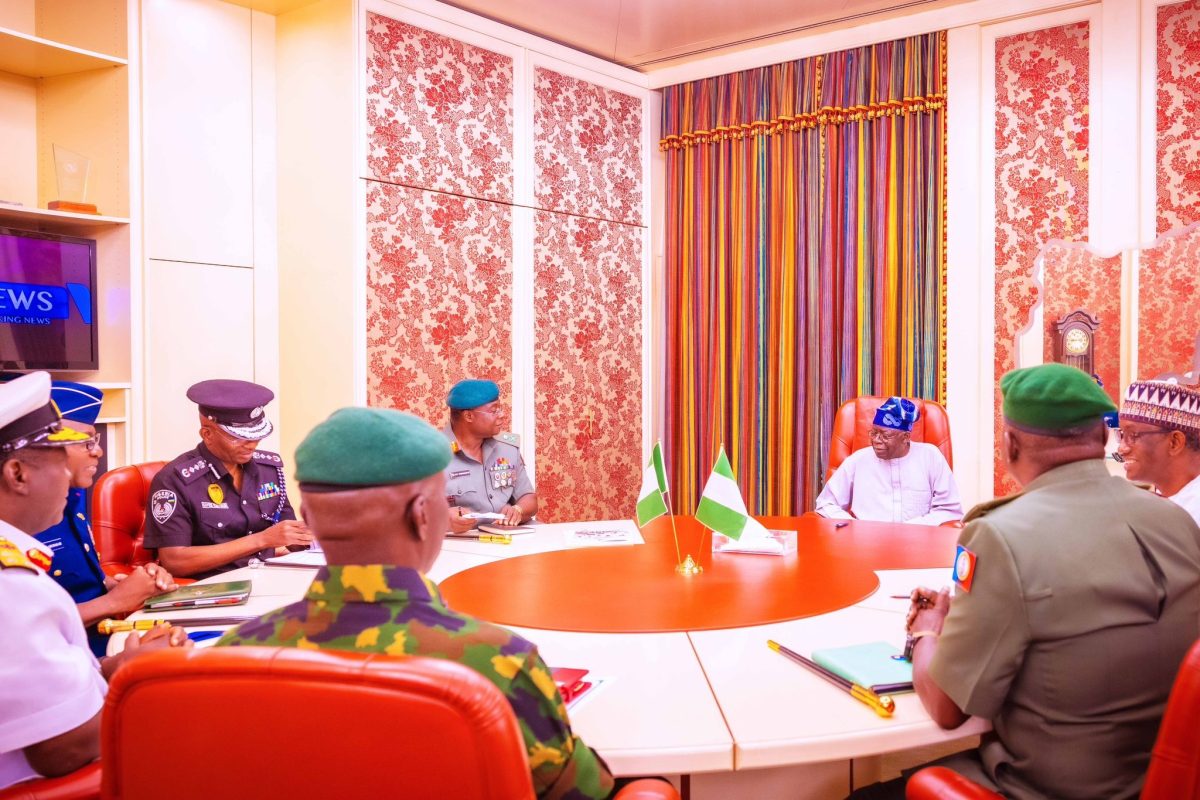
Nigeria is preparing for one of the most ambitious expansions of its security forces in recent years. President Bola Tinubu has been credited with approving the recruitment of 28,000 additional soldiers and 50,000 police officers as his administration seeks to confront terrorism, banditry, kidnapping and other violent crimes.
The figures suggest a substantial increase in the government’s capacity to defend a country where armed groups continue to threaten communities, attack military formations, abduct travellers and disrupt economic activity.
But beneath the announcement lies a more complicated question.
Is Nigeria witnessing a genuinely new recruitment drive, or is the administration repackaging previously approved manpower commitments as part of a wider security strategy?
An examination of official statements, recruitment records and independent security assessments reveals that much of the announced expansion was already underway before the latest announcement by the All Progressives Congress (APC) Presidential Campaign Council.
The Nigerian Army’s 28,000-person recruitment approval dates back to July 2026. The 50,000-police recruitment exercise was initiated in 2025, and the Police Service Commission (PSC) had already completed its selection process and handed the successful candidates to the Nigeria Police Force for training by August 2026.
The distinction matters. Approving recruitment, selecting candidates, training them and deploying operational personnel are four different stages of security capacity development.
Nigeria’s citizens need the final result, not merely another announcement.The State House, Abuja+4
The 78,000 recruitment announcement and the timeline behind it
In a statement issued on Sunday, November 15, spokesperson for the APC Presidential Campaign Council, Dele Alake, presented the recruitment figures as part of Tinubu’s broader efforts to restructure Nigeria’s security architecture.
He said the military expansion would strengthen troop presence and improve operational effectiveness.
The statement declared:
“To further the manpower expansion drive, President Tinubu also approved recruiting an additional 28,000 soldiers to strengthen the military’s presence on the ground and enhance its operational effectiveness.”
It also announced the recruitment of 50,000 police officers to reinforce internal security and strengthen the country’s response to criminal activities.
However, the history of these figures raises questions about how the latest announcement should be interpreted.
The 50,000 police recruits were already in the recruitment pipeline
On November 26, 2025, Tinubu declared a nationwide security emergency and authorised additional recruitment into the security services.
In his official statement, published by the State House, the President announced:
“The police will recruit an additional 20,000 officers, bringing the total to 50,000.”
The following month, on December 11, 2025, the PSC announced the commencement of recruitment for 50,000 police constables, following the presidential directive.
Applications opened on December 15, 2025, and the closing date was extended to February 8, 2026.
The exercise attracted 616,873 applications, according to figures subsequently released by the commission. Of these, 434,604 applicants qualified for further screening, while 121,596 were found unqualified and 60,673 submissions were invalid.
By August 6, 2026, the PSC had formally handed over the list of 50,000 successful candidates to the Nigeria Police Force for training. The State House, Abuja+4
The most important development, however, concerned funding.
At the handover ceremony, Deputy Inspector-General of Police Isyaku Mohammed, who received the recruits on behalf of the Inspector-General of Police, said:
“The training will commence nationwide as soon as funds are released.”
On August 13, the Nigeria Police Force also reported that the recruitment exercise was advancing towards its final pre-training stage, with preparations underway for training under an improved curriculum. Punch Newspapers+1
This creates an important distinction in the November announcement.
The 50,000 police recruits were not a completely new recruitment exercise announced on November 15. They were already the subject of an earlier presidential directive and an established recruitment process.
The latest statement does not explain whether the President has authorised an additional intake beyond that existing 50,000-person exercise or is referring to the recruits already selected.
That clarification is necessary, particularly when public expectations and security-sector funding are involved.
The 28,000 additional soldiers were approved in July
The Army recruitment figure also predates the November announcement.
On July 23, 2026, Tinubu approved the expansion of the Nigerian Army from eight divisions to 12, alongside the recruitment of 28,000 additional military personnel.
The announcement was communicated by Presidential spokesman Bayo Onanuga.
The four additional divisional headquarters were designated for:
- Makurdi, Benue State.
- Ilorin, Kwara State.
- Jalingo, Taraba State.
- Benin City, Edo State.
The restructuring was intended to decentralise command, improve operational coverage, strengthen border security and reduce the time required for military formations to respond to emerging threats.
Reuters reported that the implementation would occur in two phases, with the first three new divisions expected to become operational by September and the Benin City formation by December 2026. Reuters+2
The November announcement therefore consolidates an existing military expansion programme rather than introducing the 28,000-person recruitment target for the first time.
The new development is the presentation of these existing commitments as components of a comprehensive five-year security strategy.
The five-year defence plan: What is actually being implemented?
One of the most significant aspects of the announcement is the proposed Five-Year Strategic Defence Operations Plan.
The initiative is intended to coordinate Nigeria’s military, intelligence and other security capabilities under a more integrated national framework.
In August 2026, the State House announced that Tinubu had ordered the preparation of a comprehensive National Threat Assessment and a rolling five-year Strategic Defence Operations Plan.
An 11-member presidential committee was established under the coordination of the President’s Special Adviser on Homeland Security, Major General Adeyinka Famadewa.
Its membership included the National Security Adviser, the Minister of Defence, the service chiefs and other senior national security officials.
The committee was instructed to identify Nigeria’s principal security threats, assess their urgency, determine the operational capabilities required and establish an implementation timetable.
Crucially, the directive required the committee to submit the completed assessment and strategic plan within 90 days for the President’s consideration and approval.
The State House also indicated that the approved plan would provide the foundation for a corresponding multi-year defence expenditure and procurement framework. The State House, Abuja+1
The APC campaign council now says the plan is ready.
Its stated objective is to reposition the security architecture towards what Alake described as a:
“Coordinated, intelligence-led, technology-enabled, and prevention-oriented system.”
This is an important policy ambition.
Nigeria’s security challenges are not confined to conventional battlefield engagements. They involve intelligence failures, porous borders, organised criminal networks, illegal weapons trafficking, inadequate policing, local conflicts and the exploitation of poorly governed communities.
An effective strategy must address these interconnected problems rather than simply increase the number of personnel available to fight them.
Yet several essential details remain outstanding in the public announcement.
The full five-year document, its costed implementation schedule, funding arrangements and measurable performance indicators were not supplied.
There is also a difference between a document being ready for consideration and a fully approved, funded and operational national security programme.
Without public access to its objectives, procurement priorities and implementation milestones, Nigerians cannot independently assess whether the proposed framework offers a fundamental change or another administrative restructuring.The State House, Abuja+1
Can Nigeria’s military training infrastructure accommodate the expansion?
Recruitment on this scale presents a major logistical challenge.
According to Alake, Tinubu has approved two additional Army depots in Osogbo, Osun State, and Amasiri-Edda, Ebonyi State.
Each facility can accommodate 6,000 recruits at a time, giving them a combined training capacity of 12,000.
The APC campaign council also disclosed that 5,210 recruits were already undergoing training at the Osogbo facility.
The expansion is intended to accelerate military recruitment, reduce training bottlenecks and increase the number of soldiers available for deployment.Punch Newspapers+1
However, the figures raise another operational question.
If the two new facilities are the only training capacity being considered, their combined ability to accommodate 12,000 recruits at a time cannot process all 28,000 additional soldiers in a single intake.
They would need at least three full or partial training cycles, assuming no other facilities contribute to the programme.
The actual timeline would depend on the duration of training, the availability of instructors, equipment and accommodation, and the number of other Army training institutions involved.
The government has not publicly explained how the 28,000 recruits will be distributed across training facilities or how quickly the new personnel are expected to become operational.
There is also the question of equipment.
A soldier is not an effective operational asset simply because he has completed basic training.
Military effectiveness requires appropriate weapons, protective equipment, communications systems, surveillance technology, transport, ammunition, medical support, logistics and reliable intelligence.
The four new Army divisions will also require properly equipped headquarters, administrative structures, operational bases and sustainable logistical support.
Without these investments, the expansion risks increasing personnel numbers without delivering a proportionate improvement in combat capability.
Nigeria’s police shortage is bigger than recruitment numbers
Nigeria’s policing challenge is particularly acute because the country has a large population spread across 36 states and the Federal Capital Territory.
The European Union Agency for Asylum, in its January 2026 assessment of Nigeria’s security situation, cited an estimated Nigeria Police Force strength of approximately 371,800 officers serving a population of about 236.7 million.
That translates to roughly one officer for every 637 residents on paper.
The assessment also cited reports that more than 100,000 officers were assigned to the protection of politicians and other very important persons rather than ordinary policing duties.
These estimates should be treated cautiously because the reported police strength has been repeated over several years and requires an updated official headcount. Nevertheless, they illustrate the scale of the distribution problem. European Union Agency for Asylum
The issue is not simply whether Nigeria has enough police officers.
It is whether available personnel are deployed where citizens need them.
A police officer assigned to protect a politician cannot simultaneously patrol a remote farming community, investigate a kidnapping or respond to a robbery in a residential neighbourhood.
The concentration of personnel around politically influential individuals has long raised questions about the priorities of public security.
The expansion of the police force must therefore be accompanied by a fundamental reconsideration of deployment.
More officers should translate into visible neighbourhood patrols, faster emergency responses, better criminal investigations and improved protection for vulnerable communities.
Recruiting thousands of additional officers while retaining an inefficient deployment structure could reproduce the same weaknesses on a larger scale.
The government must also address professional training, police welfare, supervision, accountability and public trust.
For communities that have experienced extortion, arbitrary arrests or excessive use of force, increasing police numbers without strengthening institutional accountability will not automatically improve the relationship between citizens and law enforcement.
The financial question: Who will pay to sustain the expansion?
The proposed expansion will require substantial and sustained public expenditure.
Nigeria’s 2026 Budget Speech placed ₦5.41 trillion under the combined defence and security allocation.
The government identified modernisation of the Armed Forces, intelligence-driven policing, joint operations, border surveillance and community-based peacebuilding among its priorities.
Tinubu also made a significant commitment on accountability:
“We will invest in security with clear accountability for outcomes — because security spending must deliver results.”
The State House, Abuja
That commitment will now face a difficult practical test.
Recruitment involves much more than the initial cost of selecting candidates.
Every additional soldier and police officer represents recurring expenditure on salaries, allowances, accommodation, healthcare, training, uniforms, weapons, communications, transportation and other operational requirements.
The military’s expansion will also require additional expenditure on the four new divisions, training facilities and infrastructure.
The 700-unit military barracks project in Ikere-Ekiti, Ekiti State, cited by the campaign council, is one example of the accommodation investments required to support the expansion.
But the November announcement does not provide a breakdown of how much the new manpower commitments will cost annually or how the five-year programme will be financed.
Nor does it explain how the government will guarantee that funding for personnel training, equipment and welfare is released when required.
The police recruitment process has already demonstrated why this matters.
The successful selection of 50,000 candidates was a major administrative achievement. Yet the police training command’s August statement that training depended on the release of funds exposed the difference between completing recruitment and creating operational capacity.
A five-year security strategy cannot succeed if its funding commitments are not matched by predictable budget releases.
The 15,000 terrorists killed: What do the figures actually prove?
Another major element of the campaign council’s announcement concerns the claimed results of military operations.
The APC said operations across Nigeria had eliminated more than 15,000 Boko Haram terrorists and bandits over the past three years.
It also claimed that more than 130,000 Boko Haram fighters and their dependants had surrendered through Operation Safe Corridor, the Federal Government’s rehabilitation programme for repentant insurgents.
These are substantial figures, but they require a clearer breakdown.
The figures are not entirely new.
In May 2025, National Security Adviser Nuhu Ribadu presented security achievements covering the first two years of the Tinubu administration.
According to reporting by Premium Times, Ribadu said 15,543 insurgents had been killed across the country, while 124,408 Boko Haram and Islamic State West Africa Province fighters and their family members had surrendered.
The newer figures announced by Alake appear to update those earlier claims.
But the distinction between insurgents and their dependants is critical.
A surrender figure that includes family members cannot automatically be interpreted as the number of former combatants who have laid down their weapons.
The government should therefore disclose how many individuals were actual fighters, how many were dependants, how many underwent security screening, how many entered rehabilitation and how many completed reintegration.
It should also provide information on their locations, monitoring arrangements and subsequent outcomes.
Without such information, the public cannot properly assess the scale or effectiveness of the rehabilitation programme.Premium Times Nigeria+1
Operation Safe Corridor and the test of reintegration
Operation Safe Corridor has become a major part of Nigeria’s non-military response to insurgency.
Established to facilitate the disarmament, deradicalisation, rehabilitation and reintegration of former insurgents assessed as suitable for the programme, it is designed to encourage individuals to abandon armed groups and return to civilian life.
The approach recognises that defeating an insurgency requires more than military operations.
However, surrendering and successfully reintegrating into society are not the same thing.
The Centre for Democracy and Development (CDD-West Africa), in an assessment published on November 10, 2026, examined the programme’s strengths and weaknesses.
The report identified the involvement of 17 government institutions and the programme’s rehabilitation curriculum as important strengths.
But it also highlighted weaknesses involving funding constraints, staffing shortages, inconsistent institutional participation and inadequate support following graduation.
According to the assessment, the programme’s coordinator reported that more than 3,000 participants had been reintegrated during its first decade.
That figure is not directly comparable with the government’s 130,000 surrender claim because the two numbers measure different stages and categories of participation.
Nevertheless, the distinction exposes the need for more transparent reporting.
How many people surrender? How many are screened? How many complete rehabilitation? How many return to communities? And how many remain successfully reintegrated years later?
These are the questions that determine whether a rehabilitation programme contributes to lasting peace.CDD+1
The concerns extend beyond government statistics.
Communities that suffered killings, displacement, abductions and destruction of property need reassurance that the reintegration process adequately addresses justice, public safety and the rights of victims.
The CDD assessment specifically identified weak community participation, insufficient follow-up and inadequate livelihood support as obstacles to sustainable reintegration.
The programme’s long-term credibility will depend on whether it protects communities while providing a genuine alternative to continued participation in violent groups.
Insecurity persists despite military operations
The government’s claims of military gains must also be considered against the continuing security situation.
A SARI Global assessment reported by Nairametrics on November 15 recorded at least 835 security-related deaths across 612 incidents in October 2026.
The reported death toll increased from 587 in September.
The assessment identified armed conflict, banditry, mass-casualty attacks and other security-related incidents among the principal contributors.
It also identified expanding armed-group activity and growing threats to civilian movement, particularly in the North-West and North-East.
Importantly, the 835 figure includes different categories of security-related deaths, including armed-group and government-affiliated personnel. It should not be interpreted as a civilian death toll.
The assessment also described the totals as minimum confirmed counts rather than a complete estimate of casualties. Nairametrics
The continuing violence does not, by itself, establish that military operations have achieved nothing.
It does, however, show that operational gains have not yet removed the underlying threats.
Security forces must demonstrate that increased manpower can prevent attacks, protect transport routes, secure agricultural communities, rescue abducted victims and dismantle criminal networks.
For Nigerians living in vulnerable communities, these outcomes matter far more than the number of recruits announced in Abuja.
What the five-year strategy must deliver
For the proposed security expansion to become a meaningful national intervention, the government must move beyond recruitment announcements and provide a transparent implementation framework.
At least five priorities deserve public attention.
First, publish the complete security plan. Nigerians should be able to examine the National Threat Assessment, the strategic objectives, the funding arrangements, the responsibilities of security agencies and the implementation timetable.
Second, establish a verifiable recruitment and deployment register. The government should publish how many soldiers and police officers have been recruited, trained, equipped and deployed. These categories should be reported separately.
Third, address equipment and welfare deficiencies. Additional personnel must have the resources, protection and operational support required to perform their duties effectively.
Fourth, strengthen intelligence and community policing. Local communities are often the first to notice suspicious movements, emerging threats and criminal networks. Their information must be integrated into professional security operations without exposing residents to retaliation.
Fifth, introduce measurable security performance indicators. The government should report changes in kidnapping incidents, attacks on communities, response times, successful rescues, criminal prosecutions, weapons recoveries and the protection of vulnerable populations.
The public also needs assurances that security operations will respect human rights and civilian protection obligations.
Increased military and police capacity must not come at the expense of constitutional safeguards or accountability for misconduct.
Nigeria needs results, not another recruitment headline
Tinubu’s planned expansion of the military and police comes at a time when Nigeria urgently needs a more effective response to its security crisis.
The creation of additional Army divisions, expanded training facilities and the recruitment of more personnel could strengthen the country’s ability to confront armed groups.
But the November 15 announcement also highlights a problem with how security policy is communicated and measured.
The 28,000 military recruitment commitment was announced in July. The 50,000 police recruitment process began in December 2025, with successful candidates handed over for training in August 2026.
Presenting these figures as entirely new approvals without explaining their history risks confusing the public about what has actually been delivered.
More importantly, it shifts attention away from the questions that should define the success of the five-year strategy.
How many recruits have completed training? How many have been deployed? Are the new Army divisions fully operational? Is funding available for police training? Are vulnerable communities receiving better protection?
These questions should not be treated as criticism of recruitment. They are essential tests of whether public expenditure is producing public safety.
Nigeria does not simply need more personnel in uniform.
It needs soldiers who can operate effectively, police officers who are available to protect ordinary citizens, intelligence systems that identify threats before attacks occur and institutions capable of sustaining security gains.
The ultimate measure of Tinubu’s five-year strategy will not be the number of recruits announced, divisions created or terrorists reported killed.
It will be whether a farmer can return safely to his land, a traveller can use a highway without fear of abduction, a child can attend school without becoming a kidnapping target and a family can sleep without listening for the sound of approaching gunmen.
Until those realities change, Nigeria’s security expansion will remain a promise awaiting its most important test: results.
Follow us on our broadcast channels today!
- WhatsApp: https://whatsapp.com/channel/0029VawZ8TbDDmFT1a1Syg46
- Telegram: https://t.me/atlanticpostchannel
- Facebook: https://www.messenger.com/channel/atlanticpostng


Join the debate; let’s know your opinion.