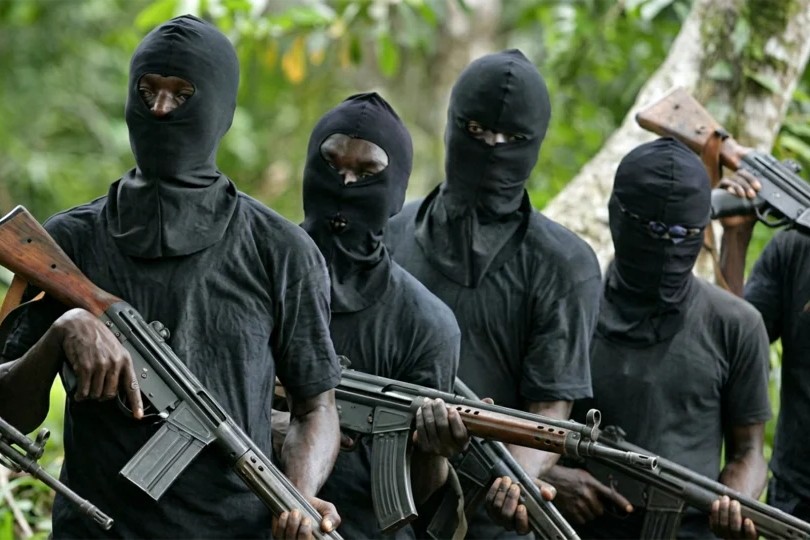
Nigeria has been handed a rare and consequential test of its democratic maturity. The reason is not that a coup succeeded. Instead, credible reporting and official confirmation now point to an alleged attempt by serving officers. They aimed to overthrow an elected government, disrupt a constitutional transfer of power, and target key political and military figures.
This is not just a barracks matter. It is not only a discipline issue. A coup d’état is an attack on the people’s sovereignty and the constitutional order. When the state treats it as an internal military breach, it risks shrinking a national crime. This turns it into a closed institutional process that Nigerians can’t see. They can’t interrogate it and they may not trust it.
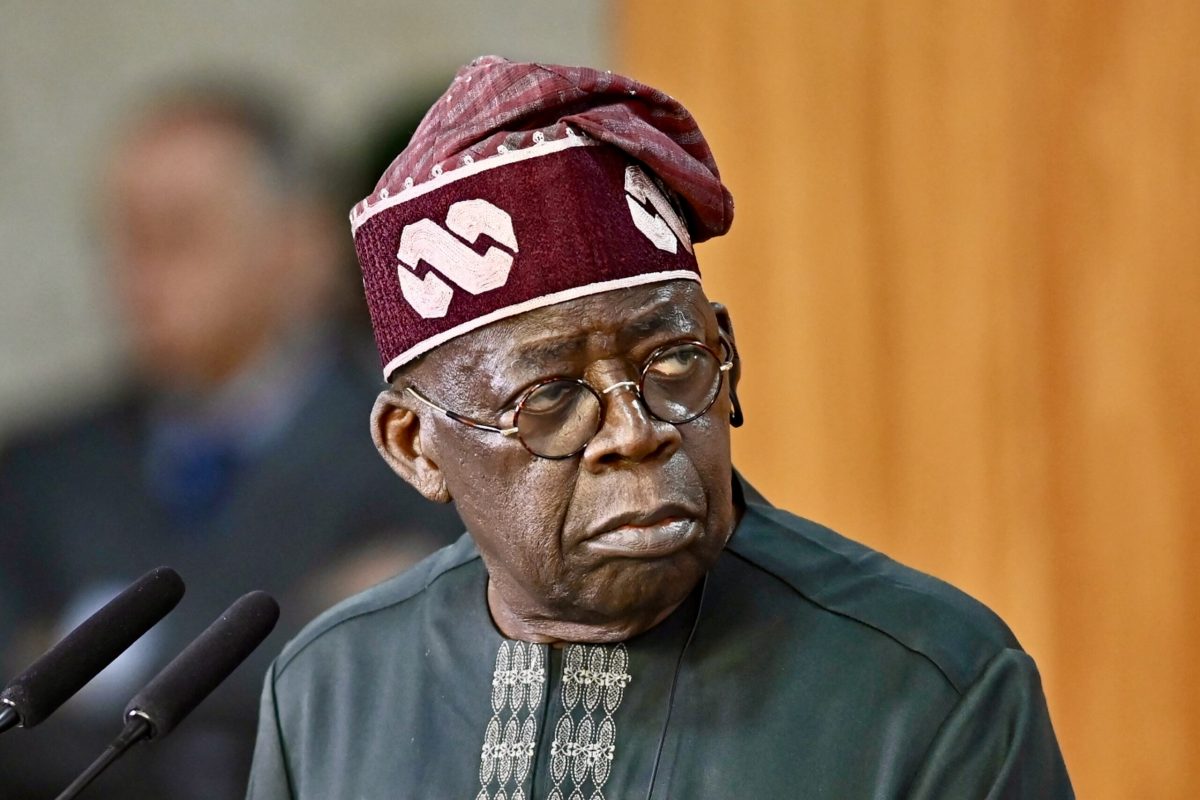
The Defence Headquarters has now publicly acknowledged an investigation. It found allegations of an illegal plot to overthrow President Bola Tinubu’s administration. Those involved would be arraigned before a military judicial panel.
Local reporting adds an earlier timeline. It alleges that elements of the plot were first conceived around the 29 May 2023 handover. These elements were later revived in 2025. There is an alleged financing trail that includes a former Bayelsa governor, Timipre Sylva. He has separately been declared wanted by the EFCC in an unrelated fraud case.
The question before Nigeria is therefore bigger than who is tried and where. It is what message the republic sends to every future conspirator, sponsor, fixer, and silent sympathiser across the security ecosystem.
If the facts and evidence meet the legal threshold, Nigeria should pursue treason charges. The core plotters and any civilian collaborators should be prosecuted in open federal court. Court martial processes may still deal with service offences and chain-of-command breaches. But the main event, the crime against the state and the people, belongs in public view.
What Nigerians Need to Know
What is alleged
A group of officers allegedly planned to overthrow an elected government. They aimed to violently disrupt the 29 May 2023 transition. The plan was later revived in 2025 after they allegedly received financial support.
What the military has confirmed
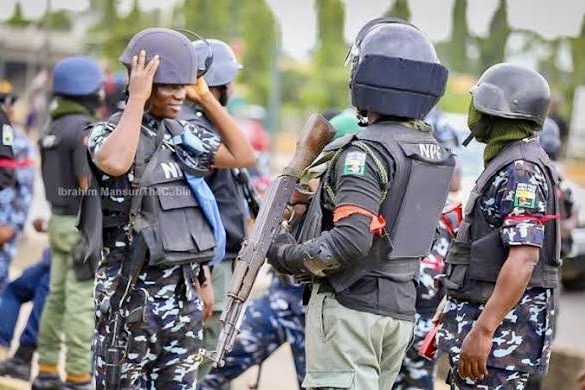
The Defence Headquarters has acknowledged allegations of a coup plot. This follows an investigative process. They say the indicted personnel will face a military judicial panel.
What is at stake
Civilian supremacy over the armed forces is crucial. Public confidence in justice is necessary. Deterrence plays a vital role. Nigeria’s stability is important as the region faces renewed coup contagion.
What Atlantic Post argues
A coup plot is not merely indiscipline. It is treason against the constitutional order. The public interest demands open prosecution in a federal court with full due process.
The Anatomy of the Alleged Plot
Nigerian media outlets report an alleged plan by a group of officers. As Nigerians prepared for the transfer of power on 29 May 2023, these officers allegedly intended to truncate the handover from Muhammadu Buhari to Bola Tinubu.
The reporting further alleges that the plan was initially set for inauguration day. However, it was suspended for lack of funds and logistics. The plan was reactivated in 2025 after alleged transfers totaling almost N1 billion. These transfers were made through accounts linked to a Bureau De Change operator.
The same reporting names an alleged mastermind. It outlines prior operational postings. It also describes alleged targets that included senior political office holders and key security figures.
It also claims a covert operation involving the Army Headquarters and the State Security Service helped foil the plot. Authorities made arrests around late September 2025.
These are severe allegations. They must be treated with seriousness and caution, with full respect for the presumption of innocence. But they must also be tested transparently because the nature of the crime is public. A coup is not a private wrong. It is a public rupture.
The Official Pivot That Changed the Story
For months, Nigerians heard language that framed arrests as internal discipline matters. Then, on 26 January 2026, the military publicly acknowledged for the first time that officers had indeed allegedly plotted to illegally overthrow the administration. Those with cases to answer would face a military judicial panel.
That admission matters for two reasons.
First, it narrows the space for euphemism. When the state says there was a plot to overthrow an elected government, the issue goes beyond career grievances. It also surpasses promotion disappointments. It becomes an existential crime against constitutional rule.
Second, it creates a legitimacy challenge. A military judicial panel may satisfy internal procedures. It may even deliver punishment. But, it is unlikely to satisfy the democratic need. The public must see justice done when the alleged offence is an assault on their collective sovereignty.
Coup D’État as a Crime Against the People
Nigeria’s constitutional architecture is built around one foundational idea. No person or group takes control of government except in the manner the constitution allows. That principle is not decorative. It is the legal expression of popular sovereignty.
A coup try is thus more than an attempted change of leadership. It is an attempt to substitute ballots with force and to substitute citizenship with fear. It is an attempt to reassign Nigeria’s ownership from the public to a faction.
Democracies treat coup plotting, violent seizure of power, and subversion of constitutional order as crimes of the highest category. These actions are often akin to treason or its functional equivalents.
And that is why Nigeria must not allow a coup allegation of this magnitude to be processed mainly behind closed doors. The process should remain open to scrutiny.
What Nigerian Law Says About Treason and Coup Plotting
Treason in Nigeria’s Criminal Code framework involves several actions. It is tied to levying war against the state. It also includes conspiring to do so and acts intended to intimidate or overawe the President or a Governor. Treasonable felonies and related offences also cover preparatory and conspiratorial conduct manifested by overt acts.
The key point is not just punishment. It is classification. Treason is not an HR violation. It is not a mere breach of service regulations. It is a direct offence against the state.
At the same time, the Armed Forces Act provides for military law. It also establishes courts martial jurisdiction over certain offences. This includes what it describes as “civil offences” committed by persons subject to service law. This is one reason the military argues for a military judicial panel.
But Nigeria must choose the path that best serves democratic legitimacy, public confidence, and deterrence. That path is open civilian trial for the core constitutional crime.
Why a Court Martial Is Not Enough
A court martial is designed for military discipline, obedience, and cohesion. Its DNA is institutional. Its logic is command. Its environment is structured around service needs, operational secrecy, and the imperatives of force readiness.
Those are valid needs. But they are not the needs of democracy when the allegation is a coup.
Open civilian trials do four things that courts martial struggle to do at the same level.
They create national ownership of justice
A coup attempt is a crime against the public. The public must be able to watch the state confront it.
They strengthen deterrence beyond the barracks
A public trial warns not just soldiers but financiers, intermediaries, and political patrons. It also warns fixers and foreign facilitators. Nigeria will prosecute the full conspiracy chain.
They reduce suspicion of cover ups
Nigerians carry historical memory of secretive military processes. Closed trials, sealed evidence, and limited reporting will feed speculation that the truth is being trimmed for institutional comfort.
They align with civilian supremacy
The military exists under constitutional authority. When the alleged offence is the attempted overthrow of constitutional government, civilian justice should lead.
If parts of evidence are sensitive, courts already have tools. Protective orders. Witness protection. In camera sessions for narrow portions. Redaction of operational details. None of these require the entire trial to disappear into a military panel.
The Money Trail Problem and Why Civilian Court Matters
If widespread media reporting is accurate, the alleged plot did not live on ideology alone. It required money.
Coups are logistics heavy. Vehicles. Communications. Safe houses. Movement. Access. Informants. Patronage.
That is why a military only process is structurally weak. Courts martial can punish soldiers. They are less credible for prosecuting civilian funders. Political facilitators are also hard to prosecute, even when the evidence points outside the barracks.
This is where an open federal court trial becomes essential.
It allows prosecutors to pursue the full enterprise, including alleged civilian sponsors, conduits, and laundering channels. It also allows Nigeria to join security investigations using financial crime tools. These tools include asset tracing, beneficial ownership analysis, and bank transaction evidence.
EFCC has taken significant action by declaring Timipre Sylva wanted in a separate fraud matter. They announced they obtained a warrant for his arrest. Sylva has denied involvement in any coup attempt, according to widely cited reporting. Those facts sit in the same public arena and will inevitably intersect in public perception. Only a transparent legal process can prevent perception from hardening into conspiracy.
Nigeria must treat alleged coup financing as a national security crime. It should be addressed with financial architecture. It should not be treated as a rumour that evaporates inside military paperwork.
Nigeria’s Historical Trauma and Why This Must Be Different
Nigeria’s coup history is not academic. It is lived.
From 1966 through 1999, military rule repeatedly suspended democratic development. There was only a short civilian interlude during this period. The regime shaped institutions around decree culture instead of public accountability. Nigeria’s political economy still carries scars from that era.
This is exactly why the present moment matters.
Nigeria has now had a quarter century of continuous civil rule since 1999. That continuity is an asset, but it is not a guarantee. A failed coup is still a warning signal, especially in a region experiencing renewed coup waves and democratic backsliding.
The lesson of Nigeria’s past is simple. When the state normalises military intervention, even as a rumour, it invites more of it. When the state makes coup plotting a spectacle of consequence, it deters it.
The Regional Coup Contagion and the Nigeria Exception
West and Central Africa have seen a surge in coups and attempted coups since 2020. Analysts link the trend to insecurity, economic shocks, youth discontent, contested elections, and weakening institutions.
Nigeria is not immune to those pressures. Nigeria’s poverty burden is severe, with World Bank projections estimating nearly half the population living in poverty in 2024. Inflation dynamics have been volatile, and the country has undergone painful reforms. These are precisely the conditions that coup entrepreneurs exploit, selling a fantasy of order through force.
But Nigeria is also different. It is the region’s largest economy and a pivotal state. A coup in Nigeria would not be a local event. It would be a continental earthquake.
That is why Nigeria must treat this alleged plot as a national civic emergency. It requires the clearest possible line between constitutional rule and military ambition.
Comparative Lessons From Other Democracies
Other states facing alleged subversion of constitutional order have leaned toward open justice, even where defendants had military backgrounds.
Ghana
Ghana’s courts have tried coup plot cases through civilian judicial processes, with high-profile outcomes. The underlying point is not the punishment. It is the model. The democratic state responds through open law.
Spain
Spain’s 1981 attempted coup became a defining test of post-dictatorship democracy. The trial and sentencing of key conspirators signalled that the era of military veto over civilian politics had ended.
Turkey
Turkey’s post-2016 coup trials ran through civilian courts, though they also triggered controversies about breadth, rights, and political use. The lesson for Nigeria is not to copy Turkey’s excesses. It is to adopt the democratic principle. Subversion of constitutional order should be prosecuted visibly. The courts should serve as a public arena.
United States
Even without a classic coup, US prosecutions for seditious conspiracy after the 6 January 2021 attack show important processes. They demonstrate how democracies use public court processes to punish attempts. These attempts aim to disrupt constitutional transfers of power.
Nigeria does not need foreign permission to defend its constitution. But comparative experience supports a clear lesson. Open justice is a democratic stabiliser.
What an Open Treason Trial Should Look Like
If Nigeria chooses the right democratic posture, the pathway is not theatrical. It is procedural.
1. A clear charging strategy
If evidence supports it, prosecutors should file treason charges in a civilian court. They should also file related conspiracy charges. Meanwhile, the military pursues parallel service offences where appropriate.
2. Full chain accountability
Charge the planners, operational teams, and any alleged civilian financiers, intermediaries, and facilitators. Not only the uniformed layer.
3. Transparent narrative discipline
The state should stop leaking selective fragments to friendly platforms. It should present a coherent account in court and allow cross examination to test it.
4. Rights protected
A public treason trial must not become vengeance. Defendants must have counsel, time, disclosure, and fair hearing. The point is to defeat coup culture through law, not to imitate it through arbitrariness.
5. Targeted secrecy only when necessary
Where operational details are genuinely sensitive, the court can protect them in limited ways. But the default must remain openness.
The Questions Nigeria Must Demand Answers To
Even at this stage, Nigerians are entitled to clarity on core issues.
Who exactly was arrested and who remains at large?
What is the evidence threshold used to classify suspects as indicted?
What financial trails exist, and what banks and intermediaries were involved?
Were any active duty personnel in sensitive presidential protection units implicated?
How did intelligence penetration occur, and what vulnerabilities remain?
Why did official communication initially frame the matter as routine discipline?
What oversight is National Assembly exercising over the process?
What reforms will follow in promotions, postings, welfare, and grievance systems to reduce susceptibility to conspiracy narratives?
These questions are not antagonistic to the armed forces. They are protective of the republic.
A Final Argument Nigeria Can’t Avoid
The Defence Headquarters has a legitimate interest in discipline. The state has a legitimate interest in stability. But the republic has a higher interest in legitimacy.
A coup plot is not a private quarrel among officers. It is a public crime. It is an attempted theft of Nigeria’s sovereignty. It is violence against citizenship, even when it fails.
Nigeria must therefore do what democracies do when the constitution is attacked.
If the evidence supports the allegations, prosecute treason in open federal court. Let Nigerians see the case. Let the accused defend themselves in public. Let the state prove its claims beyond reasonable doubt.
That is how Nigeria strengthens civilian supremacy. It deters future conspirators. It reassures investors. This signals to a coup-shaken region that Africa’s most important democracy will not negotiate with the logic of force.
Follow us on our broadcast channels today!
- WhatsApp: https://whatsapp.com/channel/0029VawZ8TbDDmFT1a1Syg46
- Telegram: https://t.me/atlanticpostchannel
- Facebook: https://www.messenger.com/channel/atlanticpostng