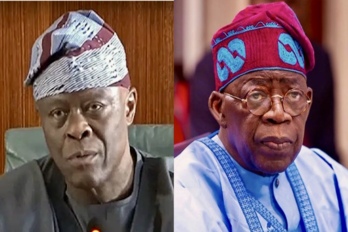
The finance minister’s fall was not sudden. It came after months of anger over stalled capital releases, a bruising relationship with the presidency and growing doubts over how Nigeria’s economy was being run.
President Bola Tinubu’s removal of Wale Edun as Minister of Finance and Coordinating Minister of the Economy is being read in Abuja as much more than a routine cabinet adjustment. Reuters reported that Tinubu approved a “minor cabinet reshuffle” on Tuesday, with Edun removed and Taiwo Oyedele elevated to the finance job. The same reshuffle also affected the housing ministry.
But the official language does not explain the political fire underneath the decision. It hides the real story, which is that Edun had become the face of a widening crisis over budget implementation, weak capital releases and a souring relationship with the president. Premium Times reported that insiders had long believed the tension was building, with complaints from ministers and lawmakers repeatedly reaching Tinubu’s desk.
The sharpest criticism centred on the capital budget. In February, federal lawmakers accused Edun of “zero implementation” of the 2025 capital budget, despite the National Assembly approving a N1.15 trillion request to fund capital components. That allegation cut deep because it went straight to the question of whether the Tinubu administration could turn revenue into visible infrastructure rather than endless promises.
For many in government, the problem was not just accounting. It was politics. Unpaid contractors, stalled projects and cash-starved ministries were fuelling anger across the federal bureaucracy. Reports from BusinessDay and Premium Times show that the finance team was being queried over poor budget performance and weak capital spending, with lawmakers openly challenging the economic managers in public view.
Edun’s defence was that Nigeria could no longer go on with the old habit of money creation and reckless fiscal patching. Premium Times reported that he argued the government had stopped the “unsustainable” practice of “printing money” to pay contractors and was focusing instead on debt servicing and stricter fiscal discipline. That explanation may have pleased economists, but it did little to calm politicians who wanted roads, hospitals and projects delivered.
This is where the deeper rupture appears to have opened. Reuters reported that Edun was still publicly defending the reform drive only days before his removal, saying higher oil output was giving Nigeria fiscal space and that the administration remained committed to reform. Yet those macro arguments were colliding with a harsher reality on the ground: inflation pressure, slow project execution and public fatigue.
According to Premium Times, the relationship between Tinubu and Edun worsened after a Federal Executive Council meeting on 10 December 2025, where the two reportedly clashed over the same budget and spending issues. The report said the atmosphere became so tense that the president’s ADC had to intervene and caution Edun. While that version has not been independently verified in full, it fits the broader pattern of a minister gradually losing the president’s trust.
The signs of that loss of confidence were already visible before the sack. Premium Times reported that some of Edun’s responsibilities had been shifted to the minister of state for finance, a classic Abuja signal that a powerful minister is being edged out. Once access narrows and authority is trimmed, the formal announcement usually follows. That appears to be exactly what happened here.
Tinubu’s choice of Oyedele is also revealing. Reuters described him as the new finance minister in the reshuffle, while Punch reported that the outgoing ministers were told to complete handover arrangements by Thursday, 23 April 2026. The message is clear enough. Tinubu wants a cleaner, tighter and more controllable economic command structure as pressure builds around the cost of reform.
There is one more layer to this story. The Guardian reported that Tinubu’s economic reset is happening under intense pressure to balance reform with relief, because the public has been battered by subsidy removal, exchange-rate changes and stubborn living costs. That makes Edun’s exit look less like a simple personnel decision and more like an attempt to absorb political anger before it spreads further.
So why did Tinubu fire Wale Edun? The best-supported answer is not one single reason, but a combination of three: fierce pressure over capital budget failure, a deepening trust deficit inside the presidency, and a growing belief that the finance ministry needed a new political face. In Abuja, that is often enough to end even a long and loyal alliance.
Follow us on our broadcast channels today!
- WhatsApp: https://whatsapp.com/channel/0029VawZ8TbDDmFT1a1Syg46
- Telegram: https://t.me/atlanticpostchannel
- Facebook: https://www.messenger.com/channel/atlanticpostng