The All Progressives Congress has launched one of its fiercest attacks yet on Oyo State Governor Seyi Makinde, accusing him of reckless incitement after he invoked the bloody memory of “Operation Wetie” at an opposition summit in Ibadan on Saturday, 25 April 2026.
The row, which has quickly spread across Nigeria’s political space, is now being framed by the ruling party as a question not only of rhetoric but of fitness for public office.
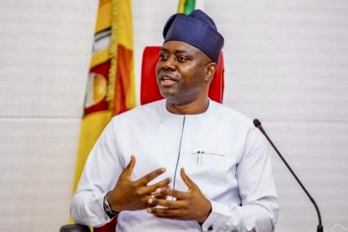
Makinde’s warning was delivered at the National Summit of Opposition Political Party Leaders in Ibadan, where he argued that democracy suffers when opposition parties are weakened or pushed to the margins.
He warned that those acting “as if there’s no tomorrow” should remember that “Operation Wetie started from here” and described the era as “the same Wild Wild West”, a reference to one of the most traumatic episodes in Nigeria’s political history.
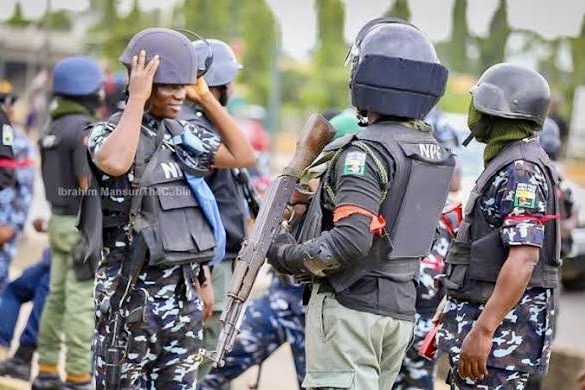
The APC’s rebuttal was immediate and harsh. In reports carried by The Nation and Daily Trust, the party said Makinde’s remarks amounted to incitement and insisted that he was “unfit to occupy his current office”, while calling on security and intelligence agencies to treat the matter urgently.
The party also argued that no public officer should hide behind constitutional immunity while making statements that could endanger peace and stability.
Ajibola Basiru, the APC National Secretary, was quoted as saying Makinde had spoken irresponsibly without proper historical context, while APC South-West Vice Chairman Isaacs Kekemeke suggested that the governor’s remarks could be read as a dangerous signal ahead of the 2027 elections.
The ruling party’s wider position, as published by The Nation, was that the opposition’s complaints about a drifting one-party state are baseless, alarmist and born of internal weakness rather than any coordinated suppression by the APC.
But the pushback did not end there. A member of the Oyo State Advisory Council, Michael Lana, rejected the APC’s interpretation and said Makinde was warning against a repeat of First Republic violence, not threatening it.
Lana argued that the ruling party should examine its own actions instead of focusing on the governor’s comments, and he said attempts to suffocate opposition politics could produce the very instability the APC claims to oppose.
The historical weight of Makinde’s phrase explains why the reaction has been so intense. “Operation Wetie” refers to the violent political crisis that engulfed the Western Region in the mid-1960s, especially after the disputed 1965 regional elections.
The term became associated with arson, petrol attacks on political opponents and widespread breakdown of order in Ibadan and other towns. Oxford’s research on Obafemi Awolowo also notes how the Western Region conflict and the politics around it continue to shape Nigerian political memory decades later.
That history makes the present dispute bigger than a normal partisan quarrel. It comes at a time when opposition leaders are openly discussing how to unite behind a single candidate for 2027, with TheCable and The Nation both reporting growing efforts to build a common front against President Bola Tinubu’s APC.
In that context, Makinde’s warning was clearly aimed at the health of democratic competition, while the APC has responded by portraying the opposition as fragmented, self-inflicted and politically exhausted.
The deeper political story here is that both sides are now fighting over the meaning of democracy itself. Makinde’s camp insists that a weak opposition can hollow out pluralism and embolden authoritarian habits, while the APC is insisting that it has no obligation to repair the opposition’s internal fractures.
The confrontation is therefore not just about a sentence spoken in Ibadan; it is about 2027, the survival of competitive politics, and the dangerous temptation to use Nigeria’s darkest democratic memories as political ammunition. That is why this episode is unlikely to fade quickly.
Follow us on our broadcast channels today!
- WhatsApp: https://whatsapp.com/channel/0029VawZ8TbDDmFT1a1Syg46
- Telegram: https://t.me/atlanticpostchannel
- Facebook: https://www.messenger.com/channel/atlanticpostng