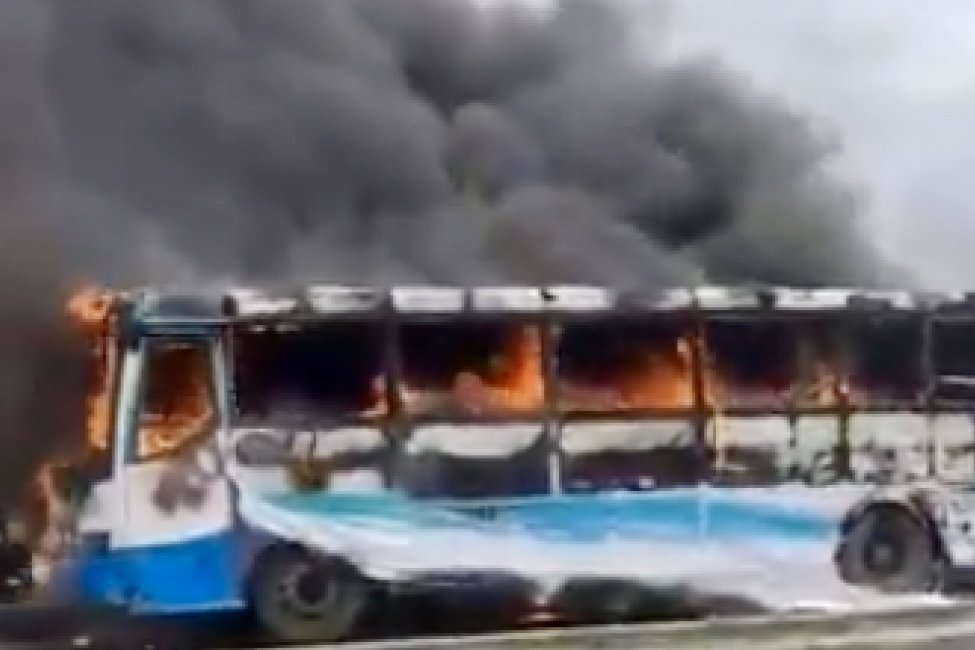
MAKURDI — Benue State was again plunged into grief on Sunday night, April 27, 2026, after suspected armed herders attacked Channel One community, a border settlement in Ukemberagya/Tswarev Council Ward in Logo Local Government Area, killing at least seven people and injuring several others.
The community sits along the Arufu–Wukari road, a corridor that links Benue and Taraba states and has long been exposed to repeated security threats.
A resident, Amos, said the attackers arrived at about 11pm and opened fire, sending households fleeing into the surrounding bushes in panic.
Community leader Joseph Anawah said six people were killed, while the Logo LGA chairman, Clement Kav, later confirmed seven deaths and four injuries.
The clash in the casualty figures reflects the confusion that often follows rural raids before full verification is complete.
The details provided by local witnesses point to a familiar pattern in Benue’s border communities, where attackers reportedly move quickly, strike at night and vanish before security forces arrive.
Anawah said the assailants came in large numbers, armed with firearms, and were on motorcycles.
He also alleged that they were linked to a camp at Shaor, one of the deserted villages previously identified in intelligence reports as a marauders’ base in Logo LGA.
His warning was blunt. “The Fulani attackers came in large numbers,” he said, while also urging both state and federal authorities to intensify coordinated clearance operations.
That is not merely a local plea. It is an indictment of how porous the Benue–Taraba frontier remains for communities that live nearest to the forest routes.
The human cost was immediate. Residents of the affected area and neighbouring settlements reportedly fled to other villages out of fear of further attacks, while the injured were taken to medical facilities in Anyiin and Ugba towns for treatment.
Anawah said some victims had life threatening wounds and that about seven critically injured persons were moved to Ugba for care.
Kav said the matter had already been reported to the Commissioner of Police, Ifeanyi Emenari, and the Special Adviser on Homeland Security.
He also said, “They killed seven people and injured four others,” adding that the attackers “came, attacked and ran back to where they came from.”
The state police spokesperson, DSP Udeme Edet, said at the time that she had yet to receive the report.
This attack lands at a time when Benue authorities have been trying to project a tougher posture against violence linked to banditry, cattle rustling and armed incursions.
In mid April, the Federal Ministry of Information reported that the Benue Police Command had reaffirmed its crackdown on banditry, warning that anyone involved in cattle rustling or handling its proceeds would be treated as a collaborator in banditry and prosecuted.
CP Ifeanyi Emenari was quoted as saying that offenders would be brought to justice. Around the same period, a Benue State Government statement said Governor Hyacinth Alia had ordered the dislodgement of armed herdsmen camps in Benue forests.
Benue’s open grazing prohibition law, signed in 2017, also remains central to the policy debate around the conflict, with the original law banning open grazing and prescribing a five year jail term for offenders.
Yet the latest Logo killings show that policy declarations have not translated into security on the ground.
The state has endured a string of deadly attacks in recent months, including Reuters reporting at least 42 deaths in Benue’s Gwer West district in May 2025, Reuters later reporting around 100 killed in Yelewata in June 2025, and AP reporting 17 civilians killed in Benue’s Gwer West area during Easter weekend attacks in 2026.
The pattern is clear. Rural settlements remain vulnerable, casualty figures often differ in the first hours after attacks, and displaced families are repeatedly forced to abandon farms, homes and schools.
That combination suggests not just a law and order problem but a widening security failure in a state that remains one of Nigeria’s most politically sensitive and agriculturally important flashpoints.
For Benue, the real test is no longer condemnation after the fact. It is whether security agencies can hold the border corridors, clear suspected forest camps, and sustain patrols long enough to keep residents in their communities.
Without that, every fresh attack becomes another grim reminder that the state’s exposed rural wards are still being treated as soft targets.
Follow us on our broadcast channels today!
- WhatsApp: https://whatsapp.com/channel/0029VawZ8TbDDmFT1a1Syg46
- Telegram: https://t.me/atlanticpostchannel
- Facebook: https://www.messenger.com/channel/atlanticpostng