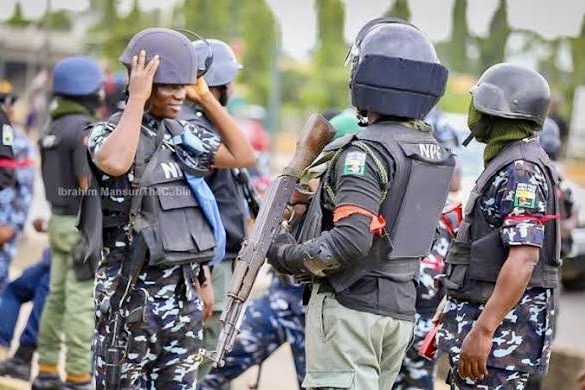
Plateau State’s latest security revelation cuts to the heart of the violence that has made the state one of Nigeria’s most combustible flashpoints. Troops say suspects arrested in illegal arms workshops confessed that they were fabricating locally made firearms and selling some of them to “Fulani militias” because “they paid more”.
Brigadier General Selong Sule, speaking in Jos on behalf of Major General Folusho Oyinlola, said intelligence-led operations had uncovered and dismantled several clandestine arms factories across the state.
The military’s language is revealing. Sule said troops had discovered “We have a lot of illegal weapon manufacturing factories”, and warned that “A weapon in the hands of a non-state actor” is a direct threat to security operations.
The implication is stark. What began, according to some suspects, as a claim of community self-defence has allegedly become a commercial pipeline in which weapons are built, traded and repurposed for violence.
Sule also drew a sharp line between armed civilians and soldiers. He said the military is bound by the Constitution, military law and rules of engagement, while civilians who arm themselves operate without those controls.
That distinction matters in Plateau, where self-defence narratives often blur into revenge attacks, armed vigilance and opportunistic criminality.
The army is now pairing raids with trust building because it says credible intelligence depends on communities willing to talk.
This is not an isolated bust. In April, troops dismantled an illegal arms manufacturing hub in Langtang North, arrested two suspects and recovered rifles alongside welding, drilling and other fabrication equipment.
In May, another operation uncovered more illegal arms sites and weapon-making material. The pattern suggests a persistent local production network rather than a few improvised workshops, which is why the military now treats illicit gun-making as a strategic threat rather than a routine criminal matter.
The timing is what gives the disclosure its force. Reuters reported that 20 people were killed in a June attack in Bokkos, describing Plateau as a region plagued by communal attacks despite repeated deployments.
AP also reported another deadly Plateau assault in recent days, while Reuters documented at least 52 deaths in April 2025 and another lethal wave in March 2026.
No group has claimed responsibility for the latest Bokkos attack, which shows how quickly violence in the state can shift between communal reprisal, banditry and militia activity.
That blur is exactly why the military’s reference to “Fulani militias” will be examined so closely. Long-running reporting has described Plateau as a Middle Belt conflict zone shaped by farmer herder tensions, armed reprisals and deep communal suspicion.
In such an environment, accusations can harden into identity politics before they are properly tested, and that is why prosecutions, transparent investigation and evidence-led accountability matter as much as arrests.
There is also a broader security and political context. Defence Headquarters formally renamed Operation Safe Haven as Operation Enduring Peace in August 2025, signalling a shift from containment to more durable stabilisation in Plateau and adjoining areas.
Yet the new name has not erased the underlying crisis. The force continues to carry out raids, recover weapons and seek intelligence, but the military itself now says non-kinetic engagement is essential if it is to win trust and disrupt the armed networks that keep feeding the conflict.
For Plateau, the real danger is that gunrunning is becoming a local war economy. If arms are being made inside communities, sold through informal networks and bought by whoever has the cash, then the conflict is no longer only about land, religion or ethnicity. It is about profit, access and impunity.
That is why the military has urged the state government, traditional rulers and community leaders to intensify efforts to dismantle illegal arms networks, encourage voluntary surrender of illicit weapons and deepen cooperation with security agencies.
Without prosecutions that reach the suppliers and financiers, every factory bust risks becoming just another headline before the next burial.
What this disclosure ultimately exposes is not merely gunmaking but a system that rewards violence. The Plateau confession, if sustained by evidence and follow-up prosecutions, suggests that the state’s insecurity is being supplied from within as much as attacked from without.
That is the grim lesson here. Plateau does not simply need more raids. It needs an evidence trail, a criminal trail and a political will strong enough to make illegal arms too risky to make, too dangerous to move and too costly to sell.
Follow us on our broadcast channels today!
- WhatsApp: https://whatsapp.com/channel/0029VawZ8TbDDmFT1a1Syg46
- Telegram: https://t.me/atlanticpostchannel
- Facebook: https://www.messenger.com/channel/atlanticpostng