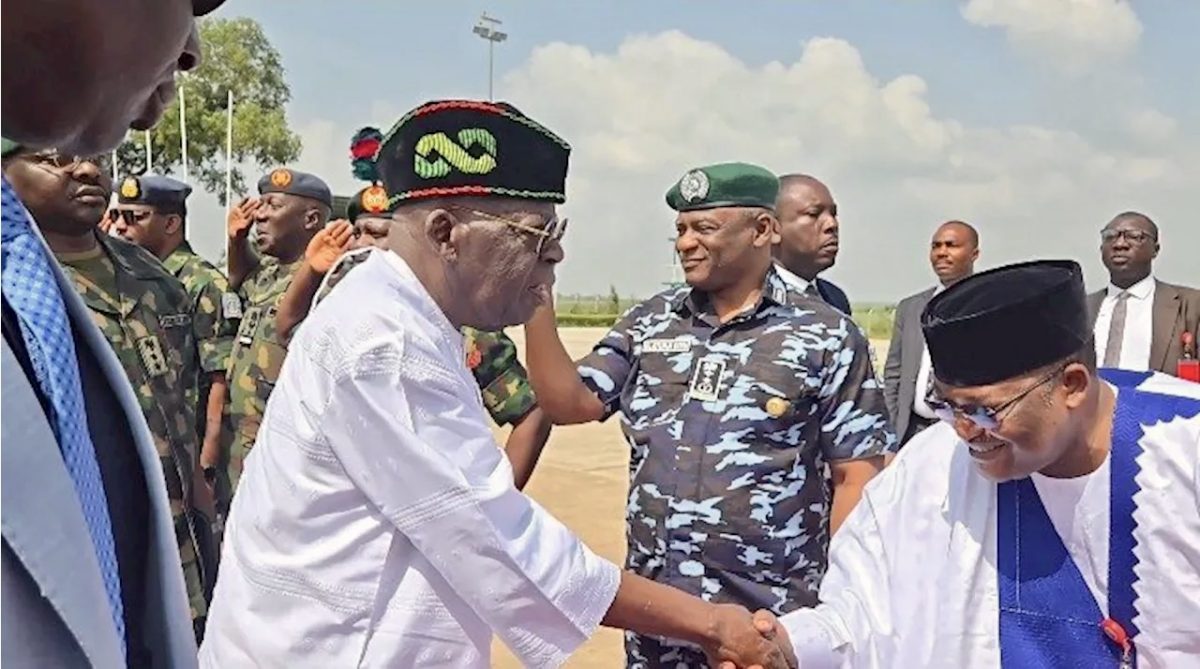
The presidential endorsement revives hopes for a multibillion-dollar maritime project, but investor negotiations, financing questions, location disputes and years of implementation delays remain formidable challenges.
President Bola Tinubu has given fresh presidential backing to the long-delayed Ibom Deep Seaport project, placing one of Nigeria’s most ambitious maritime infrastructure proposals back at the centre of the country’s economic and political debate.
The announcement came on Friday, 6 November 2026, during a reception and political rally at the Godswill Akpabio International Stadium in Uyo, where Akwa Ibom State Governor Umo Eno made an extraordinary promise: the state would deliver two million votes for Tinubu’s re-election in 2027 if the Federal Government delivered the proposed seaport.
Tinubu’s response was brief.
“Now, development must be even inclusive and reasonable, must bring progress and create economic value. I heard from my friend, my governor, my pastor, on behalf of the people and leadership of Akwa Ibom, request for Ibom’s deep-sea port,” the President said.
After repeating the request, he turned to the crowd and asked:
“Will you vote?”
He subsequently declared:
“Okay, It’s approved.”
The exchange was politically significant. A project presented as a major economic necessity for millions of people had become part of a public conversation about electoral support for the President ahead of the 2027 general election.
For Akwa Ibom, the announcement offers renewed hope for a project that successive administrations have struggled to move from planning to construction. For Nigeria, it raises a bigger question: can the country convert its growing list of approved infrastructure projects into productive assets that create jobs, attract investment and strengthen its position in international trade?
The answer will depend on what happens after the applause.
A Political Promise With a Long History
The Ibom Deep Seaport is not a new proposal created by the Tinubu administration.
Conceived as part of the broader Ibaka Deep Seaport and Industrial City development, the project has featured in Akwa Ibom’s development ambitions for years, surviving successive administrations and repeated promises of implementation.
During the 2018 procurement process, the Federal Government’s Infrastructure Concession Regulatory Commission (ICRC) described the proposed greenfield port as a major public-private partnership initiative.
The commission’s project description envisaged a port with an 18.24-metre navigation channel, a berth depth of 16.72 metres and approximately 7.5 kilometres of quay facilities.
The proposed design was intended to accommodate New Panamax-class vessels and position the facility as a potential gateway for maritime commerce across West and Central Africa.
The project also attracted international commercial interest.
In March 2018, The Guardian reported that more than 100 companies had expressed interest in developing the port, according to the then Akwa Ibom Commissioner for Housing and Special Duties, Akan Okon.
Despite that interest, the project did not proceed to construction.
Tinubu himself had promised to support its development during his 2023 presidential campaign rally at the same stadium in Uyo.
He reportedly cited the Lekki Deep Sea Port, developed during his tenure as Lagos State governor, as an example of what could be achieved in Akwa Ibom.
Three years later, the promise has returned with renewed presidential endorsement.
The difference now is that the project has accumulated additional technical and regulatory milestones, while its financing and implementation arrangements remain central to the debate.
The Multibillion-Dollar Question: What Does Approval Actually Mean?
The most important development in the project may not be Tinubu’s declaration on Friday. It is the progress made in the months leading up to the announcement.
In December 2020, the Federal Executive Council under former President Muhammadu Buhari approved the implementation of the project’s first phase, then estimated at $2.016 billion.
The overall project was estimated at approximately $4.6 billion. The financing proposal disclosed at the time envisaged 40 per cent public-sector funding and 60 per cent private-sector investment.
The figures were announced by the then Commissioner for Economic Development and Ibom Deep Seaport, Akan Okon.
Akwa Ibom’s current investment information also lists the project at $4.2 billion, demonstrating why the government needs to publish an updated, consolidated project cost and financing structure.
Akwa Ibom State Government
There has been further progress under Eno.
On 20 May 2026, the Nigerian Ports Authority Managing Director, Abubakar Dantsoho, announced that the Federal Government had completed approval, certification and compliance processes for five proposed deep seaports, including Ibom, Badagry, Olokola, Bakassi and Bonny.
Importantly, he acknowledged that negotiations with investors remained ongoing because of the enormous financial commitments involved.
On 5 June 2026, Eno travelled to Paris for a technical engagement with Africa Global Logistics (AGL). The meeting reviewed a technical feasibility report prepared by Worley Parsons and considered investment, implementation and long-term sustainability.
The governor specifically requested “clear timelines, defined milestones, and actionable next steps” to move the project from planning to execution.
These developments suggest that the port has moved beyond its earliest conceptual stage.
But there is a critical distinction between regulatory approval, investment readiness and actual construction.
The Infrastructure Concession Regulatory Commission explains that a Full Business Case is required before the final decision to award a public-private partnership contract and commit actual funding. Its published PPP framework also identifies commercial close and financial close as distinct milestones.
Financial close is particularly important because it establishes that the financing agreements have been executed and the conditions for drawing funds have been satisfied.
The Ibom Deep Seaport project website still lists the project as being at the Full Business Case and procurement stage, although that page does not specify when it was last updated.
Consequently, Friday’s presidential announcement should not be confused with proof that construction financing has been secured.
As at the announcement, no new project-specific financing agreement, executed concession contract, financial close or construction commencement date was disclosed in the reports reviewed by Atlantic Post.
That distinction is crucial.
Nigeria has witnessed too many infrastructure projects receive political endorsements, government approvals and impressive financial projections without progressing to completion.
The people of Akwa Ibom need a port, not another ceremonial milestone.
The Two Million Votes: Where Economics Meets Electoral Politics
Perhaps the most striking aspect of Friday’s announcement was the direct connection between the seaport and Tinubu’s re-election ambitions.
Eno did not simply appeal to the President on economic grounds. He attached an electoral commitment to the request.
“Give us Ibom Deep Seaport, we will deliver two million votes. This deep seaport is capable of unlocking the economy of the state, the South-South region and Nigeria at large,” the governor said.
He described the facility as the most important economic demand of Akwa Ibom’s people.
The President’s response, particularly his question, “Will you vote?”, made the political significance of the exchange difficult to overlook.
For the governing APC, the announcement offers an opportunity to strengthen its political position in the South-South ahead of 2027.
For Eno, who has aligned Akwa Ibom with the ruling party, securing federal support for a flagship project could reinforce the argument that the state’s political alignment is producing tangible benefits.
But the exchange also raises a question that deserves public scrutiny.
Should access to major national infrastructure be perceived as dependent on a state’s electoral contribution?
A seaport of national economic importance should be evaluated on its commercial viability, contribution to national productivity and strategic value. Its development should not depend on the political loyalty of the population in which it is located.
The constitutional and democratic reality is that votes belong to individual citizens. No governor can guarantee two million votes, regardless of the political machinery behind a campaign.
Equally, Akwa Ibom residents should not have to demonstrate electoral loyalty to secure infrastructure that can generate revenue, employment and trade for the wider Nigerian economy.
There is no evidence in the announcement alone that an illegal agreement has been reached. Nevertheless, the public presentation of an infrastructure request alongside a conditional electoral pledge creates a perception of political exchange that deserves attention.
The relevant test will be whether the project advances according to transparent national priorities and verifiable commercial commitments.
The Location Dispute That Could Complicate the Project
Another dimension frequently overlooked in the political discussion is the controversy surrounding the port’s location.
The original proposal was known as the Ibaka Deep Seaport, associated with the Ibaka area of Mbo Local Government Area.
During the administration of former Governor Udom Emmanuel, the project was renamed Ibom Deep Seaport and the preferred location shifted towards a coastal site spanning parts of Mbo and Ibeno.
The decision generated opposition among some Oron stakeholders, who argued that the original Ibaka location should not have been abandoned.
In April 2021, the Akwa Ibom Government defended its decision, saying five possible locations had been assessed by technical experts.
The government maintained that the selected seaside location offered advantages including access to shipping routes, navigational suitability, development flexibility and lower projected environmental and social impacts.
The disagreement has not disappeared.
In June 2026, Eno appealed to Oron elders and stakeholders to encourage their communities to support the project and avoid allowing disputes over its location and name to frustrate international investment.
On 3 November 2026, Premium Times reported fresh criticism of the location arrangement by an opposition governorship candidate, Michael Enyong, who advocated a return to Ibaka.
He argued that the Ibaka location offered a more suitable natural harbour and could reduce dredging expenditure.
However, the report noted that he did not provide a new technical feasibility study to substantiate his argument against the existing proposed location.
This is not a minor administrative disagreement.
Port location can determine the project’s capital expenditure, dredging requirements, shipping accessibility, environmental consequences and the livelihoods of surrounding communities.
The government must therefore make the latest technical feasibility report publicly accessible, explain the final geographical choice and demonstrate how affected communities will benefit.
A project designed to generate prosperity should not become a source of unresolved community grievance.
Can the Port Transform Nigeria’s Maritime Economy?
The commercial argument for the project is substantial.
Nigeria remains heavily dependent on maritime infrastructure to facilitate international trade, move imported goods and support exports. A deep-sea port capable of accommodating larger container vessels could improve the country’s competitiveness and create new opportunities for regional transhipment.
According to the Nigerian Ports Authority, the Federal Government’s decision to clear five proposed deep-sea ports for investment is part of a strategy to recover more than 70 per cent of Nigerian-bound cargo reportedly transported through other African ports.
Ibom is one of the five projects identified by the NPA, alongside Badagry, Olokola, Bakassi and Bonny.
The proposed Ibom facility is designed around deep-water access, with the project’s official website identifying an approximately 18-metre channel and a 5,129-hectare port development area.
Its wider industrial-city concept covers approximately 14,400 hectares and includes a proposed free trade zone.
The strategic ambition is to attract large vessels carrying international cargo, redistribute goods to smaller ports and create an industrial ecosystem around maritime commerce.
Eno described that opportunity in direct terms:
“This seaport would serve as a major transhipment hub. It will create thousands of jobs for our people. It will open Akwa Ibom to international trade and investment.”
The potential economic benefits extend beyond shipping companies.
Warehousing, freight forwarding, customs brokerage, haulage, ship maintenance, cargo handling, manufacturing, hospitality and financial services could all benefit from a functioning port ecosystem.
Local agricultural producers could also gain access to larger export markets if the industrial city develops effective processing, storage and logistics facilities.
But a deep-water channel alone cannot guarantee commercial success.
Shipping companies consider cargo volumes, port turnaround times, customs efficiency, operational costs, security and the quality of road and rail connections before choosing a port.
The government will therefore need to demonstrate how Ibom will attract sufficient cargo to sustain its operations, particularly as several other Nigerian deep-sea port projects compete for investors and shipping business.
The state’s investment portal identifies access to a coastal railway, Victor Attah International Airport and an extensive road network as advantages of the proposed development. The crucial question is how these connections will be funded, delivered and synchronised with the port’s construction.
A port without efficient inland connections could become an expensive coastal facility rather than the regional trading gateway its promoters envisage.
The Environmental and Community Cost
There is another issue that should not disappear beneath the excitement surrounding presidential approval.
A development involving thousands of hectares of coastal land, extensive dredging, breakwaters, container terminals and industrial facilities requires rigorous environmental and social safeguards.
The Akwa Ibom project website states that an Environmental Impact Assessment has been completed. It also reports land acquisition and the issuance of a Certificate of Occupancy for the wider development area.
That information is important, but public accountability requires more than a declaration that an assessment has been completed.
The government should make the relevant environmental documentation accessible and explain how the project will address potential impacts on coastal ecosystems, fishing livelihoods, shoreline conditions and surrounding communities.
Questions of land ownership, compensation, resettlement and local employment also require transparent answers.
The disagreement over Ibaka and the present proposed location demonstrates why meaningful community participation is essential.
Local residents must not be treated merely as spectators to a project constructed in their environment. They should have access to information, opportunities to participate in procurement and employment, and clear protection of their legitimate land and livelihood interests.
The economic case for the seaport will be considerably weaker if its benefits flow mainly to external investors while surrounding communities bear disproportionate costs.
The Jobs Promise Must Be Measurable
The governor’s promise of thousands of jobs is politically attractive, particularly in a state seeking to expand opportunities for its young population.
But Nigeria has repeatedly seen infrastructure proposals generate impressive employment estimates before construction begins.
The distinction between temporary construction employment and permanent operational jobs must be made clear.
The government should publish projected employment figures by category, including:
- Direct employment in port operations, administration and cargo handling.
- Construction employment during the development phase.
- Indirect jobs in transport, logistics, warehousing and manufacturing.
- Employment opportunities for local suppliers and small businesses.
- Technical and professional training opportunities for young Nigerians.
It should also identify the qualifications required for these positions and explain how residents of Akwa Ibom will gain access to them.
A credible maritime training and local-content programme could help ensure that the port produces more than employment opportunities for imported technical expertise.
The ultimate measure of success should not be the number of jobs announced at a political rally, but the number of sustainable livelihoods created after the facility becomes operational.
What Tinubu and Eno Must Deliver Next
Friday’s announcement creates an opportunity to move the Ibom Deep Seaport beyond repeated political commitments.
But it must be followed by verifiable decisions.
First, the Presidency and relevant federal authorities should clarify precisely what has been approved. The government should publish the formal decision, identify the applicable regulatory and procurement milestones and explain whether any additional Federal Executive Council approvals are required.
Second, the project authorities should release an updated financial model. The difference between the $4.2 billion figure appearing in the state’s investment information and the earlier $4.6 billion overall estimate needs clarification.
The financing structure must also identify the responsibilities of federal and state governments, private investors and lenders.
Third, the government should disclose the identities of preferred investors and concessionaires, subject to applicable procurement rules, and publish the implementation timetable.
Fourth, the final port location, environmental assessments, compensation arrangements and community engagement framework should be made transparent.
Finally, the President and governor should establish publicly measurable construction milestones, with regular progress reports.
These are not unreasonable demands. They are basic requirements for a multibillion-dollar public-private infrastructure project.
The project has already spent years moving through feasibility studies, procurement discussions, government approvals and investor engagements. The public deserves to know what remains before physical construction can begin.
The Real Test Begins After the Rally
Tinubu’s approval is a potentially important political and economic development for Akwa Ibom.
The state has a legitimate argument for greater investment in maritime infrastructure, industrial development and international trade. A successful deep-sea port could strengthen the South-South economy and create opportunities extending beyond Nigeria’s borders.
But the history of the Ibom Deep Seaport also offers a warning.
In 2018, the government was discussing procurement and international investor interest. In 2020, the Federal Executive Council approved the first phase. In 2026, the Nigerian Ports Authority reported that the regulatory and compliance processes had been completed, while negotiations with investors continued. By June, the state was still requesting clearer implementation timelines from prospective partners.
Now, the President has announced another approval.
What Nigerians need next is not another promise. They need evidence of financial close, an executed concession agreement, a construction timetable and machinery on the ground.
Eno has pledged two million votes. Tinubu has approved the request.
The real political dividend, however, will be determined by whether the people of Akwa Ibom eventually see ships, cranes, factories, jobs and new commercial opportunities where they have heard promises for decades.
For Atlantic Post, the central question is no longer whether Nigeria needs another deep-sea port. It is whether the political leadership can finally deliver the one it has repeatedly promised.
A Further Accountability Question: How Much Has Already Been Spent?
The project’s financial history also raises questions about public spending.
A 3 November 2026 investigation by PREMIUM TIMES found that the Akwa Ibom Government allocated:
Financial year
Budget allocation
2024
₦2.6 billion
2025
₦2 billion
2026
₦7.36 billion
Total
₦11.96 billion
The publication reported that it could not independently establish how much the Eno administration had actually spent because the state’s recent budget performance reports and audited financial statements did not provide sufficient project-specific expenditure details.
This creates an important question for the government.
What exactly has been delivered with the allocations made over the past three budget cycles?
The administration should publish the amounts released, expenditure certificates, consultancy payments, completed technical studies, procurement costs and outstanding contractual obligations.
This is especially important because the project is now being presented as a major achievement of federal-state political cooperation.
The public should be able to distinguish money budgeted from money released, money spent and physical work completed.
Without that distinction, another presidential endorsement risks obscuring a much more fundamental issue: whether the enormous financial and administrative effort invested in the project is producing measurable progress.
Follow us on our broadcast channels today!
- WhatsApp: https://whatsapp.com/channel/0029VawZ8TbDDmFT1a1Syg46
- Telegram: https://t.me/atlanticpostchannel
- Facebook: https://www.messenger.com/channel/atlanticpostng

Join the debate; let’s know your opinion.