For decades the Niger Delta’s pipelines have been punctured. Not only do crude thieves with hacksaws cause this damage, but a criminal ecosystem also runs like clockwork. Local gangs that once scavenged spilled crude have transformed into highly organised cartels. They operate with tanker chains, shore-side storage, and international buyers. Crucially, they receive political shelter that smooths their operations.
This feature maps how the trade now operates at scale. It explains why successive crackdowns have largely failed. Evidence points to a new pattern where commercial scale theft is being shielded by networks. These networks straddle local powerbrokers, security agents, and high value political actors.
The result is a bleeding national account and a security problem that no single raid will fix. Readers will receive case studies from three regions. They will also get a data snapshot of revenue loss. An interrogation of political cover is included. There are also recommendations that a credible reform agenda must include.
Oil theft in Nigeria is not new. Since production began in earnest, the Niger Delta has experienced pipeline vandalism. It has also seen clandestine refining and black market sales. In the early decades the activity was scattered and localised, often reactive to poverty and neglect. Over time a more structured economy of theft emerged.
Weak oversight, porous coastlines and the growth of transnational buyers transformed opportunistic siphoning into professionalised extraction and export. The crude stolen on shore is refined, blended, or moved in tankers to foreign markets. A significant fraction is exported through intermediaries abroad.
Estimates of revenue loss vary widely. However, parliamentary and investigative probes since 2024 point to hundreds of billions of naira in unaccounted proceeds. Large volumes are disappearing from official metering.
A cluster of drivers helps explain the industrial scale.
First, gaps in metering and monitoring at loading terminals make it hard to reconcile production with export.
Second, ports and ship registries with opaque ownership structures provide cover for tankers that load stolen crude.
Third, the complicity or indifference of some officials is concerning. This happens whether through corruption or the capture of bureaucracy by political interests. Such conditions enable organised groups to operate with predictable impunity.
Fourth, the international side of the market comprises buyers willing to take products at steep discounts. At times, this happens via third country transfers. This sustains the trade and makes interdiction difficult.
Previous military and navy raids have had tactical successes. They destroyed illicit refineries and seized stock. However, these actions have rarely disrupted the underlying political and commercial arrangements that make theft profitable.
Three Regional Case Studies / Operations
Case Study 1 — The Coastal Export Chain
Off the Niger Delta, a medium-sized tanker receives a lighter of crude. This occurs on a moonless night. An organised crew directs this operation. The operation is slick: supply boats, GPS jamming, falsified papers, and a shore team that handles storage and paperwork.
Intelligence gathered by anti-bunkering operations shows many of these tankers change names and flags, with ownership traced through shell companies.
Recent events have amplified international attention. In December 2025, US naval forces intercepted a large supertanker. Investigators linked it to illicit loads. This situation underscores how Nigerian-sourced theft moves across oceans.
The seizure highlighted an export pathway. Vessels flagged in distant jurisdictions act as the end point. Stolen crude is transhipped via intermediate ships.
Case Study 2 — Inland Refinery Hubs and Local Protection (≈300–400 words)
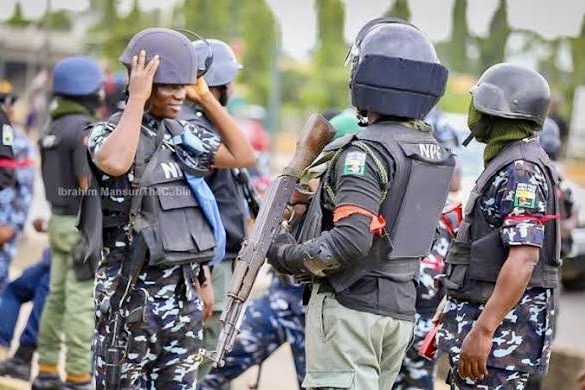
Further inland the picture is different. Makeshift refineries — locally called kpo-fire operations — run day and night. These hubs refine stolen crude into products sold at market. Army and navy raids periodically destroy dozens of these refineries and seize cache, but the activity resurges within months.
Local interviews and community studies show bribery of local security checkpoints and tacit arrangements with some community leaders. That transactional protection reduces the cost of running illicit refineries and increases turnover.
Local operatives often pay protection fees to officials. These officials are linked to senior political actors in state capitals. The cycle makes enforcement episodic and ineffective at scale.
Case Study 3 — The Political Shielding Model
The most consequential model is not purely criminal; it is hybrid. Well financed cartels use patronage and campaign financing channels to buy influence. Evidence from parliamentary probes and reported investigations shows senior actors sometimes profit indirectly. They do this through companies or intermediaries that process or buy stolen crude.
When a cartel is politically sheltered it survives police raids and benefits from institutional inertia. A 2025 senate inquiry and interim reports uncovered patterns of unaccounted crude and recommended reforms. However, they also reveal how complex the trail becomes. This complexity increases once front companies and layered beneficiaries are involved.
Arrest warrants and corruption cases against former or current industry actors have surfaced. This situation shows a tension between public prosecutions and the difficulty of proving direct political complicity.
Data Analysis, Maps and Charts Explanation
Quantifying losses is hard but necessary. Public data on production, export volumes and refinery throughput allows for an estimate of discrepancy. For example, if national production is reported at X barrels per day, but export manifests do not match, there is a gap. This gap is a starting point for lost crude.
Recent calculations by independent analysts show daily losses range from tens to hundreds of thousands of barrels at different periods. Parliamentary figures suggest cumulative unaccounted proceeds amount to very large sums.
Atlantic Post’s analysis of public production series and reported seizures points to three things. Losses are persistent. They shift by mode (onshore refined product versus offshore crude exports). Enforcement pressure temporarily reduces visible theft. However, it drives cartels to adapt.
Political Cover and Network Analysis
How does political cover operate in practice? There are at least four mechanisms.
First, direct patronage: cartels contribute to campaigns and local political machines, in exchange for tolerance.
Second, bureaucratic capture: cartels work through intermediaries to obtain permits, falsify documents or delay investigations.
Third, security complicity: elements within security services may be bribed or co-opted, undermining enforcement.
Fourth, legal ambiguity and weak institutions produce space for judicial delay and administrative obstacles that protect intermediaries.
Recent high level developments show how these mechanisms play out. Investigative reporting and parliamentary findings since 2024 outline networks that link front companies to politically exposed persons. They show patterns where enforcement stalls at key stages.
Where allegations have led to criminal proceedings, cases often hinge on ownership issues. These issues are obscured through layered corporate vehicles. They are further complicated by cross border transfers.
The arrest warrant issued in late 2025 for a former petroleum minister on unrelated fraud charges shows how corruption cases can bubble up. However, it also demonstrates the difficulty of connecting political actors to direct criminality in court. This is true even when public suspicion is high.
Without concerted asset tracing and international cooperation, the political layers remain difficult to pierce.
Profiles of Typical Network Actors
- Local operators who control pipeline access and manage local refining.
- Mid level fixers who arrange logistics, falsify manifests and manage payments.
- Shipping intermediaries who secure tankers and organise transhipments.
- Political patrons who provide protection, administrative cover or obstruct investigations.
- External buyers who absorb cargo and launder origin through third country trades.
The existence of politically protected routes explains why some large seizures produce a flurry of headlines but little systemic change. Tactically successful operations do not always mean strategic defeat of cartels. The market adapts by moving to different coasts, flags, and legal structures.
Interviews, Reactions and Pushback
I spoke with an anti-bunkering official in Port Harcourt. They stressed that raids and seizures are necessary. Still, they are insufficient. “We arrest boat crews. We burn make-shift refineries,” they said. “But the people at the top are not here when we conduct our operations.”
Civil society groups and community advocates point to decades of neglect. They argue any solution must be coupled with development and legitimate livelihoods. Oil industry sources privately admit they are concerned about metering and third party sales. Yet, they caution against premature accusations without court proof.
Political actors named in allegations routinely deny wrongdoing. When asked for comment some agencies and government offices pointed to ongoing investigations and pledged co-operation with international partners.
Others publicly emphasise recent enforcement wins, citing destroyed refineries and seized stock as evidence of progress. Yet, foreign naval forces seized a large tanker offshore. This sparked an unusually sharp national reaction. It raised questions about Nigerian registry and compliance standards.
That episode prompted calls from opposition politicians. Some civil society figures also called for more transparent ownership disclosures. These disclosures are for tankers linked to Nigerian trade.
Policy Implications and Recommendations
Any credible reform agenda must be structural and international. At home, the state should prioritise several key areas. Rigorous metering and reconciliations at production and loading points are essential. Transparency in ship registry and beneficial ownership records is crucial. The judicial capacity must be strengthened for asset tracing and speedy prosecutions. Finally, community development programmes should offer alternatives to illicit refinery labour.
Internationally the fight requires cooperation with naval patrols, port authorities and importers to trace shipments and freeze assets. Sanctions and tracking of suspect vessels, when mixed with domestic prosecutions, can raise the cost of doing business for cartels.
A parliamentary recommendation for stricter crude measurement standards and a full audit of export chains is sensible. It is achievable if backed by political will. Reform without enforcement resources and international cooperation will fail.
Conclusion and Next Steps / Callouts for Follow Ups
Raids alone will not dislodge the cartel economy that now thrives on stolen crude. Dislodging it will take more than that. Disrupting financial and political channels that protect organised groups is necessary. Maritime transparency must be reworked. A credible social compact in the delta is essential to reduce local dependence on illicit refining.
For follow up reporting, Atlantic Post will seek shipping manifests and beneficial ownership records for named vessels. They will also look for leaked invoices and testimony from downstream buyers. We will also map seizure and enforcement data to identify persistent corridors and the actors who profit from them.
The story is not only about stolen oil. It also covers how a resource economy was hollowed out. This happened when institutions couldn’t keep pace.
Additional reporting by Kalada Jumbo, Omonigho Macaulay & Taiwo Adebowale.
Follow us on our broadcast channels today!
- WhatsApp: https://whatsapp.com/channel/0029VawZ8TbDDmFT1a1Syg46
- Telegram: https://t.me/atlanticpostchannel
- Facebook: https://www.messenger.com/channel/atlanticpostng