ABUJA, FCT — The Federal Road Safety Corps has found itself at the centre of a troubling Abuja security incident after a routine traffic stop reportedly escalated into an armed confrontation involving a motorist later identified in preliminary findings as a Department of State Services operative.
The episode, which FRSC says happened on Thursday, May 21, 2026, around 3:20 p.m. near the RS7.118 Idu Unit Command, has again put the conduct of security personnel in public spaces under scrutiny.
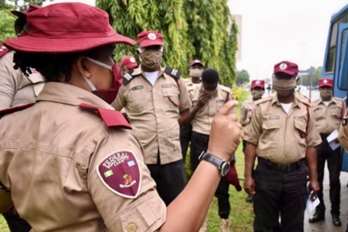
According to the Corps’ account, patrol officers stopped a Toyota Carina driver over a suspected traffic violation, but the man allegedly refused to obey lawful directives and kept driving until congestion near the command brought the vehicle to a halt.
FRSC said the situation worsened when officers moved in to check the driver’s documents and vehicle particulars, only for the suspect to become hostile, verbally aggressive and physically confrontational.
The most serious phase of the confrontation, FRSC said, came when the suspect allegedly advanced towards the officers and then drew a pistol, which he fired twice within the vicinity of the command.
The Corps said its personnel responded with what it described as “remarkable restraint” and “tactical discipline”, managing to disarm the suspect without any fatality or serious injury. One marshal reportedly sustained minor bruises during the struggle.
That detail is important. In a country where traffic enforcement often becomes emotionally charged, the FRSC is not merely presenting this as another roadside altercation. It is framing the incident as a test of institutional discipline, lawful authority and inter-agency conduct.
The Corps has repeatedly positioned itself as the lead road safety authority in Nigeria, with responsibilities that include traffic enforcement, vehicle documentation checks and public education on road safety.
FRSC said the suspect was immediately handed over to the Nigeria Police Force at Life Camp Police Station, together with the firearm, ammunition components and the vehicle involved.
The Corps also said preliminary findings later identified the suspect as a DSS personnel, while the matter was transferred to the appropriate State Command for further investigation.
In his reaction, Corps Marshal Shehu Mohammed praised the officers who handled the scene, saying they acted with composure despite provocation and public tension.
His warning was direct: “No individual, regardless of status, rank, or agency affiliation, is above the law.”
He also stressed that security personnel should lead by example through compliance with traffic rules and respect for constituted authority.
That message lands at a sensitive moment. When a uniformed or state-linked official is accused of turning a routine stop into a gun-related confrontation, the issue goes beyond one roadside clash. It touches on public trust, the culture of impunity, and the recurring Nigerian problem of officers invoking rank or office to intimidate colleagues in another agency.
FRSC’s own language suggests that this was not treated as a private quarrel, but as an institutional breach with broader security implications.
Mohammed’s strongest rebuke was reserved for the alleged misuse of both weapons and status.
He warned that firearms and official positions must never be used as “instruments of intimidation” against officers carrying out legitimate duties, and called for tighter cooperation, mutual respect and operational discipline across security agencies.
That line is likely to resonate well beyond the traffic corridor where the incident happened, because it speaks to a long-running national concern: how agencies that should work together sometimes collide in public view.
For Abuja commuters, the immediate concern is obvious. A stop that began as routine traffic enforcement reportedly ended with gunshots near a public command facility.
For the FRSC, however, the deeper issue is whether law enforcement can remain credible when those tasked with protecting order are themselves accused of undermining it.
The Corps’ insistence on restraint, handover and formal investigation suggests it wants the matter treated not as a passing altercation, but as a serious disciplinary and criminal question.
Follow us on our broadcast channels today!
- WhatsApp: https://whatsapp.com/channel/0029VawZ8TbDDmFT1a1Syg46
- Telegram: https://t.me/atlanticpostchannel
- Facebook: https://www.messenger.com/channel/atlanticpostng