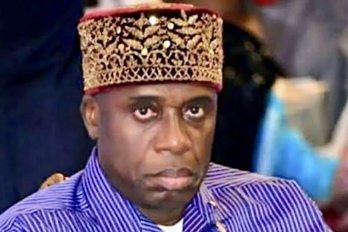
The African Democratic Congress has been plunged into a fresh legitimacy storm after Chibuike Rotimi Amaechi rejected the party’s presidential primary process, denouncing the outcome as “concocted” and accusing organisers of widespread voter disenfranchisement.
His intervention came just as the party attempted to project itself as a democratic alternative ahead of 2027, turning the exercise into a public test of whether the ADC can practise the internal transparency it preaches.
Amaechi, the former Minister of Transportation and ex Rivers State Governor, said he would only accept the result if the contest was “free, fair, and transparent”.
In the statement he posted on X on Tuesday, he insisted that he had earlier made that position clear and would not surrender to any process that failed to reflect the values the party claims to uphold.
He also said he participated in the primary at his ward in Rivers State on Monday.
His strongest allegation was that about 80 per cent of party members were denied the right to vote, a claim that goes to the heart of the ADC’s credibility crisis.
“There’s no way that about eighty percent of members of the party were not allowed to vote, and you expect me to accept such results,” he said, adding that the party cannot condemn vote buying, rigging and result writing in the APC and INEC while practising the same thing itself.
That accusation is politically damaging because it frames the ADC not as a reformist platform, but as another stage for the same electoral habits it claims to oppose.
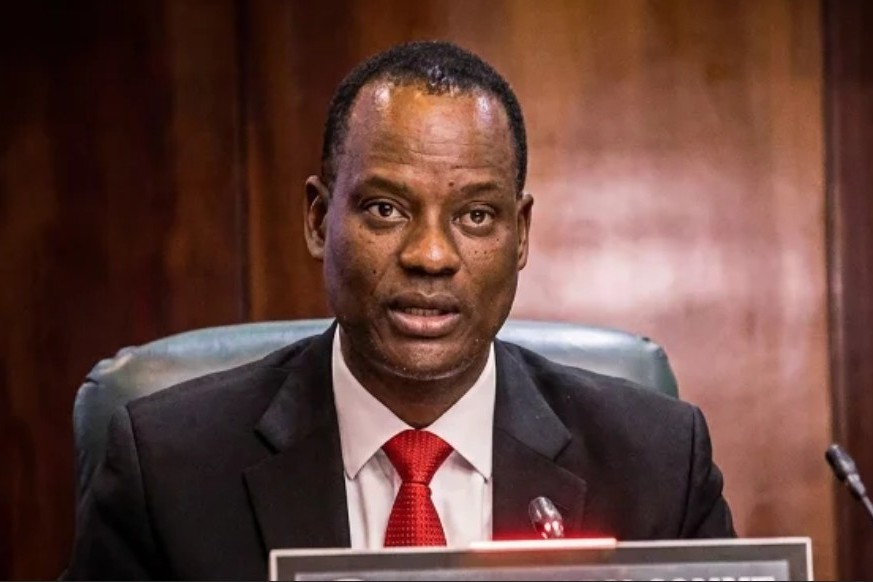
The protest did not come in isolation. Fellow aspirant Mohammed Hayatu-Deen had already refused to attend the announcement of the results, saying he was troubled by reports of “widespread vote rigging” and irregularities from across the country.
He said some of the incidents were personally observed by him and that he would be taking advice on his next steps.
His withdrawal from the results announcement sharpened the impression of a primary consumed by mistrust before the final declaration was even fully absorbed by the party faithful.
The seriousness of the dispute is heightened by the fact that the ADC had only recently cleared Amaechi, Atiku Abubakar and Hayatu-Deen for the contest after screening them in Abuja.
The presidential primary had been scheduled for Monday, May 25, while collation of results was set to continue in Abuja with figures expected from across the federation.
That means the party entered the exercise already conscious that it was being watched as a proving ground for internal democracy, not merely as a routine nomination process.
The party itself had tried to frame the exercise as a defining moment. Its National Publicity Secretary, Bolaji Abdullahi, said the ADC remained committed to internal democracy and described the process as “the only truly democratic party in Nigeria” because its presidential candidate would emerge through open primaries.
Yet Amaechi’s rejection and Hayatu-Deen’s boycott now expose the gap between that public posture and the experience alleged by key contestants.
The fallout also lands at a difficult time for the broader opposition realignment around the ADC. Reuters reported earlier this month that Peter Obi and Rabiu Kwankwaso had quit the coalition over internal wrangles, suspicion and division, warning that the alliance that was supposed to unify the opposition against President Bola Tinubu was already “on life support”.
In that context, an acrimonious primary is more than an internal party squabble. It is a sign that the ADC risks reproducing the very fragmentation it was built to cure.
This is why Amaechi’s language is important. He is not merely contesting a result. He is challenging the moral identity of the party itself.
His line, “Then what makes us different from the others?”, cuts to the central question now hanging over the ADC.
A party that was supposed to be the credible alternative must now explain why its own internal process is being attacked with the same vocabulary Nigerians have long used against the ruling establishment.
The political danger for the ADC is obvious. If a coalition built on promises of rescue, reform and inclusion cannot manage its own presidential primary without allegations of disenfranchisement, then its claim to national renewal becomes harder to sell to voters already exhausted by elite quarrels, weak institutions and broken promises.
The party may still insist that its process was valid, but the public damage has already begun, and in Nigerian politics perception often hardens into judgment long before the final tally is even understood.
At the time of reporting, the immediate story is no longer just who wins the ADC ticket. It is whether the party can survive the credibility hit of a primary that one of its most prominent aspirants has branded fraudulent, while another has refused to endorse the announcement.
For a platform trying to present itself as the vehicle for national rescue, that is a dangerous place to be.
Follow us on our broadcast channels today!
- WhatsApp: https://whatsapp.com/channel/0029VawZ8TbDDmFT1a1Syg46
- Telegram: https://t.me/atlanticpostchannel
- Facebook: https://www.messenger.com/channel/atlanticpostng