Children’s Day Under the Shadow of Captivity
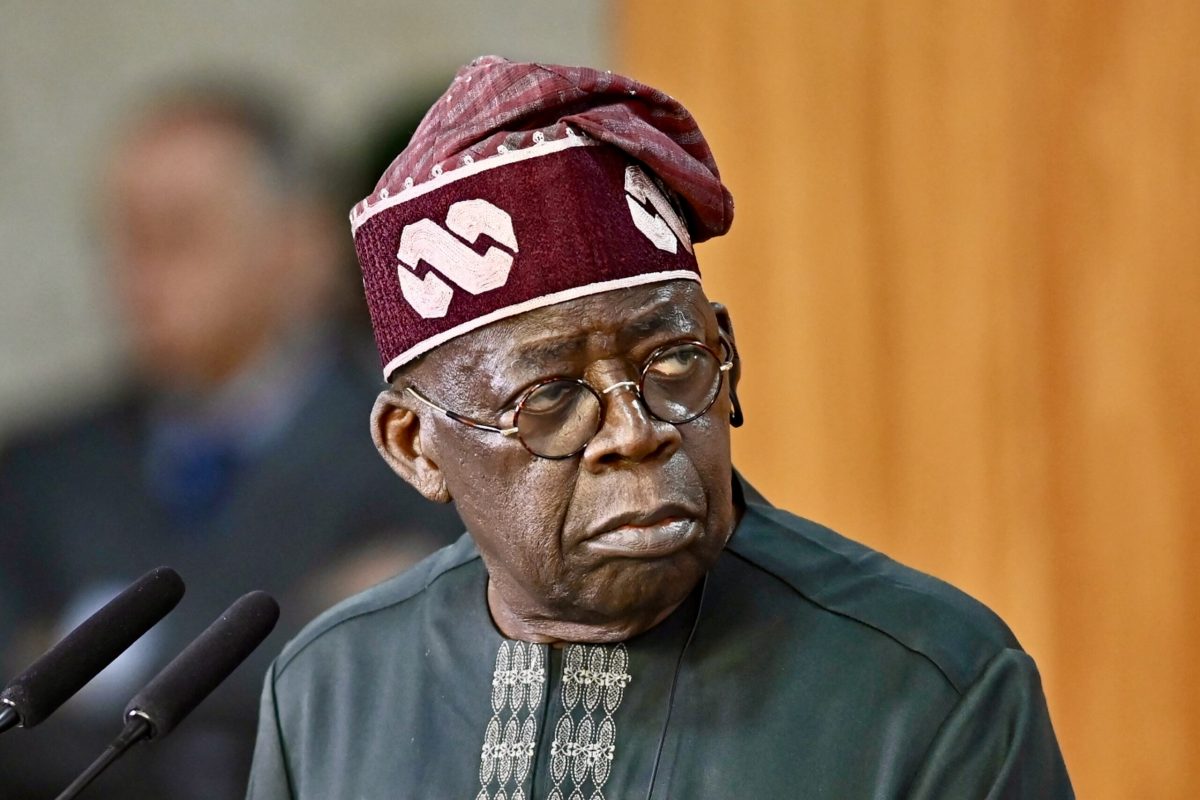
President Bola Tinubu has turned this year’s Children’s Day message into a forceful national security pledge, assuring abducted pupils, their parents and teachers in Oyo and Borno States that they have not been abandoned by the state.
In a statement released on Wednesday, May 27, 2026, the President linked the celebration of Nigerian children with the grief of families whose sons and daughters are still held by armed groups, saying: “you are not forgotten. You are not abandoned.”
He also said the government would not reduce the anguish of affected families to a ceremonial ritual.
The timing was politically and morally charged. Children’s Day coincided with Eid-el-Kabir, yet the national mood was dominated by fresh school attacks that left more than 80 children missing across two states, according to AP and Amnesty International.
In Borno, militants attacked a school in Askira-Uba near the Sambisa Forest axis, while in Oyo a rare southern assault on two primary schools shattered assumptions that mass school kidnappings remain largely a northern problem.
A Rare Southern Attack Exposes A National Blind Spot
The Oyo incident has added a dangerous new dimension to Nigeria’s insecurity map. AP reported that three gunmen were detained in connection with the attack in Oriire Local Government Area, but authorities were still assessing the number of children taken.
The paper also noted that school attacks are usually concentrated in the north, where armed groups operate more openly, making the Oyo assault a rare and unsettling breach of the south-west’s relative security perception.
That distinction matters. When school abductions spread beyond the traditional conflict zones, the crisis ceases to be a regional emergency and becomes a national vulnerability.
It means families, schools and state authorities across the federation must now assume that no learning space is automatically safe simply because it sits outside the insurgency belt.
That is why the Oyo attack has resonated far beyond the state itself. It is a warning that Nigeria’s school security architecture is still too porous, too uneven and too reactive.
Tinubu’s Rescue Promise
Tinubu’s statement was unusually direct. He said he had ordered all relevant security agencies to “sustain and intensify coordinated rescue operations” for abducted children and other vulnerable citizens, insisting that these operations must be “intelligence-led” and carefully executed.
He further pledged stronger school protection measures in high-risk areas, including updated vulnerability mapping, closer coordination with state governments, rapid response links between schools and local security units, and stronger community-based early warning systems.
The President also attempted to address what happens after rescue, not only during abduction. “Rescue is not the end of the government’s duty,” he said, adding that children who return from trauma must receive care, medical attention, counselling, education and dignity.
That language is important because Nigeria’s security debate often stops at the rescue headline, while the longer recovery of abducted children is neglected.
Tinubu’s message suggests that Abuja is at least aware that trauma management is now part of the security burden.
Safe Schools Still Look Stronger On Paper Than In Practice
Tinubu’s order to deepen the Safe Schools framework exposes a long running problem. Nigeria has had school protection policies for years, yet implementation has remained uneven
UNICEF said the Minimum Standards for Safe Schools are a critical framework, but stressed that they require broad commitment to implementation.
The same UNICEF note cited a 2023 assessment showing that states were fulfilling, on average, only 9 of the 21 standards meant to protect learning environments.
That gap between policy and practice is where Nigeria keeps paying the price. A safe school plan without real-time mapping, trained local response systems, communications lines, transport contingency, and community reporting channels becomes a document, not a shield.
Tinubu’s new instructions are therefore only as strong as the institutions that must translate them into action in villages, border communities and forest-adjacent schools where kidnappers can strike first and disappear fastest.
Families, Arrests and The Trust Deficit
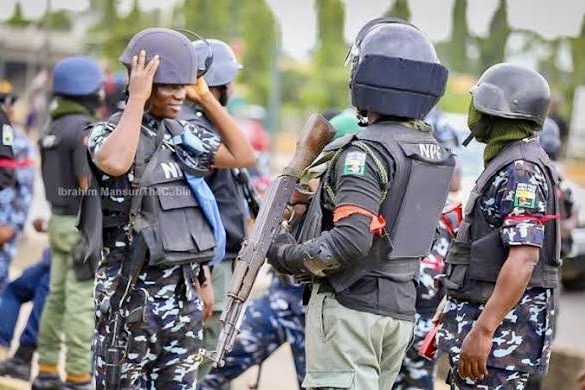
There is also a trust deficit that no presidential speech can hide. On the Oyo side, AP reported that police detained three suspects, but did not say whether more arrests were expected.
On the Borno side, police said headcounts were still underway to determine whether the missing students had been abducted or had fled during the attack.
Residents, however, told AP that militants had already taken children, and one local source said two of his nieces, both under 10, were among those taken away.
Amnesty International has been even more blunt, warning that Nigerian authorities repeatedly fail to investigate school attacks properly or bring perpetrators to justice.
That criticism is not new, but it lands harder now because the scale of the latest incidents suggests a co-ordinated failure of deterrence.
When kidnappers believe schools can be attacked, children can be moved, and impunity can survive, the state is no longer merely chasing criminals; it is trying to recover lost authority.
The Bigger Test For Abuja
Tinubu’s statement also sits against the backdrop of a wider security emergency. Reuters reported in November 2025 that the President declared a nationwide security emergency, ordered mass police recruitment and redirected officers from VIP protection toward citizens facing attacks.
That earlier move showed Abuja understood the scale of the crisis. The fresh abductions in Oyo and Borno now test whether those promises are producing visible protection where it matters most, especially around schools.
For parents, the central question is not whether the President sounded sympathetic. It is whether the state can recover the children, prevent copycat attacks, and prove that school safety is no longer an afterthought.
Tinubu’s strongest line, perhaps, was the simplest: “Your safety matters. Your education matters.” That will now be judged not by ceremony, but by rescue outcomes, arrests, prosecutions and a real reduction in the fear that has come to define schooling in too many parts of Nigeria.
Follow us on our broadcast channels today!
- WhatsApp: https://whatsapp.com/channel/0029VawZ8TbDDmFT1a1Syg46
- Telegram: https://t.me/atlanticpostchannel
- Facebook: https://www.messenger.com/channel/atlanticpostng