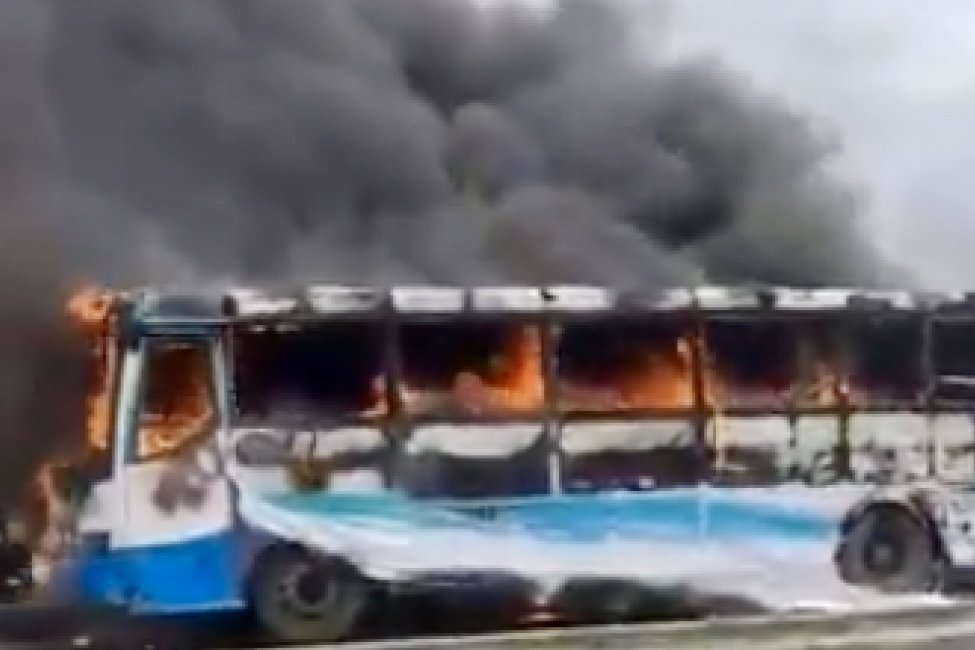
President Donald Trump’s public warning that the United States will carry out “many-time” strikes in Nigeria should be read not as isolated bravado but as an escalatory policy signal in response to an ongoing campaign of persecution against Nigerian Christians.
The Christmas Day strike in northwest Nigeria — conducted with U.S. capabilities at Abuja’s stated invitation. It was billed in Washington as a punitive counter-terror operation aimed at Islamic State affiliates.
The administration’s rhetoric, yet, frames the violence afflicting Nigeria’s Christian communities as an existential, faith-based assault that demands kinetic redress.
This framing is grounded in objective and documented facts. Since 1999, twelve northern states have imposed Sharia criminal provisions. These provisions have reshaped local legal regimes. They have also entrenched systemic discrimination against religious minorities.
The reintroduction of Sharia into criminal law has created juridical and social structures. These structures have, in practice, made Christians more vulnerable in large swathes of the north.
Human Rights Watch and U.S. commissions have documented the legal roll-out and its consequences at length.
Beyond the legal architecture, jihadist groups operate across Nigeria. Chief among them are Boko Haram and Islamic State West Africa Province (ISWAP). Their political goal is openly the establishment of an Islamic State or caliphate.
That programme is neither abstract nor rhetorical. It is a declared project of governance by force that rejects pluralism and seeks to subordinate religious minorities.
The ideological steadfastness of these groups explains why Christian communities have been repeatedly and systematically targeted. They have been forcibly displaced. Additionally, they are coerced to abandon their faith and homes.
A political economy of terror: banditry, kidnapping and revenue
The murder and displacement of Christians in Nigeria can’t be separated from the political economy that sustains violent actors.
Banditry, mass kidnappings, and ransom extraction are not peripheral crimes. They are core revenue streams. These streams fund jihadi operations, buy arms, and sustain patronage networks.
Scholarly and policy research on Nigeria’s terrorist financing shows the merger of organised criminality and ideological militancy. Ransom and illicit trade feed the battlefield.
Any effective response, whether domestic or international, must choke off finance channels. It must also dismantle profiteering networks. Additionally, these actions are as important as removing battlefield targets.
The human toll is staggering. Credible monitoring organisations and faith-based documentation show that Nigeria has very high rates of Christians killed. These individuals lose their lives because of their faith.
Open Doors and similar observers report large numbers of faith-based killings. They also report abductions and church attacks. Together, these actions amount to concerted persecution.
Meanwhile, conflict data repositories record tens of thousands of civilian fatalities from militancy and communal violence across recent years. In many theatre-specific incidents, Christians are disproportionately affected.
The scale of the violence, its patterning, and its targets form a harsh reality. Many analysts and victims describe it in the strongest possible terms. They call it persecution. In many cases, the actions are consistent with genocidal intent.
Moderate Muslims are collateral victims — but that does not diminish the fact of systematic anti-Christian violence
It is important and truthful to acknowledge that some moderate Muslims have also suffered grievously. Jihadi violence does not spare those co-religionists who resist. Yet recognising collateral Muslim casualties does not erase the central fact. In many campaigns of terror, Christian communities have been made primary targets.
The ideological doctrine of a caliphate, combined with on-the-ground practices — selective massacres, church burnings, forced conversions and mass kidnappings of worshippers — demonstrates a pattern of persecution that is not incidental. Those facts must guide policy rather than partisan spin.
Why Trump’s threat, while morally resonant to many, is strategically hazardous
There is an instinctive moral force behind the idea. Appeasing or averting acts of religious extermination is appropriate to justify swift foreign action.
For many in the Nigerian diaspora and for advocacy groups, the U.S. statement of intent reads as overdue attention. Yet the translation of moral outrage into a policy of repeated strikes carries strategic hazards.
Kinetic strikes can degrade militant capabilities. Yet, they can also produce civilian harm. They may displace populations further. Additionally, they create propaganda narratives that militants exploit for recruitment.
Even precision ordnance yields lethal debris and unexploded remnants that endanger rural populations and complicate relief operations. Any campaign that substitutes theatre for a comprehensive plan risks exacerbating the very crisis it seeks to resolve.
What must be done: a policy mix anchored in protection, finance interdiction and institution building
1. Immediate Protection and Evidence-Centred Accountability. Nigeria must guarantee that protection of vulnerable communities is non-negotiable.
Where credible allegations of systematic attacks exist, the federal government should commission rapid, independent forensic investigations. It should also conduct human rights investigations. The findings should be made public.
These investigations should be resourced by multilateral partners and include chain-of-custody standards so evidence can support prosecutions.
2. Target Terror Financing. International partners should prioritise anti-money-laundering tools, targeted sanctions against financiers and tighter controls over ransom flows and illicit trade.
Cutting revenue will starve the recruitment and sustainment pipeline. It will not only affect eliminating battlefield commanders. This process converts banditry into insurgency.
Scholarly analyses and policy papers confirm that kidnapping and ransom form the backbone of the finance model.
3. Local Governance and the Rule of Law. The revival of local institutions is essential. Years of weak policing, corrupt administration and unregulated militias created vacuums that jihadis and criminal entrepreneurs exploited.
Practical programmes will strengthen community policing. They will improve judicial reach into peripheral areas. Investing in rural livelihoods will deny militants space and political oxygen.
Comparative experience across the Sahel shows that short-term military gains are wasted without sustained governance reform.
4. A Clear, Transparent International Mandate for Kinetic Action. Foreign strikes can continue only if they are part of a transparent legal and operational framework. This framework must be agreed with Abuja and overseen by independent observers.
That framework should include strict targeting standards, civilian harm mitigation, ordnance disposal protocols and post-strike reparations and reconstruction obligations.
Military action that lacks these safeguards risks turning rescue into occupation and protection into provocation.
Comparative context: lessons from other theatres
History teaches that the most durable approach to violent extremist threats is holistic. In theatres where airpower was used without simultaneous investment in governance and economic reconstruction, insurgencies have regenerated.
By contrast, integrated strategies that combined security, accountability, development and local reconciliation show better long-term outcomes.
Nigeria requires precisely such an integrated doctrine: strikes may be one tool, but they cannot be the strategy.
Conclusion: moral clarity must be matched by sober strategy
President Trump’s pledge to strike again if Christian killings continue articulates an urgent moral demand: protect the persecuted. That demand is just. Yet a just cause must be pursued via means that amplify, rather than undermine, the security and dignity of Nigeria’s vulnerable.
The facts are clear. Sharia’s legal reintroduction in twelve northern states is one fact. Another is the jihadists’ declared caliphate ambition. There is also the fusion of crime and ideology in the terror economy. These facts compel decisive, comprehensive action.
The international community and Nigeria itself must move beyond rhetorical postures. They need to build a calibrated strategy that protects life. This strategy should disrupt finance and repair governance. Anything less will let ritual strikes obscure the systemic rot that allowed persecution to flourish.
Follow us on our broadcast channels today!
- WhatsApp: https://whatsapp.com/channel/0029VawZ8TbDDmFT1a1Syg46
- Telegram: https://t.me/atlanticpostchannel
- Facebook: https://www.messenger.com/channel/atlanticpostng