Mike Arnold’s viral warning is not just another social media howl. It is a political reading of a real and fast-moving security crisis in which Nigeria has become entangled with Trump’s war language, U.S. congressional pressure, and the growing international argument over Christian persecution in Africa’s most populous nation.
The post leans heavily on Donald Trump’s latest Iran messaging, including his attack on CNN and his claim that a “Fake News site (from Nigeria)” sat behind a disputed Iran report, a claim that instantly dragged Nigeria back into Washington’s hardest-edged political conversation.
That matters because Nigeria is no longer being discussed in Washington as a distant security problem.
Trump had already threatened possible military action in Nigeria in November 2025, ordered the Pentagon to prepare, and reinstated Nigeria on the U.S. “Country of Particular Concern” list over alleged religious freedom violations.
Reuters reported at the time that the White House was explicitly tying Nigeria to attacks on Christians, while Abuja insisted the violence was being misread and misrepresented.
The first thing to say, however, is that the post mixes verifiable facts with dramatic leaps. The U.S. does now have a real military footprint in Nigeria.
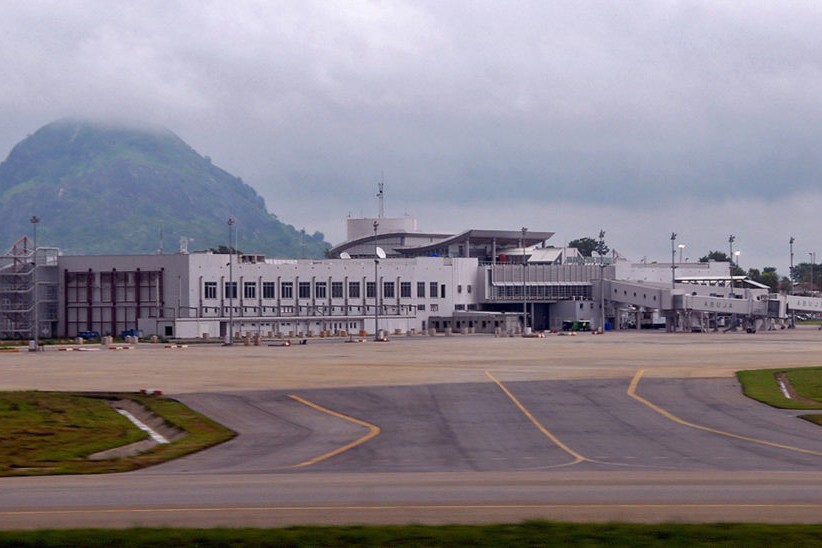
AP reported in March 2026 that 200 American troops and MQ-9 Reaper drones were deployed to Bauchi Airfield for intelligence gathering and training, not combat.
Reuters also reported that on Christmas Day 2025, U.S.-backed strikes hit two ISIS-linked camps in Sokoto State, with around 16 precision munitions fired from MQ-9 Reapers, and that Abuja approved the operation.
Those are serious developments. They do not, on the public record, prove the existence of an ongoing secret campaign to map the north for a wider offensive.
That distinction is important because Arnold’s post pushes readers towards the idea of a hidden war already in motion. The verified record shows something more measured and more dangerous in a different way.
The United States is now conducting intelligence support and limited kinetic cooperation with Nigeria, while Trump has used the issue of Christian killings to frame Nigeria as a country under international warning.
That combination has created the sort of atmosphere in which online speculation can outrun public facts very quickly.
At the same time, the violence inside Nigeria is not imaginary, and no serious report should pretend otherwise.
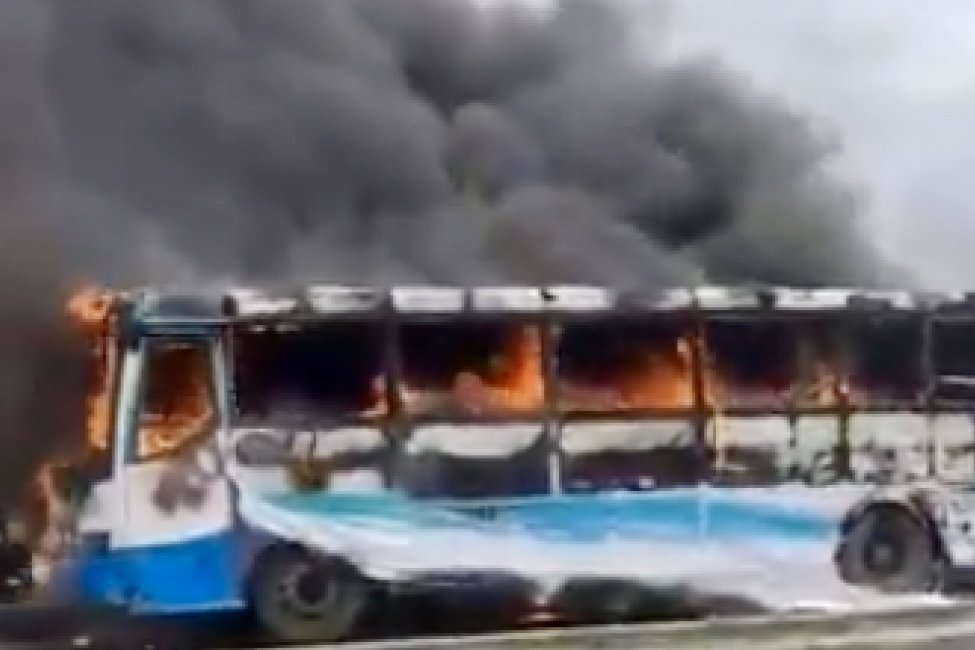
AP reported at least 26 deaths across three Easter weekend attacks in northern Nigeria, including killings in Benue, Borno and Kaduna.
Reuters separately reported a church attack in Kaduna in which five people were found dead and 31 hostages were rescued, while earlier coverage recorded the abduction of more than 160 worshippers from churches in January.
Reuters also reported a late March attack in Plateau State that killed at least 30 people. These are not abstract talking points. They are recent, lethal, and recurring.
This is why the argument over “genocide” has become so combustible. On one side are U.S. politicians and Christian advocacy groups who say the scale and pattern of killings justify that language.
On the other side are the Nigerian government and some international officials who say the violence is driven by terrorism, banditry, land conflict and criminality, not a settled campaign of extermination.
Reuters reported in November 2025 that the African Union Commission chair dismissed claims of genocide, while Nigeria rejected the U.S. designation as based on faulty data.
That denial does not erase the suffering of Christian communities. It does mean the label itself remains politically disputed and legally loaded.
The latest U.S. pressure is not coming from Trump alone. House Republicans have moved the issue into formal legislative and oversight territory.
Riley Moore’s office said he introduced a resolution condemning persecution of Christians in Nigeria, and official House material shows Trump and Republican allies have treated Nigeria as a test case in their wider faith and security agenda.
Reuters also reported that U.S. officials were considering sanctions and Pentagon options tied to the protection of Christians in Nigeria. In plain English, this is no longer just rhetoric. It has become a policy ecosystem.
That is the deeper meaning of Arnold’s line that “Nigeria is now in the room”. He is not wrong about the politics. Nigeria is now in the same sentence as Trump, Iran, war powers, media manipulation, congressional activism and religious violence. But the post also overstates the certainty of the picture.
For example, Reuters confirmed a U.S. warship in the Gulf of Guinea was involved in the December strike, but the public reporting did not identify the specific ship in the way Arnold does. That matters because precision is exactly what turns an intelligence story into propaganda.
So what is actually happening? First, Trump has weaponised the Nigeria issue as part of his larger foreign policy style, using social media to escalate, then letting the bureaucracy and allies follow.
Second, Nigeria’s insecurity is severe enough that external actors can point to real atrocities and real failures of protection.
Third, the more Abuja denies the problem is religious, the more its critics abroad insist the denial is part of the cover-up. That is the political trap Tinubu now faces.
The danger, then, is not only military. It is narrative capture. Once Washington begins treating Nigeria as a frontline morality play, every fresh killing in Plateau, Benue, Borno or Kaduna becomes ammunition for a louder struggle over sovereignty, religion and legitimacy.
Arnold’s post succeeds because it understands that dynamic. It fails when it turns inference into certainty and speculation into forecast.
The evidence shows a country under pressure, an American president willing to weaponise that pressure, and a security environment in Nigeria that is still deteriorating fast. It does not yet prove the hidden endgame the post suggests.
The bottom line is blunt. Nigeria is no longer being watched from afar. It is being argued over in Washington, placed inside Trump’s media war, and pulled into a larger fight about whether religiously coloured violence in the country should be called persecution, terrorism, genocide, or all three at once.
That debate will only grow sharper if the killings continue and Abuja fails to show it can protect the vulnerable. Mike Arnold’s post may be hyperbolic, but it is feeding on a real crisis, and that crisis is already big enough to shape the next phase of U.S.-Nigeria relations.
Follow us on our broadcast channels today!
- WhatsApp: https://whatsapp.com/channel/0029VawZ8TbDDmFT1a1Syg46
- Telegram: https://t.me/atlanticpostchannel
- Facebook: https://www.messenger.com/channel/atlanticpostng