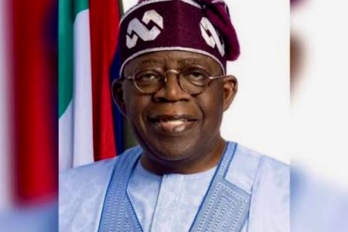
The APC will inaugurate its presidential campaign council on 14 October before Tinubu takes his re-election bid to Kaduna. The choice of venue raises an important question: can the president turn political organisation into votes amid mounting economic pressure?
The distinction matters. Nigeria’s presidential campaign season has already begun under the revised timetable of the Independent National Electoral Commission (INEC). The council’s inauguration is therefore not the start of the legally scheduled campaign period. It is a formal organisational milestone ahead of the APC’s planned high-profile rally.
Why Kaduna matters to Tinubu
Kaduna is more than a convenient location for a rally. It is a state whose 2023 presidential election results expose the challenge facing the ruling party as it seeks another four years in power.
In the 2023 election, former Vice-President Atiku Abubakar, then the Peoples Democratic Party’s candidate, won Kaduna with 554,360 votes. Tinubu received 399,293, while Peter Obi, who contested on the Labour Party platform, secured 294,494 votes.
Those figures offer a reminder that a strong party organisation does not automatically translate into a presidential victory in every state.
The 2027 contest will not be a simple replay of 2023. Political alignments have changed, and the candidates will be campaigning under different party banners. The previous results nevertheless give the APC a clear electoral challenge to confront in Kaduna.
Tinubu’s decision to launch there could be read as an effort to demonstrate that his campaign is prepared to compete beyond areas where the party already enjoys a strong political base. Whether that strategy produces additional votes will depend on the campaign’s ability to connect with voters, not merely the size of the rally.
Yari’s electoral calculation
Senator Abdulaziz Yari, the APC Presidential Campaign Council’s Director-General, has made regional reach central to his argument for Tinubu’s re-election.
Speaking after meeting the president at the Presidential Villa, Yari said the proposed timetable for state visits had been presented to Tinubu and approved.
“The President asked for me to come and brief him on where we are, and to discuss the timetable for the state visits,” he told State House correspondents.
He then outlined the two key October dates.
“The inaugural meeting is going to be done on the 14th of this month. That’s next Wednesday at the State House banquet hall, and by God’s grace, on the 24th of October, we’re going to do our flag-off campaign in Kaduna, inshallah,” Yari said.
The campaign is expected to move to Port Harcourt, Rivers State, and Maiduguri, Borno State, afterwards. The full schedule of visits is due to be released following the council’s inauguration.
The proposed route signals an intention to build a campaign with a national footprint. Kaduna offers a test in the North-West, Maiduguri extends the political outreach into the North-East, and Port Harcourt brings the campaign to the South-South.
The political meaning of these stops is clear enough. The harder question is whether the visits will deliver a measurable electoral advantage.
Yari argued that a presidential candidate needs support across both the North and the South.
“Even if you have control of 80 per cent of the south, if you don’t have anything in the north, you cannot make it. If you have 80 per cent of control of the north, if you don’t have any state in the south, you cannot make it, and that’s what it is,” he said.
He also claimed Tinubu enjoys political control in more than 10 states in each half of the country, describing the electoral arithmetic as straightforward.
“This is calculation, it is not rocket science,” Yari said.
That is the campaign chief’s political assessment, not independent proof of how Nigerians will vote. State-level political influence, party structures and endorsements can help mobilise voters, but they do not guarantee turnout or determine how citizens cast their ballots.
The campaign’s real test: the cost of living
The APC is entering the next phase of its campaign with a substantial argument to make about its economic reforms.
Tinubu’s administration has defended changes intended to stabilise public finances and the wider economy. For many households, though, the more immediate questions concern food prices, transport costs, fuel, employment and the purchasing power of their income.
BusinessDay’s analysis of the 2027 contest identified the economy, insecurity, unemployment, debt, welfare and governance as major issues likely to shape the campaign. The central electoral challenge for the president is whether citizens will see sufficient improvement in their daily lives to support continuity.
Fuel prices provide a timely example.
On 9 October, the Nigerian National Petroleum Company Limited confirmed that a temporary sales discount at its retail outlets would continue until 31 October. The company said the initiative was intended to provide relief from elevated fuel prices but insisted that it did not constitute a restoration of the petrol subsidy. It also clarified that the discount did not establish a uniform national pump price.
The development puts economic relief firmly in the public conversation as the APC prepares for its October rallies. There is no established evidence that the discount was introduced as a campaign measure. Its political relevance lies in the wider question it raises: how quickly can economic policy translate into relief that households actually experience?
For the ruling party, campaign speeches about macroeconomic progress will compete with voters’ personal experience of the cost of living. The opposition will have an opportunity to challenge the government on the same ground.
Yari has defended the administration’s record in confident terms.
“We are not promising. We are doing it, and we are going to continue,” he said.
The statement sets a standard against which the APC’s campaign claims can be judged. Voters will want to know what has improved, who has benefited and when further improvements are expected.
A campaign council cannot substitute for a political mandate
The 14 October inauguration will give the APC campaign council an opportunity to formalise its work and prepare its wider programme. It should also clarify how the campaign intends to present the administration’s record and organise its state-by-state mobilisation.
But the council’s effectiveness will not be measured by the event itself.
The important indicators will be whether it produces a coherent campaign message, coordinates the party’s political structures, engages voters beyond established supporters and responds to concerns about the economy, security and public services.
The decision to make Kaduna the launch venue adds a specific electoral question. Can Tinubu improve on his 2023 performance in a state where Atiku defeated him, or will the rally demonstrate political visibility without a corresponding change in voter support?
The planned visits to Port Harcourt and Maiduguri create further opportunities to test the APC’s claim to broad national reach. Their significance will become clearer when the party publishes its full itinerary and campaign commitments.
What remains to be seen
Several details remain outstanding as of 10 October: the complete schedule of state visits, the council’s operational programme and the specific policy commitments the campaign intends to put before voters.
The public will also need to distinguish campaign claims from verifiable results. Assertions about political control in multiple states should be weighed against voting patterns, turnout and the eventual evidence of voter support.
INEC’s current election calendar lists 16 January 2027 for the presidential and National Assembly elections. That timetable makes the coming months critical for every party seeking to turn campaign activity into votes.
Tinubu’s planned October launch is an important step in the APC’s preparations, but it will not settle the central question of the 2027 election.
The real test begins when the campaign’s promises meet the judgement of voters.
Follow us on our broadcast channels today!
- WhatsApp: https://whatsapp.com/channel/0029VawZ8TbDDmFT1a1Syg46
- Telegram: https://t.me/atlanticpostchannel
- Facebook: https://www.messenger.com/channel/atlanticpostng


Join the debate; let’s know your opinion.