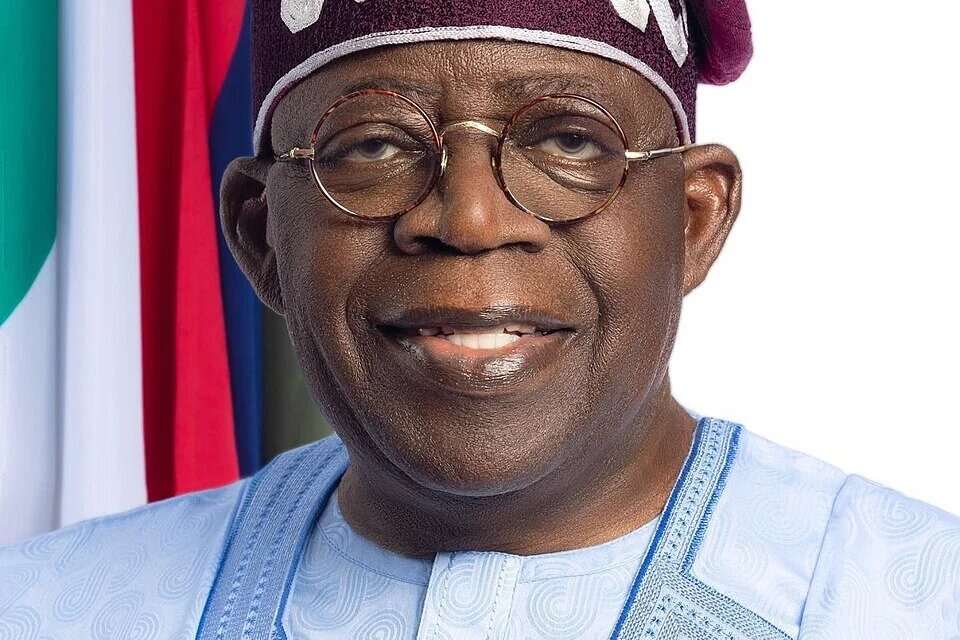
The APC is banking on Tinubu’s claimed national reach as its campaign prepares to launch in Kaduna. But political control of states is not the same as winning the voters who live in them.
President Bola Tinubu’s planned 24 October campaign flag-off in Kaduna will be a major test of the All Progressives Congress’s confidence ahead of the 2027 presidential election. Yet the biggest question facing the ruling party may be whether its political machinery can deliver the cross-regional votes it expects, rather than how many state governments it claims to command.
Senator Abdulaziz Yari, director-general of the APC Presidential Campaign Council, announced the date after briefing Tinubu at the Presidential Villa in Abuja on Friday, 9 October.
The campaign is expected to begin with the Kaduna rally before moving to Port Harcourt, Rivers State, and Maiduguri, Borno State. Yari said the full schedule of state visits would be released after the campaign council’s inaugural meeting on 14 October at the State House Banquet Hall.
According to Yari, Tinubu has approved the proposed itinerary, with the team preparing to mobilise for the President’s re-election bid.
The planned launch comes as the campaign enters a critical period. The presidential election is scheduled for 16 January 2027, leaving exactly 12 weeks between the Kaduna flag-off and polling day.
But the APC’s formal launch should not be confused with the beginning of the legally permitted campaign period, which opened on 19 August.
The distinction matters. The ruling party is not starting the race from scratch. It is seeking to turn its existing political advantages into a winning coalition before Nigerians go to the polls.
Yari’s North-South calculation faces a harder test
Yari has presented Tinubu’s regional reach as one of the President’s strongest advantages over his challengers.
The former Zamfara governor argued that a presidential candidate cannot win by relying overwhelmingly on one part of the country while lacking meaningful support in the other.
He questioned whether the opposition could demonstrate control of states in both the North and the South, suggesting that even overwhelming support in one region would not compensate for a weak presence in the other.
He also claimed Tinubu had the backing of more than 10 states in each region, describing the calculation as straightforward.
“This is calculation, it is not rocket science,” Yari said.
Yet the political arithmetic is more complicated than the number of states claimed by either side.
The first difficulty is the meaning of control. A party may have a governor, political office-holders and an established grassroots structure in a state without necessarily commanding the votes of its entire electorate.
Governors can mobilise supporters, party organisations can coordinate campaigns and influential local figures can help candidates reach voters. None of these guarantees how citizens will vote in a presidential election.
The second difficulty is that political alignments can change between elections. A party’s position in a state today does not automatically establish its level of support among voters tomorrow.
For the APC, the important question is not simply whether it has a presence across the federation. It is whether that presence can translate into a sufficiently large national vote and the geographical spread required by law.
What the 2023 election actually showed
Nigeria’s last presidential election offers a useful test of Yari’s argument.
Tinubu won the 2023 election with 8,794,726 votes. Former Vice President Atiku Abubakar finished with 6,984,520, while Peter Obi secured 6,101,533.
The result demonstrated that national victory depends on more than a simple count of state-level wins. The three leading candidates each carried substantial geographical support, while Tinubu emerged with the highest national vote total.
The constitutional requirements are also more precise than Yari’s language of regional control suggests.
Under Section 134 of the Constitution, a presidential candidate must secure the highest number of votes and obtain at least one-quarter of the votes cast in at least two-thirds of the states and the Federal Capital Territory, Abuja.
That is a test of votes and geographical spread, not formal ownership of state governments.
Yari’s argument captures an important reality of Nigerian politics: a candidate with support in different regions may be better positioned to build a national coalition than one whose votes are heavily concentrated in a limited geographical area.
But the argument becomes less conclusive when political presence is treated as equivalent to votes already secured.
The 2023 election showed why. The APC’s eventual victory came through the combination of its national vote total and the spread required by the Constitution. The number of governors or states aligned with a candidate’s party cannot, on its own, settle the result of a presidential contest.
The Buhari comparison leaves an important question unanswered
Yari also invoked the late former President Muhammadu Buhari, arguing that Buhari previously enjoyed substantial support in the North but struggled to win the presidency without a comparable Southern base.
His example was intended to demonstrate the limitations of regional concentration.
However, the comparison needs more precision. Buhari contested the presidency unsuccessfully in 2003, 2007 and 2011 before winning in 2015. Each contest involved different political alliances, opponents and electoral circumstances.
Without identifying the election year or explaining what he means by the percentage of states under a candidate’s control, Yari’s historical comparison offers a political lesson rather than a complete explanation of why Buhari lost earlier contests.
The broader point remains relevant: a presidential candidate needs a national strategy that can reach beyond a loyal regional base.
Whether Tinubu’s current political alliances will translate into comparable electoral strength in 2027 remains an open question.
Tinubu’s record will be part of the campaign argument
Yari has also framed the election as a contest between the administration’s record and the promises offered by its opponents.
He asserted that Tinubu had changed the situation inherited by his government and that “the economy is moving”. He maintained that the ruling party would campaign on what it says it has already delivered.
Those statements are central to the APC’s re-election message. They are also claims that the party must defend against scrutiny.
Economic performance cannot be established by a campaign assertion alone. Voters will judge the administration against their experiences of food prices, household purchasing power, employment opportunities, business costs and the wider cost of living. Security and the quality of public services will also shape how many Nigerians assess the President’s first term.
For the opposition, the challenge is to offer a credible alternative rather than rely solely on public dissatisfaction. For the APC, it is to demonstrate that its policy decisions have produced tangible benefits and that those benefits justify another term.
The campaign’s claims of economic progress therefore create an accountability test for the government as well as an opportunity to defend its record.
Atiku and Obi remain key opposition figures
Nigeria’s 2027 presidential contest has 18 candidates on INEC’s published list, making it a broader field than a simple contest between the APC and two opposition figures.
Among the leading challengers are Atiku Abubakar of the African Democratic Congress, whose running mate is former Rivers State Governor Rotimi Amaechi, and former Anambra State Governor Peter Obi of the Nigeria Democratic Congress.
Yari argued that Tinubu’s past political support for both men made the prospect of either defeating the President difficult to accept.
He invoked religious providence, saying that “if Allah uses me to support you”, the beneficiary should not expect to be used to bring him down.
The statement reveals the confidence with which the APC campaign leadership is approaching the contest. But past political relationships do not establish how candidates or their supporters will behave at the ballot box.
Elections are decided by voters, and political alliances are not permanent guarantees of electoral loyalty.
Atiku and Obi will face their own tests of organisation, mobilisation, regional reach and the ability to persuade Nigerians that they can offer a credible alternative. The APC, in turn, must demonstrate that the political support Yari describes exists beyond endorsements and campaign calculations.
What the Kaduna launch must prove
Tinubu appointed Yari to lead the APC Presidential Campaign Council on 22 August 2026, with Imo State Governor Hope Uzodimma named as secretary. Tinubu chairs the council, while Vice President Kashim Shettima and APC National Chairman Nentawe Yilwatda serve as vice-chairmen.
The Kaduna rally will give the campaign an opportunity to demonstrate organisational strength, bring party leaders together and establish its message for the months ahead.
The subsequent visits to Port Harcourt and Maiduguri will also offer a chance to test the APC’s ability to project that message across different parts of the country.
Yet crowds, endorsements and the presence of political office-holders will tell only part of the story.
The more significant measures will emerge as the campaign progresses: the strength of the party’s appeal among ordinary voters, its ability to communicate a credible policy record and the extent to which its support translates into votes across the federation.
Yari has expressed confidence that Tinubu possesses the regional reach required to win again. The campaign must now demonstrate that his calculations reflect more than the confidence of the ruling party.
With the presidential election set for 16 January 2027, the ultimate question is whether the APC can turn its claimed political advantages into the electoral support needed for another four years in power.



Join the debate; let’s know your opinion.