OSOGBO, Osun — A deadly shooting in Osogbo on Wednesday has plunged Osun State deeper into concerns over cult-linked violence and the continuing presence of politically exposed street gangs, after the police said a 60-year-old man was killed shortly after a confrontation involving a suspected gang member identified as Adebayo Taoreed, popularly known as “Small Rugged”.
The victim, identified by the Osun State Police Command as Tajudeen Yusuf, was shot at Itaolokan in Osogbo after what police described as a confrontation involving suspected gang members near the palace of the Ataoja of Osogbo.
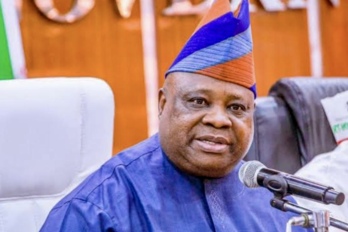
The incident occurred on 19 August 2026, only days after Governor Ademola Adeleke secured another term in office in the fiercely contested Osun governorship election.
The timing is significant.
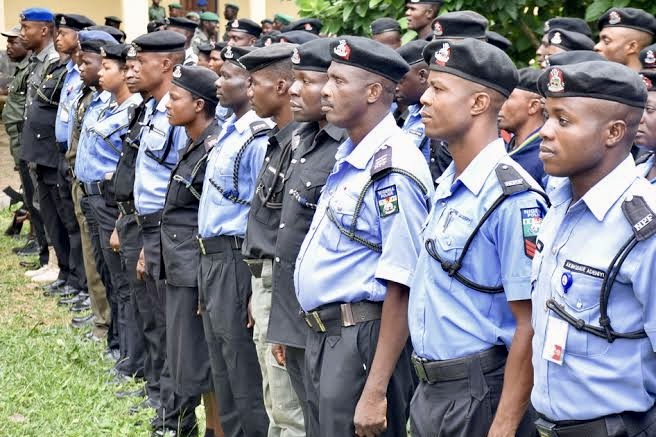
For weeks before the 15 August election, Osun had been one of Nigeria’s most closely watched political-security flashpoints. The Nigeria Police Force had warned politicians, supporters and other actors that violence, intimidation and thuggery would attract arrest and prosecution. The Force specifically said it was concerned about clashes between rival supporters and ordered security agencies to protect voters across all 30 local government areas.
Against that background, Wednesday’s shooting raises an uncomfortable question: was this simply another eruption of organised street violence, or does it expose a deeper network in which cult figures, political mobilisation and access to influential public figures intersect?
At present, the police investigation has not established the full answer.
What happened after Adeleke and Davido left the palace?
According to the statement by the Osun State Police Command’s spokesperson, DSP Abiodun Ojelabi, officers received information at about 4pm that Yusuf, a resident of the Oke-Ayepe area of Osogbo, had been shot by suspected hoodlums at Itaolokan.
The police said the incident came shortly after Governor Adeleke and his nephew, internationally known Afrobeats star David Adeleke, Davido, visited the palace of the Ataoja of Osogbo, Oba Jimoh Oyetunji Olanipekun Larooye II.
The command said that immediately after the visit, Adebayo Taoreed, alias Small Rugged, allegedly attempted to gain access to Davido but was prevented by members of the singer’s security team.
The police described Taoreed as an “ex-convict”, a suspected notorious thug and an alleged member of an “eye confraternity”.
“Immediately after the visit, one Adebayo Taoreed, popularly known as ‘Small Rugged’, an ex-convict, a suspected notorious thug and a member of eye confratanity allegedly attempted to gain access to Davido but was resisted by members of his security team,” the police statement said.
The confrontation, according to the command, did not remain a private dispute.
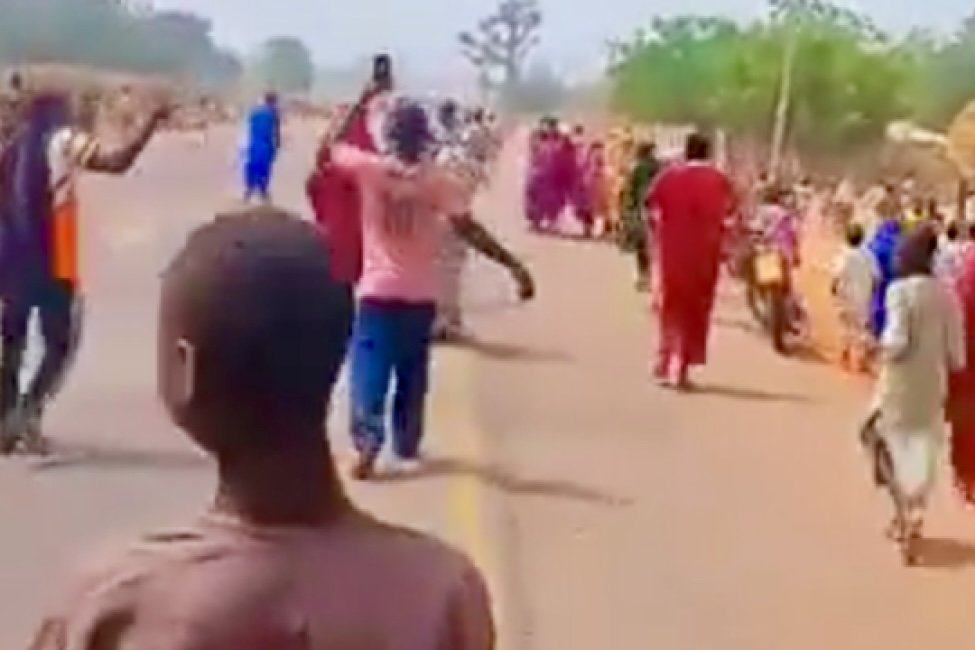
Other suspected gang members allegedly converged on the area, temporarily blocking the palace entrance and obstructing movement.
“The suspected gang members temporarily blocked the entrance to the palace and obstructed the movement. The convoy eventually left the area safely,” the police said.
There is therefore no police suggestion, in the account presently available, that either Governor Adeleke or Davido was the intended target of the shooting.
That distinction is critical.
The shooting at Itaolokan
The police said that after the group eventually left the palace vicinity, the suspected gang members moved away from the area.
It was during that movement, according to the command, that Yusuf was allegedly shot.
“Shortly afterwards, the suspected gang members reportedly departed the vicinity and, however on their way, they allegedly shot Tajudeen Yusuf at Itaolokan area of Osogbo,” the statement said.
Police officers were subsequently deployed to the location.
Yusuf was found lying in a pool of blood and was rushed to the University Teaching Hospital, Osogbo. Medical personnel later pronounced him dead.
The incident is now officially being treated as a homicide investigation.
The police said they had commenced what they described as a full-scale investigation, while efforts had been intensified to identify and arrest the suspects.
“The Command has commenced a full-scale investigation into the incident and intensified efforts to identify, apprehend and bring the fleeing suspects to justice,” the statement said.
CP Samuel Etaifo, the Commissioner of Police deployed for the Osun election, condemned the killing and assured residents that the command would deploy “all available resources” to apprehend those responsible.
The police also urged anyone with useful information to approach the nearest police station or use the command’s official channels.
‘Small Rugged’ is not an unknown name to Osun police
The most significant investigative dimension of the case is the identity of the man the police say triggered the confrontation.
Taoreed, known as Small Rugged, has featured in Osun police and media accounts for years.
In July 2026, the Osun State Police Command declared Taoreed and four other men wanted over alleged political violence, killings, maiming and thuggery.
The other suspects named were Dauda Olamilekan, also known as “Emir”; Adetunji Kamoru Olatunde; Saka Afees, known as “Terror”; and Adeyemi Saheed. Police said intelligence-led investigations had identified them as alleged “arrowheads” behind escalating political violence and thuggery in the state.
That earlier police action makes Wednesday’s incident more than an isolated shooting.
It means the name now being associated with the palace confrontation belonged, according to the command’s own previous account, to a man it had already sought in connection with serious violence.
The distinction between accusation and proof remains essential. Being declared wanted does not amount to a criminal conviction, and the allegations against Taoreed must still be established through investigation and, where charges are filed, judicial proceedings.
But the sequence is difficult for security authorities to ignore.
A history dating back years
Taoreed’s name also appeared in police-related reporting as far back as 2019.
Punch reported at the time that Osun police anti-cultism operatives arrested Adebayo Taoreed, describing him as an alleged kingpin of the Aiye cult and a suspected robber. The report said he had allegedly been linked by police sources to murder and robbery cases around Osogbo.
Another 2019 report described Taoreed as a leader of a “dreaded cult group” in Osogbo and reported his arrest by anti-cultism officers.
The relevance of that history is not to establish guilt in the present case. Rather, it demonstrates that the police’s reference to Taoreed as a suspected cult-linked figure is not appearing in a vacuum.
It also underlines the persistence of organised cult structures in parts of Osun despite periodic police crackdowns.
Why this shooting matters beyond one death
Osogbo has endured months of political tension, cult-related violence and accusations of politically sponsored thuggery.
In June, the police arrested dozens of suspected cultists and political thugs in the state as security agencies attempted to contain the crisis. Punch’s Osun Police archive records several incidents involving cultism, political violence and killings in the state during the months leading into the election.
In July, two people were reportedly killed in separate attacks in Osogbo. Vanguard reported allegations from an eyewitness who claimed Taoreed, “Small Rugged”, confronted him during one of the attacks, allegedly pointed a gun at him and fired into the air. The same report said police recovered a Beretta pistol after the incident. Police were investigating the matter at the time.
Those allegations are significant in understanding the security climate but should not be conflated automatically with Wednesday’s murder. Authorities must establish, through ballistic, forensic and witness evidence, whether the same weapons, individuals or networks were involved.
That is precisely where the latest police investigation becomes crucial.
Osun’s election violence did not disappear with the ballot
The shooting occurred just four days after the Osun governorship election.
INEC declared Adeleke of the Accord Party winner after he polled 511,067 votes, defeating APC candidate Munirudeen Bola Oyebamiji, who recorded 444,815 votes. Adeleke won by a margin of 66,252 votes and secured victory in 19 of the state’s 30 local government areas, according to reports of the final collation.
The election came after months of bitter political accusations.
Governor Adeleke had repeatedly accused opponents of orchestrating violence, while opposition actors levelled their own allegations against the administration and its supporters. Security agencies were consequently under intense pressure to prevent the electoral contest from degenerating into widespread bloodshed.
On 11 August, the Nigeria Police Force publicly warned that political parties, candidates and supporters would be held accountable for violence, intimidation and thuggery. It also stressed that sponsors of unlawful violence would face prosecution regardless of political affiliation.
The fact that a fatal shooting has now occurred in the state capital, days after the election, therefore presents a test of whether security agencies can contain the violent networks that became increasingly visible during the campaign.
The politics around the palace
The presence of Adeleke and Davido adds an additional layer of sensitivity.
Davido has become a prominent campaign-period political figure in Osun because of his close family relationship with Adeleke. During a recent public appearance in Osogbo, he urged voters to participate peacefully, telling residents: “Don’t fight anybody. Let your vote speak for you.”
That makes Wednesday’s reported confrontation particularly jarring.
A major question for investigators will be why Taoreed allegedly attempted to breach the security cordon around Davido immediately after the palace visit.
Was he attempting to make personal contact?
Was it a political encounter?
Was there a dispute?
Was someone in the group known to him?
Or was the confrontation merely the spark for a wider gang dispute?
At this stage, none of those questions has been conclusively answered.
The police account provides a chronology, but not yet a motive.
The APC allegation — and the need for caution
Earlier reports cited by the supplied police account included allegations from the Osun APC Governorship Campaign Council that supporters of Governor Adeleke were involved in the violence.
The party alleged that a passer-by was killed and several people injured.
However, those allegations have not been independently established by the evidence presently available.
That caution is particularly important in Osun, where both political camps have repeatedly accused one another of weaponising violence.
Indeed, the state has witnessed competing narratives over attacks, arrests and alleged political thuggery for months. Adeleke himself previously alleged that political opponents and security authorities were involved in violence against his supporters, while opposition figures made counter-allegations against his administration.
The police, therefore, face a credibility test.
The investigation into Yusuf’s death must be sufficiently transparent to withstand claims that the case is being politicised.
A disturbing pattern around Osogbo’s traditional institution
Wednesday’s incident is also the second major security controversy involving the Ataoja’s palace in 2026.
In June, police rejected claims that an alleged intrusion into the palace amounted to an assassination attempt against Oba Jimoh Oyetunji. The command said the suspect had entered the palace unarmed after scaling the fence and found no evidence of a coordinated plot against the monarch.
That earlier episode and Wednesday’s shooting are not being presented by police as linked.
But together they demonstrate how traditional institutions in Osun have increasingly become caught in the state’s charged political-security environment.
A palace should be a controlled environment.
When a wanted or allegedly notorious street figure can reportedly approach a high-profile visitor there, confront security personnel and trigger a confrontation that spills into surrounding streets, questions inevitably arise about access control, intelligence gathering and the policing of known violent actors.
The unanswered questions
The most important questions facing investigators now are straightforward.
Who fired the fatal shot?
What weapon was used?
Was Yusuf deliberately targeted or was he caught in the line of fire?
Who was with Taoreed when the alleged confrontation occurred?
Was there more than one firearm?
Were the suspects already under surveillance before the incident?
Did any political actor have contact with the suspects before or after the shooting?
Were CCTV cameras operating around the palace, Itaolokan and the route taken by the fleeing suspects?
Did witnesses record the incident on mobile phones?
And, critically, why was a man previously declared wanted over alleged political violence able to remain at large?
Those questions should now be answered with evidence, not political claims.
What the police must prove
The command has made the right initial move by announcing a full-scale investigation. But Osogbo has heard promises of investigations before.
What will matter is what comes next.
Investigators will need to secure eyewitness statements, CCTV footage, ballistic evidence, telephone and location data, forensic material and any available video recordings from the palace area and Itaolokan.
They must also establish a clear chain connecting the alleged palace confrontation to Yusuf’s killing rather than simply assuming that the same suspects were responsible.
If a firearm is recovered, forensic comparison with bullets or cartridge cases recovered from the crime scene could provide critical evidence.
If suspects are arrested, their statements must be tested against independent evidence.
And if political sponsorship is alleged, investigators must follow the money and communications rather than relying solely on partisan claims.
‘Remain calm’ is not enough
The police have appealed to residents to remain calm and avoid taking the law into their own hands.
That is appropriate.
But calm cannot mean silence, and it cannot substitute for accountability.
Osun has already endured an unusually tense political season. The police themselves recognised the threat, deployed thousands of personnel for the election and warned that violence and thuggery would not be tolerated.
The killing of Yusuf now provides an early test of whether those commitments will extend beyond election day.
For the family of the 60-year-old victim, the central issue is not politics.
It is justice.
For the residents of Osogbo, the larger issue is whether the city is becoming a place where heavily armed street actors can dictate the security environment around political leaders, traditional institutions and ordinary citizens.
And for the police, the challenge is far more consequential than arresting one suspect.
They must demonstrate that the networks behind recurrent violence can be identified, dismantled and prosecuted — regardless of whose political interests, if any, they serve.
For now, one fact remains beyond dispute: Tajudeen Yusuf is dead.
The police say his death followed a confrontation involving suspected gang members after Adeleke and Davido visited the Ataoja’s palace.
Everything else — the motive, the identity of every person involved, the source of the weapon, and whether the killing formed part of a broader political or cult network — remains a matter for investigation.
Atlantic Post will continue to track the case as investigators establish the facts and as the police move to locate those they say fled the scene.
One dead man has turned an already volatile Osogbo security story into a test of whether the state can finally break the cycle of cult violence, political thuggery and impunity.