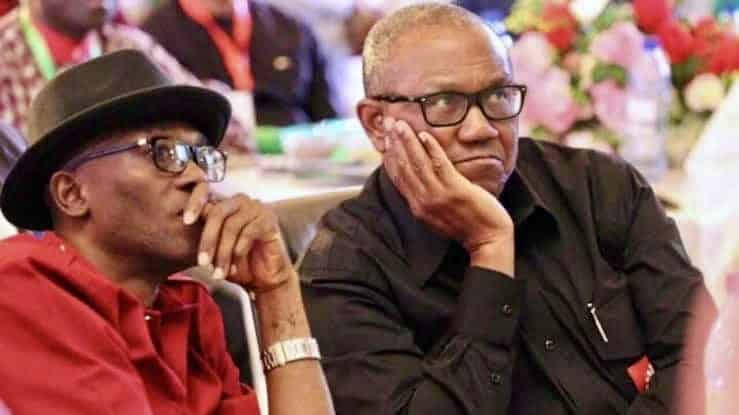
The Supreme Court of Nigeria has ruled on the Labour Party’s internal leadership disputes, emphasising that such matters should be resolved internally, raising concerns over judicial involvement in party politics. The decision impacts the legitimacy of leadership and underscores tensions within the party, prompting discussions about Nigeria’s democratic processes and accountability.
ABUJA, Nigeria – In an electrifying development that has rocked Nigeria’s political landscape, the Supreme Court’s ruling on the internal affairs of the Labour Party (LP) has ignited fierce debate among party loyalists, legal experts, and political pundits alike. The apex court’s decision—setting aside a previous ruling that endorsed the Anambra convention’s ratification of Julius Abure’s National Working Committee—has not only unsettled the balance of power within the LP but also raised profound questions about the judiciary’s role in party politics.
As the saga unfolds, seasoned political analysts warn that this may be a turning point in the nation’s journey towards a truly democratic process.
A Fiery Judicial Declaration
In a unanimous verdict delivered by a five-member panel, the Supreme Court emphatically ruled that disputes regarding party leadership are strictly internal matters, entirely beyond the purview of judicial intervention.
The court’s observation that the issues at stake—chiefly, the expiry of Abure’s tenure and the inherent rights of party structures—are best resolved within the party framework sent ripples across Nigeria’s political circles.
With the apex court dismissing the cross-appeal lodged by the Abure faction, critics are left to grapple with the unsettling reality: while some herald this as a victory for the sanctity of internal party democracy, others see it as a potential prelude to greater partisan conflicts.
The Abure Conundrum: Misinterpreted or Misunderstood?
While headlines blared that Abure had been unceremoniously “sacked” by the Supreme Court, top party officials vehemently refuted this interpretation. According to Obiora Ifoh, the National Publicity Secretary of the LP, the judgment did not expel Abure from his position as National Chairman. Instead, it reaffirmed a series of prior High Court and Court of Appeal decisions that reinforced the party’s constitutional prerogative to determine its own leadership.
Ifoh’s assertion that “political matters are strictly internal affairs” resonates deeply with those who advocate for a clear demarcation between legal mandates and party self-governance.
The controversy deepens with the noticeable absence of Abure at the media briefing—rumoured to be due to personal bereavement over his father-in-law’s passing. However, this absence has only fuelled speculation regarding the true state of his leadership and the stability of the party’s internal structures.
In a bold statement, Ifoh re-emphasised that Abure’s leadership remains constitutionally intact, contending that the party’s internal processes had duly ratified his re-election during the national convention held on 27 March 2024.
Constitutional Clashes and Internal Discord
At the heart of the dispute lies the interpretation of the Labour Party’s 2024 constitution, particularly Article 14. This provision vests significant authority in the national secretary to issue notices for meetings of the national convention and other executive bodies, contingent upon consultation with the National Chairman.
This constitutional clause has become a battleground, with party officials arguing that the call for a national convention and the subsequent ratification of party leaders are matters strictly reserved for the party’s internal mechanisms.
Kehinde Edun, the LP National Legal Adviser, criticised what he described as deliberate distortions of the Supreme Court’s judgment. Edun clarified that the court’s pronouncement was not a blanket statement on the expiry of Abure’s tenure but rather an affirmation of the constitutional rule that elected officials must either step aside or seek re-election once their term concludes.
With Abure’s tenure reportedly having ended in 2019—extended briefly into 2023 and conclusively expiring in 2024—the legal adviser argued that the party had already taken the necessary steps to address this eventuality through a democratic process. Yet, the confusing interplay between legal advice and political manoeuvring continues to stoke tensions within the party ranks.
The Controversial Call for a Caretaker Committee
The Supreme Court’s ruling has further complicated the debate over the legitimacy of setting up a caretaker committee—a proposition vehemently opposed by several high-ranking party officials. Deputy National Chairman Ayo Olorunfemi dismissed the notion as a subterfuge by “outsiders” who are not bona fide party members.
Olorunfemi’s biting criticism underscores a broader narrative: the alleged attempts by certain factions to undermine the established leadership of Julius Abure are not only unconstitutional but also indicative of deeper, more sinister political scheming.
According to Olorunfemi, the LP constitution categorically precludes the formation of any caretaker panels. He further vowed that Abure would remain at the helm until the completion of his tenure in 2028, dismissing reports that the Supreme Court had any authority to impose interim leadership structures.
His comments reflect a deep-seated conviction that internal party mechanisms, rather than external judicial mandates, should dictate the course of leadership transitions within the LP.
A Battle for the Future of the Labour Party and Nigeria
The ramifications of this Supreme Court ruling extend far beyond internal party politics. For many observers, the decision is a litmus test for the evolving nature of Nigeria’s democratic institutions.
The stark divergence between judicial interpretation and party constitutionality has raised questions about the balance of power:
How much influence should the courts wield over political parties?
And can a judiciary truly remain impartial when confronted with the messy realities of internal party disputes?
Political analysts have argued that the current turmoil within the LP represents a broader crisis in Nigerian politics—one where legal, constitutional, and partisan lines are increasingly blurred.
The ruling, with its insistence on respecting party supremacy and internal decision-making, appears to reinforce the notion that political parties must resolve their disputes through dialogue and internal mechanisms rather than through the courts.
Yet, the counterargument is equally compelling: in a democratic society, transparency and accountability often require judicial oversight, particularly when leadership disputes threaten to derail the democratic process.
Sensational Implications and the Battle for Public Opinion
The dramatic unfolding of events has not escaped the notice of Nigeria’s vast media apparatus. Sensational headlines, charged commentaries, and heated debates on television and online platforms have transformed this legal tussle into a media spectacle.
At the heart of the controversy lies a narrative of betrayal and resilience—of an ageing leadership clinging to power amidst calls for reform, and of a judiciary caught in the crossfire of political expediency.
The conflicting narratives from the LP’s own officials, the Nigerian Labour Congress, and external legal commentators only serve to heighten the public’s appetite for clarity and accountability.
What remains unequivocally clear is that the Labour Party, once a beacon of hope for a New Nigeria built on justice, equity, and people-centred governance, now finds itself at the epicentre of a storm.
As party leaders on both sides of the debate resort to constitutional invocations and judicial precedents, the ultimate question looms large: can the LP reconcile its internal divisions and restore faith among its supporters, or will this latest episode accelerate its descent into fragmentation?
Conclusion: A Turning Point in Nigerian Democracy?
In the final analysis, the Supreme Court’s ruling stands as a testament to the complex interplay between law and politics in Nigeria. While the decision has been lauded by some as a reaffirmation of party sovereignty and constitutional supremacy, it has equally been criticised as an abdication of the judiciary’s responsibility to safeguard democratic accountability.
With figures like Julius Abure and his detractors locked in a battle of wills, and with the prospect of a caretaker committee emerging on the horizon, Nigeria’s political future hangs in a delicate balance.
For Atlantic Post, this is not merely another political skirmish—it is a watershed moment that encapsulates the perennial struggle between tradition and reform, between judicial restraint and political accountability.
As the LP grapples with its internal demons and as the nation watches with bated breath, one thing is certain: the fallout from this ruling will reverberate far beyond the confines of party politics, shaping the very contours of Nigeria’s democratic landscape for years to come.
In these turbulent times, only one truth remains indubitable: the path to a New Nigeria, underpinned by justice and equity, demands that all stakeholders—be they party leaders, judicial authorities, or the electorate at large—embrace the spirit of reform and accountability.
The coming weeks will reveal whether the current crisis will yield a reformed, united Labour Party ready to lead the charge for change, or whether it will merely mark the beginning of a prolonged period of political uncertainty and division.
Atlantic Post remains committed to delivering in-depth, balanced, and critically engaging reporting on Nigeria’s political landscape, ensuring that our readers are well-informed and empowered to shape the future of our great nation.