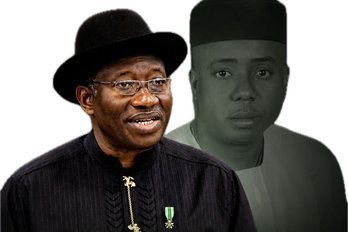
The latest Jonathan 2027 storm is less about one aide’s interview than about a deeper battle for narrative control inside Nigeria’s opposition politics.
Recent reports say a faction of the PDP has moved to adopt former President Goodluck Jonathan as its 2027 presidential candidate, while the court has also affirmed that he remains eligible to contest.
At the same time, Jonathan has not publicly accepted or rejected the nomination, and his former aide Jude Imagwe has said there is “no evidence anywhere” that Jonathan is running.
That is the real backdrop to the counterpunch from Sam Presto and the Goodies Movement. Their core argument is not merely that Imagwe should not speak for Jonathan. It is that Nigerian media and political actors must stop mistaking proximity for mandate.
On the record, Imagwe is not some faceless newcomer. Independent reported in 2023 that he was a “former aide to ex-President Goodluck Jonathan on Youth and Students Affairs” and a former PDP candidate for Estako Federal Constituency.
Leadership, in its recent report, also described him as one of Jonathan’s media aides. But none of that automatically proves he has authority to issue binding political positions for the former president today.
That distinction matters because the current Jonathan debate is being driven by a fog of factional claims. The Turaki-led PDP bloc has adopted Jonathan as its candidate, with the former president absent from the ceremony and his certificate of return received by Fred Agbedi on his behalf.
Another PDP bloc, aligned with Nyesom Wike and recognised by INEC, is pursuing a rival political path. Premium Times warned that, in the present arrangement, Jonathan’s nomination may even be “a non-event”.
That is why every statement around him now carries a political charge far beyond the words themselves.
Imagwe’s remarks on News Central sit inside that turbulence. Leadership quoted him saying there is “no evidence anywhere” that Jonathan is running for president in 2027, and that Jonathan has neither declared interest nor authorised anyone to buy forms or campaign for him.
Other recent coverage also quotes Imagwe as saying he does not think Jonathan is “power-hungry or power-drunk”, and that Jonathan is not desperate to return to Aso Rock. Those are emphatic lines, but they remain the view of an individual speaking in the media, not a formally authorised presidential communication.
The deeper controversy, then, is not whether Imagwe once served Jonathan. It is whether he currently occupies a verified role that gives him the right to close down speculation on Jonathan’s future.
The statement from Sam Presto exploits exactly that gap. In a season where campaign posters, factional endorsements and proxy announcements are multiplying, the question of representation becomes as important as the question of ambition itself.
Without a direct Jonathan statement, every denial, endorsement or rumour is vulnerable to being read as strategy rather than truth.
This is also why media caution is not optional. Journalists who present aides, former aides or political associates as if they are definitive spokesmen for high officeholders risk turning speculation into headline fact.
That warning has extra force here because the surrounding claims are already deeply politicised. On 31 May, Festus Keyamo publicly urged Jonathan to reject the PDP faction’s nomination, calling the move a “bizarre comedy” and warning that Jonathan should issue a strong “no, thank you” statement.
Whatever one thinks of Keyamo’s tone, his intervention shows how widely the Jonathan question has spilled beyond the PDP into the broader national arena.
At the legal level, the picture is no less complex. The Federal High Court in Abuja declared Jonathan eligible to contest the 2027 presidential election, and the Guardian reported the same ruling while noting that the suit was dismissed as an abuse of court process.
Premium Times further reported that the case has moved to the Appeal Court, meaning the legal argument is not entirely dead even if one court has spoken strongly in Jonathan’s favour. The law, the factions and the media are therefore all pulling in different directions at once.
Jonathan’s silence is what keeps the whole controversy alive. Premium Times reports that he has neither accepted nor rejected the nomination publicly, and that this silence has intensified speculation.
The same report also notes that since leaving office in 2015, Jonathan has largely stayed away from frontline partisan politics and reinvented himself as a statesman and democracy advocate. That public image, built over years, is now being tested by people trying to draft him back into the centre of Nigeria’s most volatile political calculations.
So the counterpunch from the Goodies Movement lands on a real fault line. Imagwe may be a former Jonathan aide, but the authority to speak for a former president is not inherited forever.
In a political climate where factions are manufacturing candidates, courts are settling eligibility questions and ministers are attacking the process, the public is entitled to ask a blunt question: who exactly has the mandate to speak for Goodluck Jonathan? Until Jonathan himself answers, the loudest claims remain claims, not final truth.
Follow us on our broadcast channels today!
- WhatsApp: https://whatsapp.com/channel/0029VawZ8TbDDmFT1a1Syg46
- Telegram: https://t.me/atlanticpostchannel
- Facebook: https://www.messenger.com/channel/atlanticpostng