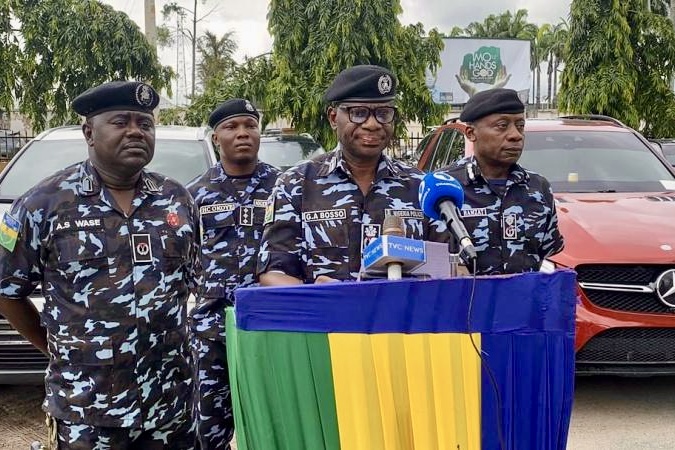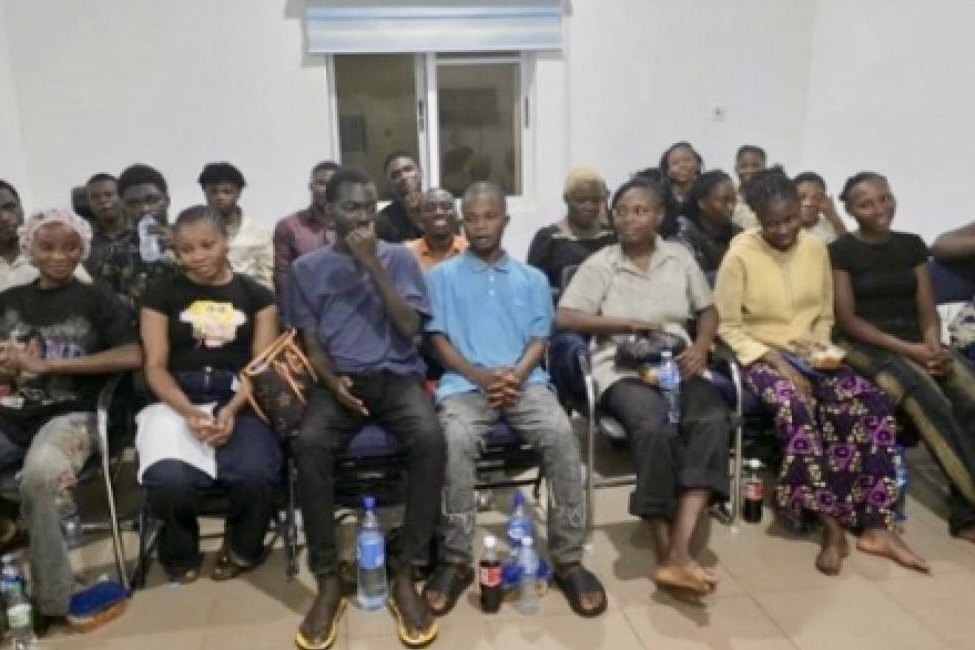
A fresh digital storm has broken out around President Bola Tinubu’s image after presidential aide Bayo Onanuga announced that the Inspector-General of Police crack team had arrested one Ifechukwu Dennis over a fake voice recording allegedly passed off as the President’s own words.
Onanuga said Dennis was arrested in Benin and added that the police would issue an official statement. The claim immediately reignited Nigeria’s wider battle over misinformation, deepfakes and the speed with which political narratives now outrun verification.
The arrest, as reported by The Guardian and The Punch, is tied to an AI-generated voice note that had been circulating online as though it were a leaked Tinubu recording. The reported audio was allegedly used to mislead people into believing the President had made inflammatory comments about insecurity, the 2023 election and public dissatisfaction. At the time of filing, the police had not yet issued the promised formal statement, and full details of the suspect’s circumstances or possible charges were still not available.
What makes the case politically explosive is that the controversy did not begin with the arrest. It began on 27 May 2026, when a viral clip linked to social media activist Martins Vincent Otse, popularly known as VeryDarkMan, began circulating online. Fact-checkers later found that the version shared around the internet had been tampered with, with the audio inserted into footage lifted from VDM’s original Instagram video. DUBAWA said the video was digitally altered, while Premium Times and other outlets reported that the Presidency initially treated the clip as if VDM had posted the doctored version himself.
That earlier phase of the row matters because it explains the anger now aimed at the Presidency as much as at the alleged forger. Onanuga had already taken a hard line, calling for prosecution and describing the matter as “a clear case of egregious abuse of the social media platform,” according to Punch’s report. Legit.ng also reported that VDM’s legal team rejected the allegation, insisted he did not originate or distribute the audio, and urged security agencies to investigate the real source of the recording rather than rely on viral assumptions.
DUBAWA’s verification adds further weight to the argument that the controversy was driven by manipulation rather than a straight upload from VDM. Its findings said the circulating video had been altered and that the content in VDM’s original Instagram post was about a Tinubu campaign clip, not the poisonous voice note now being debated. The fact-check also noted that the viral version had been repackaged and redistributed across platforms, which is exactly how digitally engineered falsehoods gain political force in an era of fast-sharing and low verification.
That is the deeper security problem here. The issue is not only whether one man has been arrested. It is that Nigeria’s information space now allows a voice to be cloned, a clip to be edited, and a political crisis to be manufactured in hours. Once such material lands in the public square, it can provoke outrage, damage reputations and deepen distrust in official communication. The Onanuga announcement therefore lands not merely as a police matter but as a warning shot in the country’s growing fight against AI-enabled deception. This is an inference from the reporting and the fact-checks, not a separate official finding.
The public reaction has been just as revealing as the arrest claim itself. Among the reactions supplied in the discussion, one critic said the case “goes to prove that the government is shielding these bandits,” arguing that the state could track a person over “AI pictures” but not stop the armed groups killing Nigerians. Another wrote that it was a “shame” that a fake voice note drew swift attention while kidnappers and terrorists allegedly remained beyond reach, adding that “Tinubu MUST resign.” A third reaction mocked the contrast more bluntly, asking how the same crack team could be used for a voice controversy while bandits holding children still evade arrest. These comments capture a broader mood of anger, suspicion and state distrust.
Yet not all reactions were hostile. One supportive response praised the police move as a necessary deterrent, warning that “the damage criminal like this can cause to public safety at scale is even more dangerous than what an individual kidnapper can cause.” That view reflects a different anxiety altogether: the fear that if deepfake audio is left unchecked, it will become a routine political weapon, not an isolated stunt. In that reading, arrests are not about defending government pride alone, but about protecting the integrity of public information.
The fault line, therefore, is not simply pro-government versus anti-government. It is trust versus disbelief. On one side are those who see the arrest as overdue enforcement against digital impersonation. On the other are those who see the speed of the response as proof that the state moves faster when its image is threatened than when citizens are threatened by kidnappers, bandits and terrorists. Those competing interpretations have now become part of the story itself, and they are politically dangerous because they deepen the belief that law enforcement priorities in Nigeria are uneven and highly selective.
What emerges from this episode is a familiar Nigerian pattern with a more modern twist. The political class still fights over truth, but now the battlefield includes voice cloning, manipulated video and AI-assisted misinformation. The state wants to show it can trace digital offenders. The public wants to know why the same energy is not always visible in the pursuit of violent criminals. Until that gap is closed, every arrest in a misinformation case will be judged not only on legality, but on whether ordinary Nigerians believe justice is being applied evenly.
For now, Onanuga’s announcement has done what every hard political message is designed to do: it has shifted the conversation, hardened the camps and turned one alleged fake voice into a test of state credibility. The police may yet publish a fuller account. But even before that happens, the public verdict is already being written online, where suspicion is now as powerful as evidence.
Follow us on our broadcast channels today!
- WhatsApp: https://whatsapp.com/channel/0029VawZ8TbDDmFT1a1Syg46
- Telegram: https://t.me/atlanticpostchannel
- Facebook: https://www.messenger.com/channel/atlanticpostng