AGGAH, Rivers State — The fight over the chronic flooding that has swallowed homes, farms and livelihoods in Aggah has now moved into a sharper legal and moral phase. The Egbema Voice of Freedom (EVF), Advocates for Community Alternatives (ACA) and community activist Pastor Nicholas Evaristus Ukaonu have appealed the April 9, 2026 judgment of the Ordinary Court of Milan in their case against Eni S.p.A. and Oando Energy Resources Nigeria Ltd, arguing that a decades-long environmental disaster has been reduced to a narrow question of paperwork rather than real-world harm.
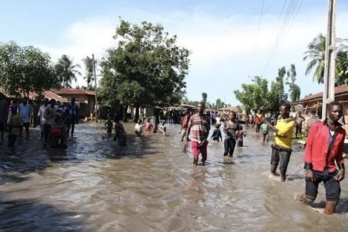
At the centre of the dispute is Aggah, a farming and fishing community in Ogba/Egbema/Ndoni Local Government Area of Rivers State, where residents say oil infrastructure built around the Mgbede oil field altered natural waterways and left the town vulnerable to annual flooding.
The OECD database records that the complaint was first filed on 15 December 2017 by EVF and Chima Williams Associates, alleging that construction linked to ENI, ENI International BV and Nigerian Agip Oil Company Limited caused violent flooding and severe harm to local communities.
The history is crucial because this is not a new grievance suddenly discovered in court. Eni says it has been present in Nigeria since 1962, while the OECD record shows that the disputed works date back to the 1970s, when embankments and roads were built to support wellheads in the Mgbede field.
The complainants have long argued that those structures blocked streams that once flowed naturally through Aggah, turning seasonal rain into repeated inundation of homes, roads and farmlands.
That complaint was not left to languish. The Italian NCP accepted the case on 26 July 2018 and, after mediation, the parties signed Terms of Settlement on 8 July 2019.
According to the OECD Watch summary, the settlement called for the urgent construction of new culverts and drainage channels, along with the maintenance and management of existing channels, and also required verification by a technical expert to determine whether further action was needed.
The same record shows that the complainants later returned to court in December 2023, seeking enforcement of the agreement and damages for loss of lives, livelihoods and property.
The Milan judgment, as described by the claimants and reported locally, is what has now triggered the appeal. The court reportedly accepted that it had jurisdiction over overseas conduct by an Italian parent company, but still dismissed the claims for further remediation and compensation.
Its reasoning, according to reporting, was that ENI and the former NAOC had done enough by constructing 14 drainage channels and carrying out feasibility studies, because the 2019 settlement required specific works rather than a guarantee that flooding would disappear altogether.
That line of reasoning has enraged community representatives because it appears to separate engineering activity from engineering success. The claimants say the court looked at whether structures were built, not whether those structures actually solved the flooding.
They insist that the real question is whether the drainage system works, whether the water is diverted, whether farmland is saved and whether families can live safely when the rains come.
As community member Evangelist UBAS put it in the material supplied to the court, “By focusing on whether infrastructure was built rather than whether it actually solved the flooding, the Court adopted an approach disconnected from the realities faced by the people of Aggah.”
The appeal also challenges what the claimants see as a deeply restrictive approach to standing and damages. Reporting on the judgment says the court dismissed the compensation claim on the ground that EVF could not act on behalf of nearly 1,900 affected residents and could not claim on its own behalf as a mission-driven organisation.
It also imposed more than €180,000 in legal costs on the claimants, a move Pastor Ukaonu has branded punitive.
“How can the judge ask the oppressed to pay €180,000 to the oppressor who has taken our oil for more than 50 years and left us flooded for the same number of years and counting?” he said.
“This is a difficult moment for us as a community, but we are not deterred. We have gone to appeal, regardless of the punitive cost imposed upon us.”
The community’s broader argument is that the Milan court should have weighed the evidence more seriously.
The OECD Watch summary says the original complaint relied on an impact assessment report showing that nearly all households lost agricultural products and that more than 65 per cent of residents suffered physical injuries from the flooding.
The community and its supporters now say the court should have engaged with the full record, including technical assessments, internal company documents, the Rivers State Ministry of Environment’s findings and a Nigerian civil judgment they say linked the infrastructure to the flooding.
The case has also been complicated by corporate changes inside the oil sector. Eni confirmed in July 2024 that it had received regulatory consent from the Nigerian Upstream Petroleum Regulatory Commission to sell NAOC to Oando, and then announced in August 2024 that the sale had closed.
That means the company now known as Oando Energy Resources Nigeria Ltd sits inside a corporate story that began long before the transaction, but the controversy over drainage, flooding and remediation remains unresolved in the eyes of the complainants.
For Aggah, the issue is not abstract legal theory. The OECD and civil society records describe a community whose streams were blocked, whose farmlands were flooded and whose residents believed the 2019 settlement would finally bring relief.
Instead, the current appeal reflects a harder truth: in environmental justice cases, construction on paper can be treated as completion in court even when the people on the ground are still living with the water.
That is why the claimants say the appeal is now about something bigger than one village in Rivers State. It is about whether multinational companies can escape accountability by meeting technical checklists while the damage continues.
The stakes are especially high because the rainy season is not a hypothetical threat in Aggah. It is the recurring test that will show whether the drainage works, whether the settlement meant anything in practice and whether the law can recognise harm that is collective, seasonal and repeated.
In that sense, the appeal is not only a challenge to a judgment. It is also a challenge to the idea that environmental justice can be achieved by declaring success before the floodwaters have actually gone.
Follow us on our broadcast channels today!
- WhatsApp: https://whatsapp.com/channel/0029VawZ8TbDDmFT1a1Syg46
- Telegram: https://t.me/atlanticpostchannel
- Facebook: https://www.messenger.com/channel/atlanticpostng