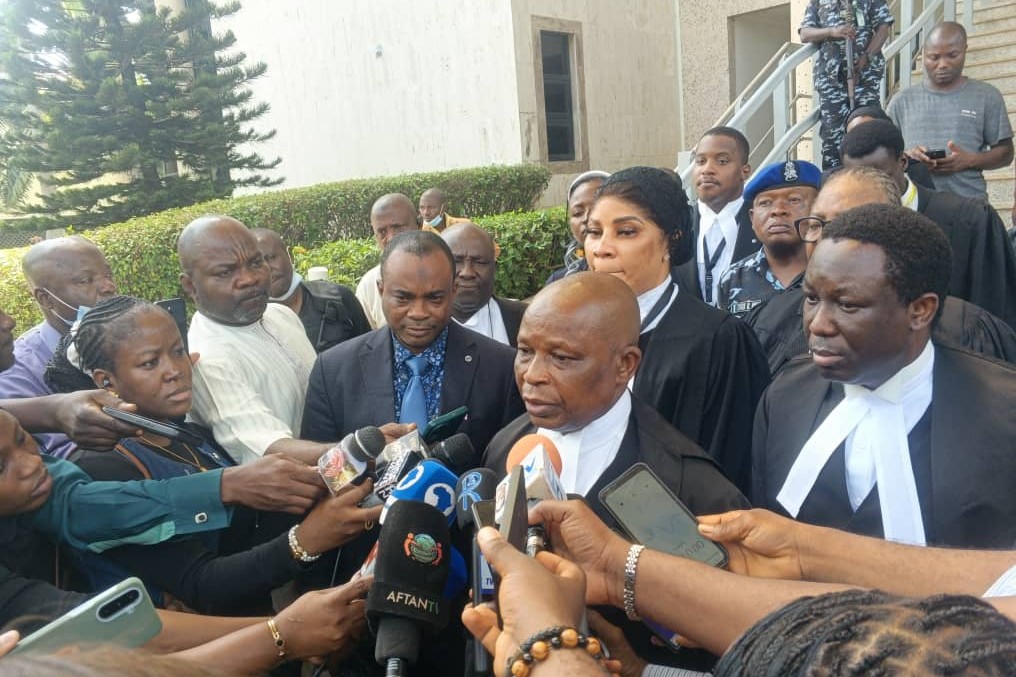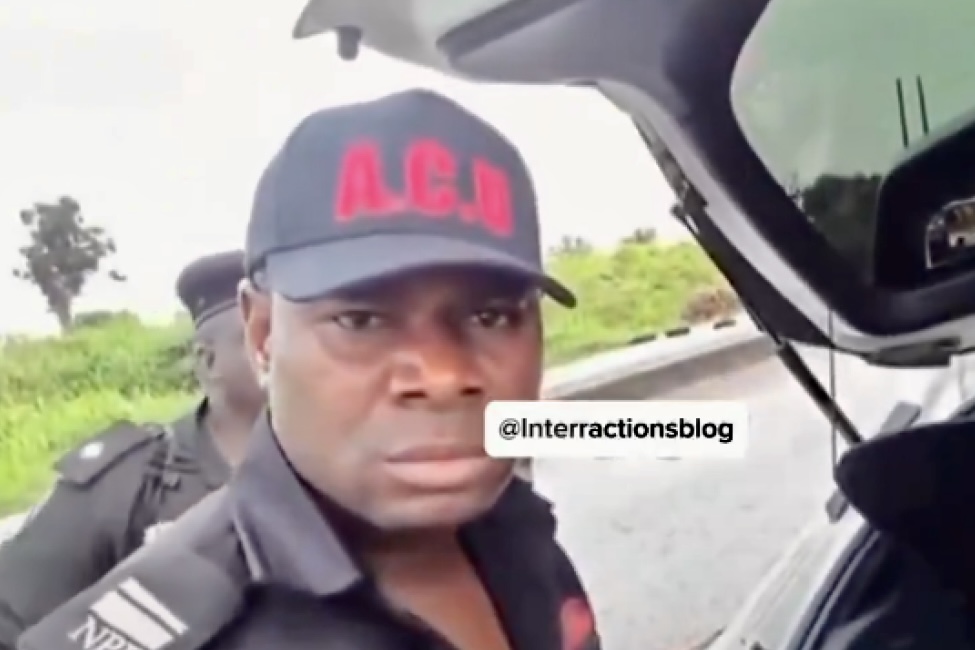
The row over the death of a Mining Marshals operative has erupted into a broader institutional fight, after the commander of the Nigeria Security and Civil Defence Corps’ anti-illegal mining unit, John Onoja, rejected a police-linked report claiming one of his officers was tied to more than ₦2 billion in suspicious transactions.
The NSCDC’s own official position is that the Mining Marshals were created to confront illegal mining because it threatens Nigeria’s economy, environment and national security.
A Death Probe That Has Become A Turf War
Onoja’s intervention came after a viral publication alleged that the Nigeria Police had arrested three NSCDC officers over the death of a colleague and traced over ₦2 billion to a suspect’s bank account.
In his rebuttal, the Mining Marshals commander said the report was “false and misleading” and insisted that the bank account in question did not support the claim.
He said the Zenith Bank account attributed to Jibrin Labaran showed total debits of ₦760,457.25 and total credits of ₦760,129.85 over the past year, which he argued was nowhere near the scale suggested in the online report.
That denial matters because the case has moved beyond a single death and now sits at the intersection of criminal investigation, inter-agency rivalry and the politics of illegal mining.
Onoja accused officers attached to Team N of the Force Intelligence Department, led by CSP Abdulmajeed Abisoye Oyewumi, of repeated interference with Mining Marshals operations in Nasarawa State, claiming the same team had for more than a year disrupted lawful enforcement work on mining sites.
He also alleged that foreign nationals affected by anti-mining enforcement were helping to bankroll the effort to discredit the unit.
“The Modest Thing” Was To Hand The Case To The DSS
Onoja said he had written to the Inspector-General of Police asking that the death probe be transferred to the Department of State Services, arguing that this would provide a more impartial review.
His words were pointed: “The modest thing to do was for the police to transfer the case to DSS.”
In the same response, he said the Mining Marshals management supported the deceased officer’s family and bore the cost of burial arrangements without asking the family for money.
He added that friends and associates later raised ₦3 million for the widow.
The commander also went further, alleging that police officers accompanied foreign nationals during an attempt to arrest the lead prosecution counsel representing the Mining Marshals.
He described those involved as acting in the interests of “common enemies” of the unit and said the death of Deputy Superintendent of Corps Agada Levi was the first fatality recorded by the Mining Marshals since the unit was set up more than two years ago.
Onoja maintained: “We are not denying that Agada Levi died in the line of duty, sadly. But none of the Management Team of Mining Marshals knows anything about his death.”
The Backstory: An Older Clash Between Mining Marshals And Police
This latest outburst did not emerge in a vacuum. In a separate petition dated 27 May 2026 and reported before the current rebuttal, Onoja accused a Police Force Intelligence Department team of running what he called a “grand conspiracy” to discredit the Mining Marshals.
That petition, according to The Eagle Online, said the dispute stemmed from the death of Agada Levi and alleged that three management officials were later arrested over the incident.
It also claimed earlier confrontations between police operatives and Mining Marshals personnel at mining locations in Kaduna and Ondo States.
The same petition painted the row as an institutional battle over illegal mining enforcement, not merely an isolated death inquiry.
Onoja alleged that the police had previously obstructed prosecutions linked to illegal mining, while the petition urged the Inspector-General to release detained officers and withdraw further invitations issued to NSCDC personnel.
Even at that stage, the commander was arguing that the matter had wider national-security implications and should be handled in a way that preserved inter-agency cooperation.
The Family’s Petition Deepened The Mystery
Before Onoja’s latest pushback, the family of the late officer had already gone public with its own petition, asking the Inspector-General of Police, the National Assembly and the National Human Rights Commission to investigate the circumstances of Agada’s death.
Legit.ng reported that the family wanted a full-scale probe because it had received conflicting versions of what happened.
One account said the team was attacked by bandits and Agada later died in hospital, while another suggested only Agada died and others were detained.
The family also said financial and burial arrangements around the case raised questions.
That petition is important because it shows why the matter has moved so quickly from internal grief to public controversy.
The family said it had not received a clear official explanation and wanted the truth established through an independent inquiry.
Related reporting also said police investigators had begun inquiries and invited several NSCDC personnel for questioning.
In other words, the current crisis is being driven not just by official claims and counterclaims, but by a grieving family insisting that the record is incomplete.
What Remains Unclear
At the heart of the story is a basic credibility problem. One version of events says the officer died during a deadly attack on a mining operation. Another version suggests an internal shooting may have been involved.
A third layer of reporting now focuses on whether suspicious banking activity existed at all, with Onoja flatly rejecting the ₦2 billion claim and insisting the numbers are grossly inflated.
The fact that the key narratives do not yet align makes the case look less like a settled criminal matter and more like a dangerous contest over who controls the story around illegal mining enforcement.
The NSCDC has publicly framed the Mining Marshals as a special unit defending Nigeria’s critical assets against illegal mining, while Onoja has cast the current uproar as an attempted sabotage of that mission.
The police, for their part, had not publicly responded to the allegations at the time of filing this report. Until they do, the dispute will remain suspended between accusation and denial, with the truth still trapped behind competing institutional narratives.
Follow us on our broadcast channels today!
- WhatsApp: https://whatsapp.com/channel/0029VawZ8TbDDmFT1a1Syg46
- Telegram: https://t.me/atlanticpostchannel
- Facebook: https://www.messenger.com/channel/atlanticpostng