Conflicting reports have emerged about an alleged explosion at the Soku gas facility in Rivers State. While community leaders deny any explosion, an environmentalist claims witnesses heard a significant blast and saw a fire. The incident has raised concerns about safety and management of Nigeria’s oil infrastructure. Calls for a thorough investigation have intensified.
SOKU, Nigeria — In a dramatic twist that has sent ripples of disquiet through Rivers State, conflicting accounts have emerged over reports of a catastrophic incident at the Soku gas facility.
While some news outlets initially reported an explosion at the site, community leaders from the Soku community in Akuku-Toru Local Government Area have categorically refuted such claims.
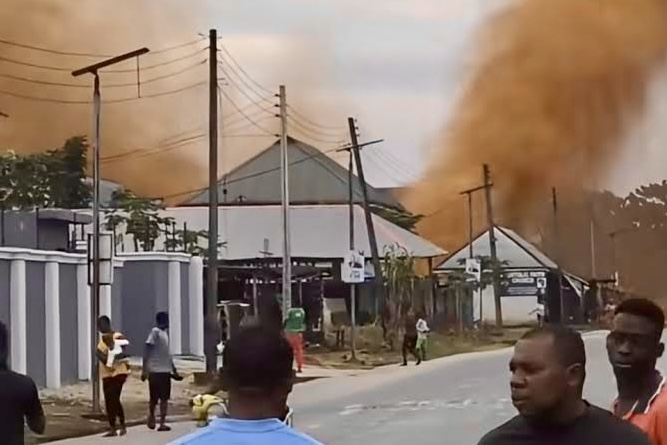
Instead, they admit that a significant fire erupted along the Soku-Abua-Rumuji gas pipeline right-of-way, leaving residents and experts alike grappling with uncertainty.
In an official statement, Mr Witness Alasia, the General Secretary of the Soku community, vehemently denied that an explosion occurred at the gas plant.
“It is disheartening and worrisome that people will mischievously misinform the public with a baseless and untrue story. Soku Gas Plant is safe and in perfect working condition,” he declared.
His remarks have done little to allay public fears, however, as conflicting reports continue to emerge from different quarters.
Adding to the confusion, environmentalist Dr Dumnamene Fyneface, Executive Chairman of the Youths and Environmental Advocacy Centre (YEAC-Nigeria), confirmed that his team’s youth volunteers had indeed witnessed an incident.
According to Dr Fyneface, witnesses reported hearing a thunderous explosion and seeing fireballs streaking across the sky in the affected area—a location notoriously difficult to access.
“The cause of the explosion is not yet known—whether it was due to equipment failure, sabotage, or an attack on the facility,” he stated.
Despite these stark observations, community leadership remains adamant that the gas plant itself was not directly involved.
The divergence between the community’s official stance and the reports from YEAC-Nigeria has left many questioning the reliability of the information circulating on social media and local news channels.
While the Soku community insists that the plant is fully operational and safe, Dr Fyneface’s account points to an incident of potentially far-reaching consequences.
The admission of a fire outbreak along the gas pipeline, even without an explosion at the plant, has raised fresh concerns about the overall security and maintenance of Nigeria’s critical oil and gas infrastructure.
This episode comes at a time when the Niger Delta has already been reeling from a series of disruptive events. In recent weeks, multiple incidents at oil and gas facilities across Rivers State have plunged the region into a state of turmoil.
The heightened security concerns, compounded by persistent rumours of sabotage and equipment failures, have not only jeopardised the operational stability of key energy installations but have also heightened political tensions.
Earlier, President Bola Tinubu’s declaration of a six-month state of emergency in Rivers State underscored the gravity of the situation, following similar disruptions that had rattled oil pipelines and installations in neighbouring communities.
The conflicting narratives over the Soku incident have sparked a renewed debate over accountability and transparency in the management of Nigeria’s oil infrastructure.
The Youths and Environmental Advocacy Centre has called on the National Oil Spill Detection and Response Agency (NOSDRA) to conduct a thorough Joint Investigation Visit (JIV) to ascertain the true cause of the pipeline fire and, if necessary, to hold any perpetrators accountable under the provisions of the Petroleum Industry Act (PIA), 2021.
Such an investigation, they argue, is critical not only for ensuring justice but also for restoring public confidence in the oversight of the country’s vital energy resources.
Critics have long argued that the persistent instability in the Niger Delta is symptomatic of deeper systemic issues. They point to lapses in security protocols, insufficient maintenance of ageing infrastructure, and a governance system that appears ill-prepared to address the unique challenges of the region.
In this context, the latest reports from Soku have served as a stark reminder of the perils facing an industry that is not only central to Nigeria’s economy but also intimately intertwined with the livelihoods of millions of its citizens.
As authorities scramble to piece together an accurate account of events, the Soku saga remains a potent symbol of the broader crises that continue to plague Nigeria’s oil and gas sector.
With community leaders urging caution and misreporting, and environmental advocates demanding swift accountability, the stakes have never been higher.
The public awaits a comprehensive investigation, one that promises to unravel the tangled web of misinformation and deliver clarity amidst the chaos—a task that will undoubtedly shape the future trajectory of Nigeria’s energy landscape.