ADC Court Ruling Deepens Party Crisis As 2027 Battle Lines Harden
The African Democratic Congress has moved swiftly to manage the political fallout from a fresh Federal High Court ruling in Abuja that has reopened one of the party’s most sensitive battles: who controls the state structures, who has the power to convene congresses, and whether the current state executives can legally be displaced before the end of their tenure.
The ruling, delivered by Justice Joyce O. Abdulmalik, has already triggered a defensive response from the party, which says it has only seen media reports for now and will wait for its legal team to study the judgment in full before taking a formal position.
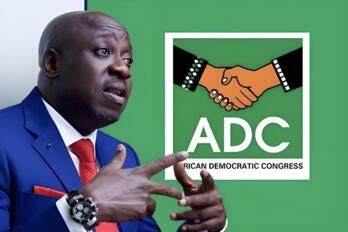
In a statement signed by its National Publicity Secretary, Mallam Bolaji Abdullahi, the ADC said it had “drawn” attention to media reports that the court had “sacked the party’s duly elected, but yet-to-be inaugurated, State Chairmen”.
But the party also restated its earlier position that the congresses did not cut short the tenure of the current state executives, who, it said, would run their full course before the new officials are inaugurated.
The party added that its legal team had been directed to “obtain and review the judgement in detail” and advise on the next steps.
That distinction matters. From the court summaries available so far, the judgment does not appear to be a simple political decapitation of the party’s state structure. Rather, the court restrained the Independent National Electoral Commission from recognising or participating in any congress organised by the disputed caretaker or interim leadership.
It also restrained former Senate President David Mark and other party figures from interfering with the functions and tenure of elected state executives.
In other words, the dispute is not only about personalities. It is about whether the interim national arrangement can lawfully override sitting state organs.
The suit was filed by Norman Obinna and six others on behalf of ADC state chairpersons and executive committees across the country.
Their case, as reported, challenged the legality of actions taken by the party’s interim national leadership, especially its decision to appoint a committee to conduct state congresses.
The plaintiffs argued that only duly elected structures could organise such congresses and that the tenure of state executives remained protected under the party’s constitutional framework.
Justice Abdulmalik accepted that reasoning, describing the originating summons as “meritorious”.
The court’s reasoning is politically significant because it leans heavily on the democratic architecture imposed on political parties under Nigerian law.
According to the reports, the judge relied on section 223 of the 1999 Constitution, which requires political parties to conduct periodic elections on a democratic basis, alongside article 23 of the ADC constitution, which reportedly limits national and state officers to two terms of eight years.
The court also held that the procedure adopted by the defendants, including the appointment of a “congress committee”, was not recognised by the party’s constitution.
In practical terms, the judgment has turned the ADC’s internal transition into a legal minefield. If the court’s position is maintained on appeal, the implication is that any faction or interim arrangement that tries to bypass elected state executives may be viewed as acting outside the party’s constitution and outside the democratic standards embedded in section 223.
That is why the fight over congresses is no longer a routine party quarrel. It has become a test case for the limits of internal party power in Nigeria’s opposition politics.
The broader context is even more revealing. This dispute is unfolding while the Supreme Court is already seized of the ADC leadership crisis. The apex court recently reserved judgment in an appeal tied to the party’s internal tussle, leaving uncertainty over the final shape of its leadership before the 2027 elections.
The Punch reported that the Supreme Court’s delay has heightened uncertainty for aspirants and deepened anxiety about the party’s ability to present a stable front.
That uncertainty is important because the ADC has been trying to project itself as a credible opposition platform ahead of 2027, but the legal war has kept dragging the party into headlines for the wrong reasons.
In March, the party had insisted that a Court of Appeal decision did not disturb the legitimacy of David Mark and Rauf Aregbesola’s leadership, stressing that the ruling was procedural and that the substantive case remained before the Federal High Court. Today’s new ruling suggests that the leadership question is still far from settled.
For the public, the key issue is not just which faction wins. It is whether Nigeria’s opposition parties can obey their own constitutions consistently enough to avoid endless court battles.
The court’s latest order, if sustained, could force the ADC to slow down any parallel congress processes and return to a strict reading of its own rules on tenure, state autonomy and internal democracy.
That would be a major setback for any group hoping to use caretaker arrangements to rapidly consolidate control.
For now, the ADC is not conceding defeat. Its statement was carefully worded. It did not reject the court outright. It did not celebrate the judgment either. It chose the safer route: acknowledge the reports, restate its earlier interpretation of tenure, and hand the matter to lawyers.
That is a familiar political tactic, but it also reflects the stakes. A wrong public response could weaken the party’s legal position or split its ranks further at a time when opposition unity is already fragile.
The real test now lies in the full text of the judgment and the next moves of the party’s legal team.
If the court record confirms the summary reports, the ADC may have to defend not only the legitimacy of its caretaker leadership but also the constitutional basis of the congresses already contemplated or conducted under it.
If it appeals, the matter could climb further up the judicial ladder and remain unresolved deep into the 2027 pre-election cycle.
Either way, the party’s crisis has moved from internal politics into a full-scale legal and strategic battle.
Follow us on our broadcast channels today!
- WhatsApp: https://whatsapp.com/channel/0029VawZ8TbDDmFT1a1Syg46
- Telegram: https://t.me/atlanticpostchannel
- Facebook: https://www.messenger.com/channel/atlanticpostng