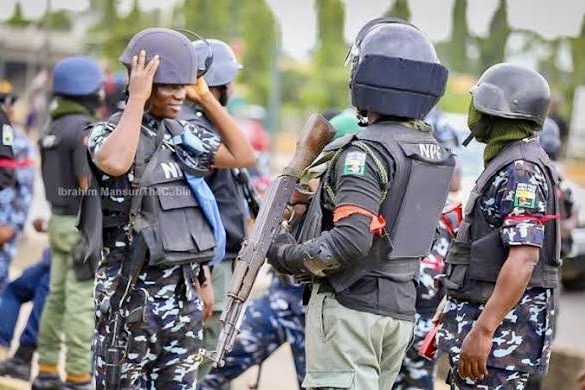
Operation Enduring Peace says soldiers stopped an arson bid in Jos North and crushed a second cell in Wase, just days after the Angwan Rukuba massacre that left 28 dead and the state on edge.
JOS, Nigeria — Plateau State has once again become the theatre of a brutal contest between armed violence and a security system struggling to stay ahead of the next strike.
In a fresh escalation on Friday, the Joint Military Task Force, Operation Enduring Peace, reported significant developments in Jos North. Its troops neutralised three suspected terrorists. They also arrested two men dressed as security operatives who reportedly tried to set homes ablaze in Dutse Uku.
The military said the suspects were caught during a late-night response to distress calls, while two other people with gunshot wounds were taken for medical attention.
Captain Chinonso Oteh, the task force spokesman, said the men were “caught in the act of arson and orchestrating violence within the community.”
He underscored a worsening pattern of criminal actors. They use camouflage, confusion, and fear as operational tools.
The army’s account also said the same push in Karem, Wase Local Government Area, ended with three suspected terrorists killed in a separate engagement.
The latest raid is more significant because it follows an intense security panic across Plateau. This panic occurred after the March 29 attack in Angwan Rukuba, also known as Gari Ya Waye, in Jos North.
Residents and authorities said gunmen stormed the area on Sunday night, with AP reporting at least 20 dead at the scene and Reuters putting the toll at 30 based on resident and local official accounts.
Governor Caleb Mutfwang later fixed the death toll at 28 in a statewide broadcast.
Mutfwang did not dress the crisis in bureaucratic language. He described the attack as “senseless”. He stated that the victims were “law-abiding citizens”. He insisted that Plateau “will not succumb to fear or intimidation”.
He also said security agencies apprehended a suspect linked to the massacre. TheCable reported that a 48-hour curfew was imposed in Jos North to aid operations.
The army’s latest success is being sold as proof that the security response is finally tightening.
Punch reported this week that the Chief of Army Staff is Lieutenant General Waidi Shaibu. He approved the immediate deployment of more than 850 additional troops to Plateau. This decision came after the Angwan Rukuba killings.
The reinforcement, according to the military, is meant to bolster troops already on the ground. It aims to restore law and order across flashpoint communities.
That reinforcement matters because Plateau’s crisis is no longer just about one massacre, one reprisal or one botched response. It involves a security environment. Attackers still believe they can move fast, strike hard, and vanish before the state can close the gap.
Human Rights Watch published a report on Friday. The report said the March 29 attack highlighted “persistent patterns of violence” in northern Nigeria. Killings, kidnappings, and limited state protection leave communities vulnerable.
The military is also trying to neutralise another dangerous narrative that has spread after the Jos North killings.
Premium Times reported that Operation Enduring Peace rejected the allegations. The soldiers did not give cover to the attackers. Troops responded to distress calls. However, they arrived after the assailants had fled.
That denial matters because in Plateau, trust is now a security asset as valuable as ammunition. Once residents begin to doubt the protection of the uniform, the balance of power changes. Insurgents and armed gangs gain a strategic advantage without firing a shot.
This is why Friday’s arrests in Dutse Uku cannot be treated as an isolated win. Men allegedly masquerading as security operatives were arrested. This suggests a theatre of war. Impersonation, arson, and psychological sabotage are components of the violence itself.
PRNigeria said the suspects were intercepted. They were allegedly setting residential buildings on fire and inciting violence. The military linked the improved response to the recent arrival of additional counter-terrorism personnel.
Yet the hard question remains the same one that has shadowed Plateau for years. How many more raids and curfews will it take? How many more condolence visits and emergency deployments will it take before the state can stop reacting? When can the state start preventing?
Reuters noted that the broader Middle Belt violence is often driven by disputes over land and grazing. It also pointed to a deeper cycle. Attacks, reprisals and weak accountability keep recycling the same tragedy. Plateau is now paying the price for that failure in blood, fear and public fatigue.
For now, the military is asking residents to stay alert and report suspicious movements. That is necessary, but it is not enough.
Follow us on our broadcast channels today!
- WhatsApp: https://whatsapp.com/channel/0029VawZ8TbDDmFT1a1Syg46
- Telegram: https://t.me/atlanticpostchannel
- Facebook: https://www.messenger.com/channel/atlanticpostng
Plateau does not only need more boots on the ground. It needs intelligence that works. It requires prosecutions that stick. It also demands a political response that treats every fresh assault as a test of state credibility. It should not be addressed as a routine security memo. Until then, the state will keep winning small battles while losing the larger war for civilian confidence.