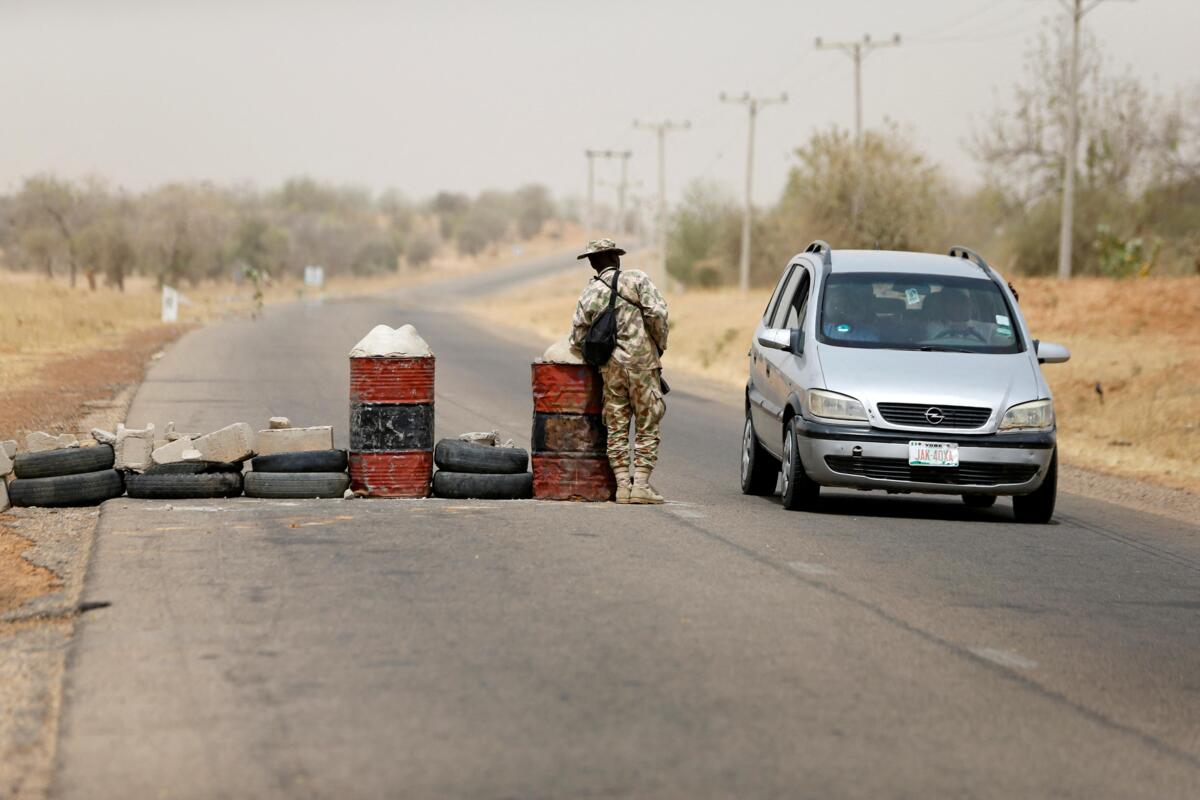
Drone surveillance has reportedly pinpointed the kidnappers’ hideout in Imo. But a suspected IED field, a disputed victim count and a N1bn ransom demand have turned a rescue mission into a race against time.
By Atlantic Post Special Investigations Desk
The most troubling development in the abduction of prospective National Youth Service Corps members in Imo State is no longer whether security agencies know where the hostages are.
They say they do.
The harder question is whether Nigeria’s security apparatus can reach them before the kidnapping becomes another test of the state’s ability to turn intelligence into safe action.
Imo State Commissioner of Police, Audu Garba Bosso, said operatives tracked the kidnappers into the bush on Friday and used drones to locate the suspected camp where the abducted graduates are being held.
Then the operation stopped short.
According to Bosso, intelligence indicated that the camp had been mined with improvised explosive devices.
“Any moment, we’ll still move into the bush,” he said.
“Yesterday, we were in the bush, we trailed them up to a particular location.”
He said the drones showed security agencies “exactly their location”, but added: “Our predicament is that with the intel we have, the camp is mined with IEDs.”
The police are now preparing heavy equipment, including bulldozers and armoured personnel carriers, for the next stage of the operation.
“We are moving in there with high-velocity vehicles, that is, bulldozers. We’re moving in with bulldozers and APCs to see how we’re going to rescue these victims unhurt,” Bosso said.
As of the latest public update on Sunday evening, the operation had not produced a confirmed rescue of the remaining captives. The Imo police said operatives were “gradually closing in”, while the 34 Artillery Brigade said all relevant security agencies were working together and exploring every available avenue.
That leaves Nigeria facing a grim equation.
The families say as many as 20 young Nigerians remain in captivity.
The kidnappers reportedly want N50m for each victim.
That puts the demand at N1bn.
And the reported ransom deadline was due to expire on Sunday morning.
The First Problem Is Not the Jungle. It Is the Numbers
Before the security agencies can claim a complete rescue, one basic question remains unresolved:
How many people were actually taken?
The answer has changed several times since the attack.
The Imo State Police Command initially announced that 10 victims had been rescued after armed men attacked two buses on the Owerri-Onitsha Road near Umunoha in Mbaitoli Local Government Area on October 1.
Police spokesman Henry Okoye said the exact number abducted was still being verified.
The Defence Headquarters later said 20 passengers had been abducted and that 10 people, including eight prospective corps members, were rescued.
The families tell a different story.
They say 30 passengers were in the two buses. Ten escaped into the bush. Twenty were captured.
That distinction is not cosmetic.
If the 10 people described officially as “rescued” actually escaped before security forces reached them, as the parents allege, then the number still in captivity could be substantially different from what the early official statements implied.
The families have also raised questions about the buses’ passenger records.
Alhaja Alimot Akande said the families demanded the transport company’s manifest but were not initially given one. She said that when a list was eventually produced, some affected corps members were missing from it.
“We have asked them to produce the drivers of the two vehicles who managed to escape the attacks, but they declined as well,” she said.
There is no evidence at this stage that the transport operator deliberately concealed passengers or records.
There is, though, an obvious investigative gap.
A definitive passenger reconciliation should now be possible through the transport company’s records, ticket information, the drivers’ accounts, NYSC mobilisation data and the identities of those who reached their destinations or escaped.
Until that exercise is completed, the state is conducting a hostage rescue with an intelligence picture that is itself still being contested.
That is dangerous.
The N1bn Ransom Changes the Stakes
The ransom demand adds another layer to an already volatile operation.
Families told the Olubadan of Ibadanland, Oba Rashidi Ladoja, that kidnappers had contacted them using the mobile phones of their abducted relatives.
“They have been calling us since yesterday (Friday) with a demand for N50m ransom each,” Akande said.
“There is no way we can raise such an amount at this period. Baba, kindly assist us. Don’t let them kill our children.”
A separate account from the transport company put the number abducted at 19, producing a N950m ransom demand rather than N1bn.
The difference between N950m and N1bn is only N50m.
The difference between 19 and 20 hostages is much bigger.
It is the difference between a documented passenger count and a family account that the authorities have yet to conclusively reconcile.
It also shows how quickly kidnappers can exploit uncertainty.
Every additional unidentified passenger potentially becomes another ransom line.
Every disputed rescue can create another layer of fear.
Every hour without a verified update allows speculation to outrun facts.
Nigeria Has Built a Ransom Economy Around Fear
The Imo kidnapping cannot be viewed only as a criminal incident on one highway.
It is part of a larger economic problem.
The National Bureau of Statistics estimated that Nigerians paid about N2.23tn in ransom during the 12 months covered by its Crime Experience and Security Perception Survey for May 2023 to April 2024. The survey estimated that 65 per cent of households affected by kidnapping paid ransom, with an average payment of about N2.67m.
SBM Intelligence later tracked a sharp rise in ransom payments. It reported that at least N2.57bn was paid between July 2024 and June 2025, against more than N48bn demanded during the period. It recorded 4,722 people abducted in 997 incidents.
The figures are not directly interchangeable. They come from different methodologies and periods.
The direction is nevertheless clear.
Kidnapping has become more than a security threat.
It is a market.
And the Imo operation presents the state with a difficult problem at the heart of that market.
How do you rescue hostages without allowing the kidnappers to gain time, money or leverage from a prolonged standoff?
The IED Threat Reveals a More Sophisticated Challenge
The reported presence of IEDs is significant because it suggests the suspected camp may have been prepared not simply as a temporary hiding place but as a defensible criminal base.
That claim still requires technical confirmation by bomb-disposal and other specialist security personnel.
It should therefore be treated as operational intelligence rather than established forensic fact.
But even as an intelligence warning, it changes the nature of the mission.
A kidnapping on a highway is one problem.
A hostage site protected by explosives is another.
The police can use drones to observe.
They can track movement.
They can establish coordinates.
Yet none of that guarantees a safe physical route to the captives.
This is where intelligence-led policing meets the old problem of ground capability.
Finding a target is not the same as reaching it.
And reaching it is not the same as rescuing hostages alive.
That distinction may now determine whether the Imo operation becomes a successful rescue or another prolonged hostage crisis.
The Government Has a Recent Model to Study
There is a striking recent comparison.
In July, security agencies rescued 44 pupils and teachers abducted in Oyo State after 56 days in captivity.
The Nigerian Army said the operation targeted the wider network supporting the abductors, including their leaders, informants, logistics links and hideouts.
President Bola Tinubu said no ransom was paid.
“Tonight, our nation has reason to give thanks. The children and teachers abducted by Ansaru terrorists in Oyo State have been rescued by our security forces, alive and unharmed. No ransom was paid. No concession was made,” Tinubu said.
The lesson is not that every hostage situation should be handled identically.
It is that successful rescue requires more than chasing captives through forests.
It requires intelligence, surveillance, coordination, pressure on the wider criminal network and a clear understanding of where the money supporting the operation comes from.
Security analyst Bulama Bukarti described the Oyo operation as potentially important precisely because it attacked the economics of kidnapping.
“The surest way to dismantle the kidnap-for-ransom economy is to remove its financial rewards,” he argued.
The Imo case now tests whether that approach can be adapted to a rapidly evolving hostage situation.
Disu Sends Reinforcements
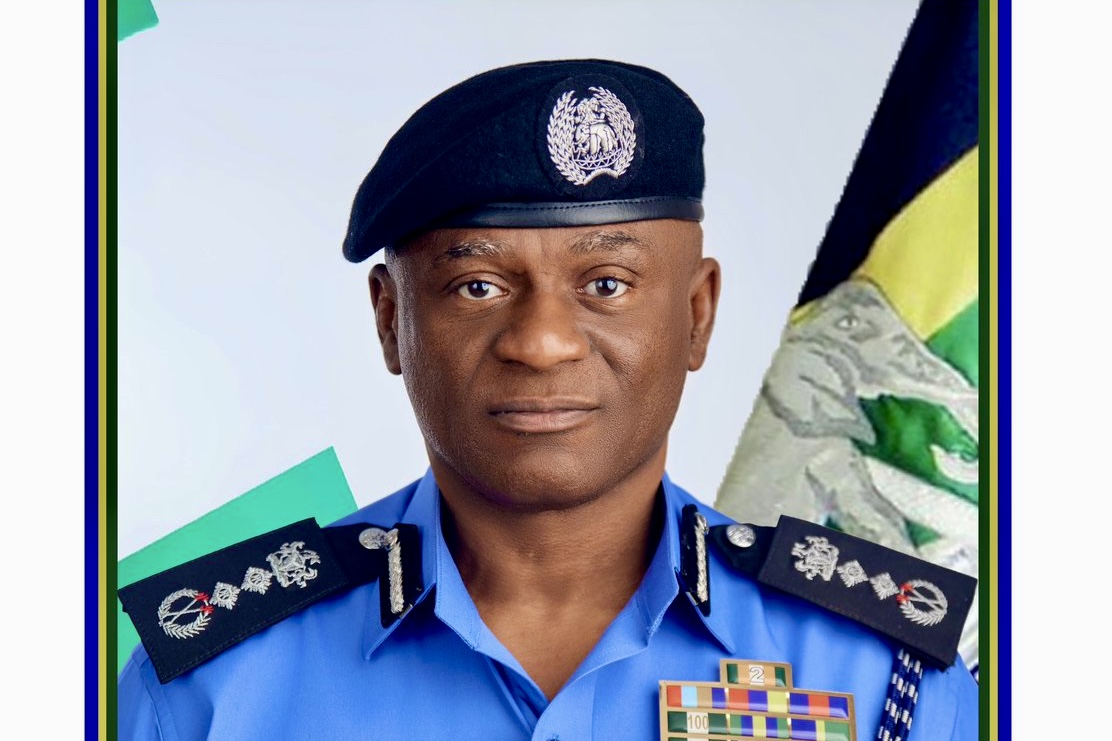
Inspector-General of Police Olatunji Disu has deployed the Deputy Inspector-General of Police in charge of Operations, Shehu Umar Nadada, alongside two commissioners of police, to reinforce the operation.
Nadada arrived in Imo on Friday, reviewed personnel and equipment and assessed the operational strategy.
His message to the families was direct.
“Definitely, let them rest assured that they are going to be rescued safely,” he said.
“I know what they are feeling, but they should work with the security agencies.”
The 34 Artillery Brigade has also confirmed that the military is involved.
Major Hashimu Abdullahi said the situation was receiving the required attention and that every available avenue was being explored.
The significance of this is that the rescue effort is no longer solely a state police operation.
It is now a multi-agency response involving police, military and intelligence capabilities.
The test is whether that coordination is producing a single, verified operational picture.
The NYSC Question Is Bigger Than This Kidnap
There is another uncomfortable truth embedded in the incident.
The victims were not travelling aimlessly.
They were travelling to serve Nigeria.
The NYSC was created in 1973 to promote national unity and deliberately expose young Nigerians to life and work outside their states of origin.
Its legal framework envisages the deployment of corps members to states other than their states of origin and provides for one year of national service, subject to statutory exemptions.
That means the dangerous journey is not an accidental by-product of the scheme.
Mobility is part of its design.
The question facing government is therefore not simply how to rescue those taken in Imo.
It is how to make cross-country national service safe enough to remain credible.
Omoyele Sowore has called for the immediate suspension and eventual scrapping of NYSC, arguing that the scheme has “outlived its usefulness in its present form”.
He proposed that graduates should, in the interim, be permitted to serve within their states of origin and that a voluntary National Job Corps should eventually replace the present system.
Peter Obi has taken a different route, demanding immediate rescue and arguing that young Nigerians should be able to travel, work and serve without fear.
“The abduction of approximately 20 prospective NYSC members travelling to their orientation camp is yet another distressing indication of the worsening insecurity in our country,” Obi said.
The disagreement over what should happen to NYSC is now political.
The security vulnerability is not.
The Parents Are Running Out of Time
For the families, none of the strategic questions is abstract.
One mother said she was on a prayer mountain while relatives searched for the money demanded by the kidnappers.
“I’m currently on a prayer mountain, praying for his release, while the family has been running helter-skelter to raise the money,” she said.
Then came the sentence that captures the broader national failure:
“We cannot stop our children from going to serve in other states; it is part of the adventure. But the security of the lives of citizens is the responsibility of the government.”
Oba Ladoja told the families: “The police are working round the clock to secure their rescue. Don’t worry yourself, the police are up to the task, and nothing will happen to your children.”
Oyo Commissioner of Police Olugbenga Abimbola said the Imo command had assured him that the victims would be rescued unhurt.
Those promises now face the hardest test of all.
At the latest public update on Sunday evening, the police said they were still closing in and the Army said the operation remained active. No verified announcement had been made of the safe release of the remaining captives in the sources reviewed.
The clock has moved past the ransom deadline reported by the families.
The coordinates have been found.
The camp has reportedly been found.
The families have been found.
Now the state must prove that finding the hostages is not where the rescue ends.
Follow us on our broadcast channels today!
- WhatsApp: https://whatsapp.com/channel/0029VawZ8TbDDmFT1a1Syg46
- Telegram: https://t.me/atlanticpostchannel
- Facebook: https://www.messenger.com/channel/atlanticpostng

Join the debate; let's know your opinion.