The battle for Nigeria’s creator economy is no longer just about views and followers. It is about who can turn an audience into sustainable income, build a recognisable brand and retain control of their business.
The best platform for a Nigerian content creator may not be the one with the most views. It is the one that makes it possible to turn attention into money without depending entirely on an algorithm, an invitation to a monetisation programme or a change in a foreign technology company’s policies.
For a comedian in Lagos, a fashion influencer in Abuja, a financial educator in Port Harcourt or a food entrepreneur in Enugu, the decision between YouTube, TikTok, Facebook and a personal website can determine whether content creation remains a side hustle or develops into a sustainable business.
Nigeria’s digital market offers considerable opportunity. DataReportal’s Digital 2027: Nigeria report estimates that the country had 116 million internet users and 61.4 million active social media user identities in October 2026. The figures indicate a large potential audience, although social media identities should not be interpreted as 61.4 million distinct individuals.
The platforms are also reaching different audiences. Advertising data cited in the report indicate potential YouTube ad reach of 36 million people, Facebook reach of 34.2 million and TikTok reach of 61.4 million adults aged 18 and above. These are advertising audience estimates, not independently verified monthly active user counts, and should not be treated as a perfect like-for-like comparison.
The central question, therefore, is not simply where Nigerian creators can attract the biggest audience. It is where they can build the most valuable one.
The Nigerian creator economy is becoming a serious business
Content creation has moved beyond celebrities, comedians and entertainment personalities. Teachers, journalists, financial advisers, chefs, fashion designers, fitness instructors, technology specialists and small-business owners are increasingly competing for attention online.
The commercial opportunity is attracting brands. The 2026 Nigeria Influencer Marketing Report by Dotts Media House examines how the market has matured between 2021 and 2025, with greater attention to campaign performance, creator partnerships and measurable commercial results.
A June 2026 report by Punch also cited an industry estimate of more than 250,000 active content creators and influencers in Nigeria. That figure illustrates the scale of competition, although it should be treated as an industry estimate rather than an official census.
For creators, the implication is straightforward. Having thousands of followers is no longer enough. Businesses increasingly want creators who can influence purchasing decisions, generate enquiries, promote products and build consumer trust.
This is where choosing the right platform becomes important.
1. YouTube: The strongest option for long-term video monetisation
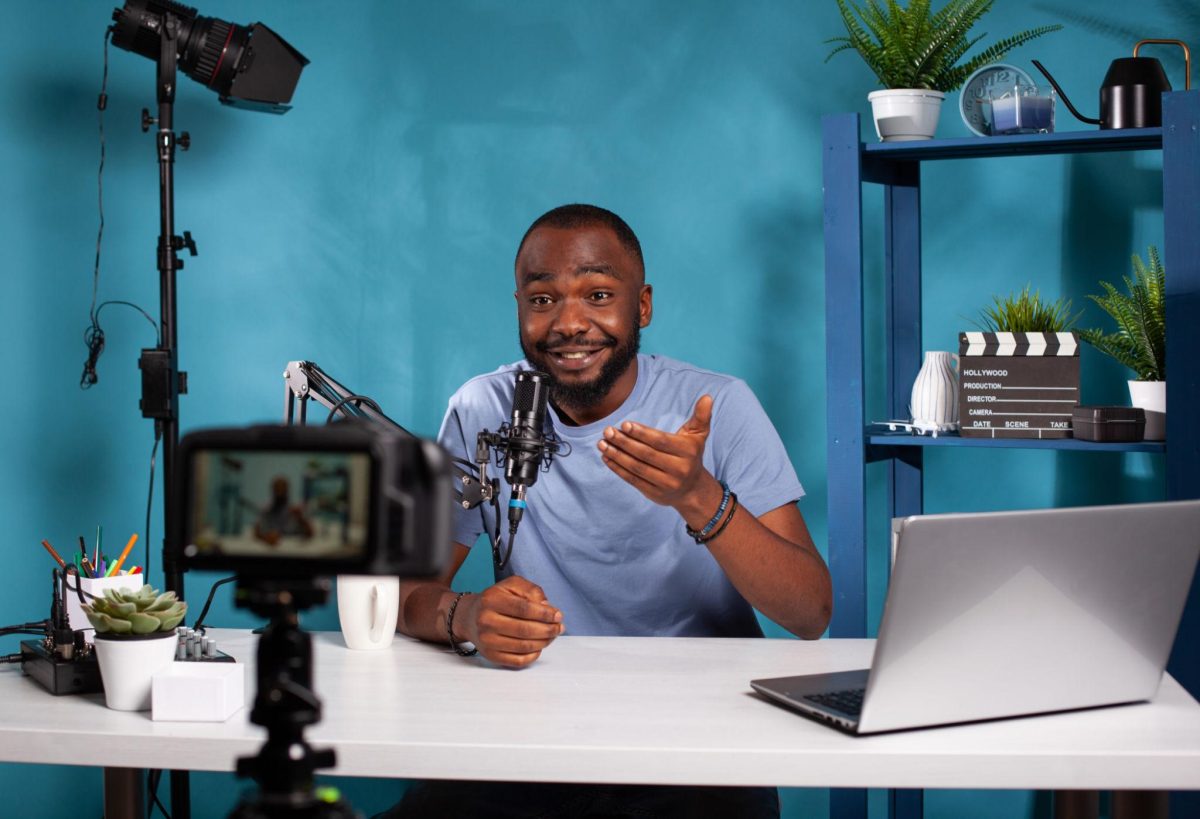
Vlogger talking with audience in excitement in front of recording digital video camera
Razvan Paraschiv (@razvanparaschiv) on X
6
Among the four options, YouTube offers one of the most established and transparent routes to earning money directly from a platform while living in Nigeria.
The Google-owned video platform allows eligible creators to earn through advertising revenue, YouTube Premium, channel memberships, Super Chat, Super Stickers and Super Thanks.
Importantly, Nigeria is included in the countries eligible for the expanded YouTube Partner Programme.
This gives Nigerian creators an opportunity to access certain monetisation features before reaching the full advertising-revenue threshold.
What does it take to qualify?
YouTube operates two principal eligibility levels.
The first is the expanded Partner Programme entry level. Creators need:
- At least 500 subscribers.
- Three valid public uploads within the previous 90 days.
- Either 3,000 valid public watch hours during the previous 12 months or three million valid public Shorts views within 90 days.
This entry level provides access to eligible fan-funding features and Shopping opportunities, subject to individual feature requirements.
For advertising revenue from long-form videos and Shorts, the higher threshold applies:
- At least 1,000 subscribers.
- Either 4,000 valid public watch hours within 12 months or 10 million valid public Shorts views within 90 days.
These requirements are published in Google’s official YouTube Partner Programme guidance.
How much does YouTube pay creators?
YouTube’s revenue-sharing structure offers an additional attraction.
Under its published arrangements, creators receive 55 per cent of net advertising revenue from eligible Watch Page advertisements. For Shorts, creators receive 45 per cent of the revenue allocated to them from the Shorts Creator Pool.
The platform also pays eligible creators 70 per cent of net revenue from channel memberships, Super Chat, Super Stickers and Super Thanks.
These percentages do not mean every creator receives the same amount per 1,000 views. Actual earnings depend on factors including audience location, advertiser demand, content category, eligible views and advertising conditions.
For Nigerian creators targeting audiences in the United States, United Kingdom, Canada and other higher-advertising-spend markets, international audience development can therefore make a significant difference.
How do Nigerian creators receive their money?
An important practical advantage is that Google’s AdSense payment system supports Nigerian accounts.
Google’s published payment information lists international wire transfers as available for both AdSense and YouTube payment accounts in Nigeria. Creators can receive eligible payments through participating Nigerian bank accounts, subject to their bank’s international transfer requirements and applicable charges.
Who should choose YouTube?
YouTube is particularly suitable for:
- Educational and tutorial creators.
- Technology reviewers.
- Financial literacy specialists.
- Business and entrepreneurship educators.
- Documentary filmmakers.
- News commentators and journalists.
- Lifestyle and entertainment personalities.
Its biggest advantage is the ability to create content that remains discoverable long after publication.
A useful tutorial uploaded today may continue attracting viewers months or even years later.
The disadvantage is that building a successful channel takes consistency, production effort and patience. Reaching the advertising threshold can also take considerable time.
Nevertheless, for creators seeking a long-term video business with platform-based advertising income, YouTube is arguably the strongest starting point.
2. TikTok: The best platform for rapid audience discovery
Study reveals TikTok’s growing influence on global music charts | The Citizen
Smiling young African female influencer doing a vlog post at home
Fortune Barthson: Talented Nigerian Script Writer and Cinematographer Creating Cinematic Experiences
African woman vlogging at home
Finding God | Biggest Nigerian Smartphone Film | Oladipo O’fresh Film – TV/Movies – Nigeria
Togo’s wax print traders – the descendants of Nana Benz – DW – 07/17/2024
TikTok has changed how people discover entertainment, products, personalities and information.
Its short-video recommendation system gives creators the opportunity to reach people who have never encountered their accounts.
That is particularly valuable for Nigerian creators starting without established audiences.
The platform’s advertising resources estimated a potential Nigerian adult audience of 61.4 million in late 2026, making it an important channel for audience development and commercial visibility. This is advertising reach, not a verified count of unique monthly users.
TikTok is especially effective for content that captures attention quickly.
Comedy, fashion, beauty, food, music, personal finance, technology demonstrations, lifestyle and product reviews can all benefit from its discovery-driven format.
A creator with a relatively small following can attract substantial attention when a video connects with the right audience.
But there is an important distinction between becoming popular on TikTok and earning money directly from TikTok.
The Nigerian monetisation problem
TikTok’s Creator Rewards Programme pays eligible creators for qualifying original content, particularly videos longer than one minute.
The programme requires creators to be at least 18, have a personal account in good standing, accumulate at least 10,000 followers and generate 100,000 video views during the preceding 30 days.
However, the programme is restricted to supported countries.
The current published eligibility list identifies the United States, United Kingdom, Germany, Japan, South Korea, France, Mexico and Brazil. Nigeria is not included.
This is an important warning for Nigerian creators who assume that reaching 100,000 views or one million followers automatically qualifies them for TikTok’s Creator Rewards payments.
It does not.
Creators based in Nigeria should not build their financial projections around this programme unless TikTok formally expands its eligibility to the country.
How can Nigerians make money on TikTok?
The commercial opportunity remains substantial despite the restriction.
Nigerian creators can generate income through:
- Paid influencer partnerships with brands.
- Sponsored product demonstrations.
- Affiliate marketing through eligible external programmes.
- Creating short-form videos for businesses.
- Promoting personal businesses and services.
- Selling digital products, training and consultations.
- LIVE Gifts where the feature is available to their accounts.
Brand partnerships can be particularly attractive because payments are negotiated directly between the creator and advertiser rather than determined entirely by TikTok’s view-based reward system.
For example, a Nigerian skincare creator with a loyal audience might earn more from a properly negotiated campaign with a cosmetics company than from millions of views that generate no direct Creator Rewards payments.
The same applies to fashion entrepreneurs, restaurant reviewers, technology influencers and business educators.
Who should choose TikTok?
TikTok is best for creators whose strongest skills are visual storytelling, entertainment, short explanations and product demonstrations.
It is particularly useful for attracting new audiences, testing content ideas and establishing commercial visibility.
Its weakness is that high views do not automatically translate into dependable income.
TikTok should therefore be treated primarily as a discovery and customer-acquisition channel by many Nigerian creators, rather than their only source of earnings.
3. Facebook: A powerful commercial platform for Nigerian audiences
Free SEO Course with Certificate | Learn SEO from Scratch
FG Expands List, Invites Content Creators To Apply for Tax Training – Legit.ng
African female content creator filming a vlog with a smartphone and microphone in a modern studio
Fawehinmi Ibukun – Digital Analyst – Natural Self | XING
At-Home Content Creation: How to Build a Mini Studio That Reflects You – hollywood mirrors
Facebook remains a significant platform for Nigerian digital entrepreneurs, particularly those producing community-focused, entertaining, educational and commercially useful content.
Its strength is the diversity of content formats and audience communities.
Unlike platforms that place greater emphasis on short-form video, Facebook supports a combination of Reels, longer videos, Stories, photographs, text posts, Pages and Groups.
This flexibility makes it suitable for creators who do not want their entire business to depend on producing videos every day.
Facebook’s advertising resources estimated its Nigerian advertising audience at approximately 34.2 million in late 2026.
However, its most important attraction is its evolving content monetisation programme.
How Facebook Content Monetisation works
Meta consolidated several earlier monetisation initiatives into Facebook Content Monetisation.
Eligible creators can earn from different formats, including:
- Reels and longer videos.
- Stories.
- Photographs.
- Text posts.
The programme rewards eligible content based on performance, including qualified views and engagement.
Meta reported that Facebook paid content creators nearly $3 billion through its monetisation programmes in 2025, representing a 35 per cent increase on the previous year.
It also disclosed that 60 per cent of its total creator payouts in 2025 went to Reels, with the remainder distributed across Stories, photographs and text posts.
These figures demonstrate the commercial scale of Facebook’s creator economy.
But Nigerian creators need to understand an important qualification.
Is Facebook monetisation available in Nigeria?
Nigeria appears on Meta’s published country and language availability list for Facebook Content Monetisation.
However, the programme remains invitation-only. Being in an eligible country does not guarantee immediate admission.
Meta allows creators to express interest through the Professional Dashboard by selecting Monetisation and then Content Monetisation.
The platform assesses eligibility, originality and policy compliance.
This means Nigerian creators should regularly check their Professional Dashboard rather than relying on third-party promises that an account can be activated for a fee.
Originality is also increasingly important.
Meta has announced measures to prioritise original content and reduce the distribution of unoriginal material. Repeatedly downloading and reposting other people’s videos without meaningful creative contributions is therefore a poor long-term business strategy.
How Nigerian creators can earn through Facebook
Apart from eligible platform monetisation, creators can earn through sponsored posts, brand partnerships, affiliate marketing, product sales, paid communities and business promotion.
A food entrepreneur, for instance, can use Facebook Reels to demonstrate recipes, photographs to showcase products, Groups to build a community and posts to direct customers to a WhatsApp ordering channel.
A business educator can publish practical financial advice and promote paid training programmes.
The platform is particularly valuable when content encourages conversation, repeat engagement and customer enquiries.
Who should choose Facebook?
Facebook is particularly suitable for Nigerian creators who:
- Target local communities.
- Produce mixed-format content.
- Have established Facebook Pages or professional profiles.
- Promote products and services.
- Cover public affairs and current events.
- Want to build commercial relationships with Nigerian businesses.
Its main disadvantage is dependence on Meta’s eligibility decisions, distribution systems and changing monetisation policies.
For creators who already have substantial Facebook audiences, however, abandoning the platform would be commercially unwise.
4. A personal website: The platform that gives creators ownership
Remote Workers for Marketing & Social Media | Agency Support | HireSava
The Best Website Builder for Small Business: A Practical Guide | Solo Blog
The Minimalist Creator – Framer Template
À propos de Selltry – Notre mission pour les créateurs africains | Selltry
Professional Link Building in Woodlawn, IL | WebJi
Ghost Websites Inspiration #67 – Marketplace – Ghost Forum
Brand Identity For Nigerian Startups: A 2026 Guide
Beselly – Venda Pelo WhatsApp e Crie Sua Loja Online em Angola | Plataforma E-commerce
Building Your Personal Website with Notion: A Guide to Creating a Content Hub | Ron Forbes
While YouTube, TikTok and Facebook compete for attention, a personal website offers something fundamentally different.
It gives creators a digital business asset they can control.
A website allows an individual to publish articles, videos, photographs, podcasts, product reviews, newsletters, portfolios and digital products without depending entirely on the rules governing a social media account.
It also gives creators greater control over their branding, domain name, website structure, customer journeys and commercial partnerships.
More importantly, a website can attract visitors through Google Search.
Unlike a social media post whose visibility may decline within hours, a useful article answering a question people repeatedly search for can continue generating traffic for an extended period.
Google’s Search Central guidance encourages original, useful, well-organised and up-to-date content. It also makes clear that SEO cannot guarantee a first-place ranking.
How Nigerian creators can make money from websites
There are several opportunities.
Display advertising: Eligible website owners can apply to Google AdSense and other advertising networks. Revenue is generally influenced by visitor numbers, audience location, content category and advertising demand.
Google requires publishers to produce original, high-quality content, comply with its policies and provide an accessible, properly organised website.
Affiliate marketing: Creators can recommend relevant products and receive commissions when visitors complete qualifying purchases through their links.
Sponsored content: Businesses can pay creators to publish sponsored articles, reviews, product features and promotional campaigns, with appropriate disclosure.
Digital products: Creators can sell electronic books, templates, online courses, training materials, guides, photographs and other downloadable resources.
Memberships and subscriptions: Writers, journalists, analysts and educators can offer premium content to readers who pay for continued access.
Professional services: Consultants, designers, photographers, technology specialists and marketing professionals can use websites to attract clients and generate business enquiries.
The Nigerian payment advantage
Google’s published AdSense payment information confirms that Nigerian publishers can receive payments through international wire transfers.
This makes a website-based advertising business a practical monetisation option, provided the publisher satisfies the relevant requirements and attracts sufficient traffic.
What makes websites different?
The biggest advantage is control.
A creator who builds an email list through a website has a direct way to communicate with subscribers without depending entirely on a social media recommendation system.
The same website can support multiple income streams.
For example, a Nigerian technology creator could publish smartphone reviews, earn advertising income, promote affiliate products, attract sponsored reviews and sell a digital guide.
A financial educator could publish investment explainers, offer paid consultations, sell educational materials and build a subscriber community.
One audience can generate income through several different products.
The disadvantages
Websites are not automatic money-making machines.
Creators must pay for domain registration, hosting, design, maintenance and, where necessary, professional development.
They also need a strategy for attracting visitors.
A website with excellent content but no traffic is unlikely to generate significant advertising income.
Building meaningful organic search traffic can take time, and Google can change its ranking systems.
The strongest strategy is therefore to use social media to attract people and the website to establish a more lasting commercial relationship.
YouTube vs TikTok vs Facebook vs Website: Which is better?
The four platforms serve different commercial purposes. Their relative strengths become clearer when creators assess them against specific business objectives.
Platform
Biggest strength
Main income opportunity
Biggest limitation
YouTube
Long-term video discovery
Advertising and fan funding
High eligibility and production demands
TikTok
Rapid audience discovery
Sponsorships and product promotion
Creator Rewards unavailable in Nigeria
Community and varied formats
Content monetisation and brand deals
Main monetisation programme is invitation-only
Website
Ownership and independence
Advertising, affiliate sales and products
Traffic generation takes time
Which platform is best for different types of creators?
For someone seeking fast audience growth: TikTok is a strong choice because its recommendation system can introduce new creators to large audiences.
For someone seeking structured advertising income: YouTube offers the clearest established monetisation framework for Nigerian creators.
For someone targeting Nigerian communities: Facebook offers useful distribution and commercial opportunities, particularly for creators who have developed loyal local audiences.
For someone building an independent digital business: A personal website is the strongest long-term asset because it provides control over publishing, audience relationships and multiple revenue streams.
For someone seeking brand partnerships: TikTok and Facebook can be valuable discovery channels, while YouTube can demonstrate authority and deeper audience engagement.
The important distinction is that the most popular platform is not necessarily the most profitable for every creator.
The smartest strategy: Combine the four platforms
The greatest mistake Nigerian creators can make is treating these platforms as competing destinations when they can function as parts of one business.
A creator who depends exclusively on Facebook could lose income following a monetisation policy change. Someone who builds an entire business around TikTok could attract millions of views without qualifying for direct view-based payments.
A YouTube creator could experience declining advertising revenue, while a website owner could struggle to attract search traffic.
Diversification reduces these risks.
A more sustainable strategy is to give each platform a defined commercial responsibility.
TikTok should attract attention. Publish short, engaging videos that introduce the creator, demonstrate expertise and generate interest.
Facebook should build community. Use Reels, posts, photographs, Stories and Groups to encourage engagement and reach audiences interested in the creator’s subject.
YouTube should establish authority. Develop longer videos, tutorials, interviews, reviews and detailed explanations that people can find through search and recommendations.
The website should convert attention into business. Publish detailed articles, build an email list, display relevant advertisements, promote products and services, and provide a permanent home for the creator’s work.
For example, a Nigerian personal finance creator could publish a 45-second TikTok explaining a common banking mistake, share a related Facebook post, produce a 12-minute YouTube explanation and publish a detailed guide on a personal website.
One subject can generate four different pieces of content, each serving a distinct purpose.
This approach also makes content production more efficient.
Creators do not necessarily need to develop entirely different ideas for every platform. They can adapt an original piece of content to different audiences, formats and viewing habits.
They should, however, retain clean original files, respect copyright rules and avoid simply reposting other people’s work.
Seven practical steps for Nigerian creators who want to earn more
Building a profitable content business requires more than uploading videos and waiting for views.
1. Choose a commercially valuable niche.
Focus on a subject where people have identifiable interests, problems or purchasing needs. Finance, technology, education, beauty, fashion, food, business and professional development offer different opportunities.
2. Build a recognisable identity.
Develop consistent branding, a distinctive presentation style and a clear promise to the audience.
3. Concentrate on audience quality.
A smaller audience that trusts a creator and responds to recommendations can be more valuable than hundreds of thousands of passive followers.
4. Develop more than one income stream.
Combine platform earnings with sponsorships, affiliate marketing, products, subscriptions or professional services.
5. Build an independent audience channel.
Use a website, newsletter and appropriately consent-based WhatsApp community to maintain communication with people who value the content.
6. Monitor commercial performance.
Track returning viewers, watch time, audience retention, website visits, enquiries, sales and campaign conversions. Follower numbers alone do not measure business success.
7. Understand monetisation eligibility before investing.
Check YouTube Studio, Facebook’s Professional Dashboard and TikTok’s Creator Tools. Review the requirements that apply to the country in which the account is registered.
This prevents creators from spending months pursuing income streams that are not available to their accounts.
The verdict: YouTube for earnings, TikTok for reach, Facebook for community and websites for ownership
There is no universally superior platform for every Nigerian creator.
But the commercial differences are becoming increasingly clear.
YouTube is arguably the strongest all-round choice for creators who want to build a sustainable video business supported by an established advertising and fan-funding system.
TikTok offers exceptional opportunities for discovery and brand visibility, but Nigerian creators must understand that its main Creator Rewards Programme is not currently available in the country.
Facebook remains useful for reaching communities, developing relationships and accessing a variety of content monetisation opportunities, although invitations remain a significant barrier.
A personal website provides the greatest independence. It allows creators to build an identifiable digital business, attract search traffic, develop customer relationships and diversify revenue without relying on a single social media company.
The most commercially intelligent approach is not to choose one platform and ignore the others.
It is to build an audience across platforms while gradually moving valuable relationships and commercial activity towards assets that the creator controls.
For Nigerian creators, the next stage of digital entrepreneurship will not be determined by who goes viral most frequently.
It will be determined by who can turn attention into trust, trust into customers and customers into a sustainable business.
That is the difference between being a popular content creator and owning a profitable digital media enterprise.
Follow us on our broadcast channels today!
- WhatsApp: https://whatsapp.com/channel/0029VawZ8TbDDmFT1a1Syg46
- Telegram: https://t.me/atlanticpostchannel
- Facebook: https://www.messenger.com/channel/atlanticpostng


Join the debate; let’s know your opinion.