
GAFAMORG wants all 36 State Houses of Assembly to produce evidence that citizens were consulted before endorsing a historic transfer of policing powers. With the constitutional amendment advancing, the question is no longer simply whether Nigeria needs State Police, but who gets to control them.
ABUJA, Nigeria — Nigeria’s proposed transition to a dual policing system is approaching a decisive stage, but an uncomfortable democratic question is emerging alongside the political momentum: were the people who will live under State Police actually given a meaningful opportunity to shape the reform?
The Gani Fawehinmi Memorial Organisation (GAFAMORG) believes the public has not been adequately accounted for in the process. It is now demanding documentary evidence from all 36 State Houses of Assembly to establish whether citizens were consulted before lawmakers endorsed the constitutional alteration.
Its intervention raises an issue extending beyond the familiar debate about whether policing should be decentralised. It concerns the accountability of institutions that will eventually possess significant powers over people’s liberty, political activities and personal security.
A State Police Service could bring law enforcement closer to communities struggling with kidnapping, banditry, communal violence and other security threats. But if its leadership becomes answerable primarily to political power, decentralisation could also move the risk of police abuse closer to the citizens it is supposed to protect.
GAFAMORG’s campaign is therefore centred on a fundamental democratic principle: the creation of a powerful security institution should not be treated as a decision for politicians alone.
State Police approval has moved faster than public scrutiny
The constitutional amendment establishing a dual policing structure has made substantial progress through Nigeria’s legislative system.
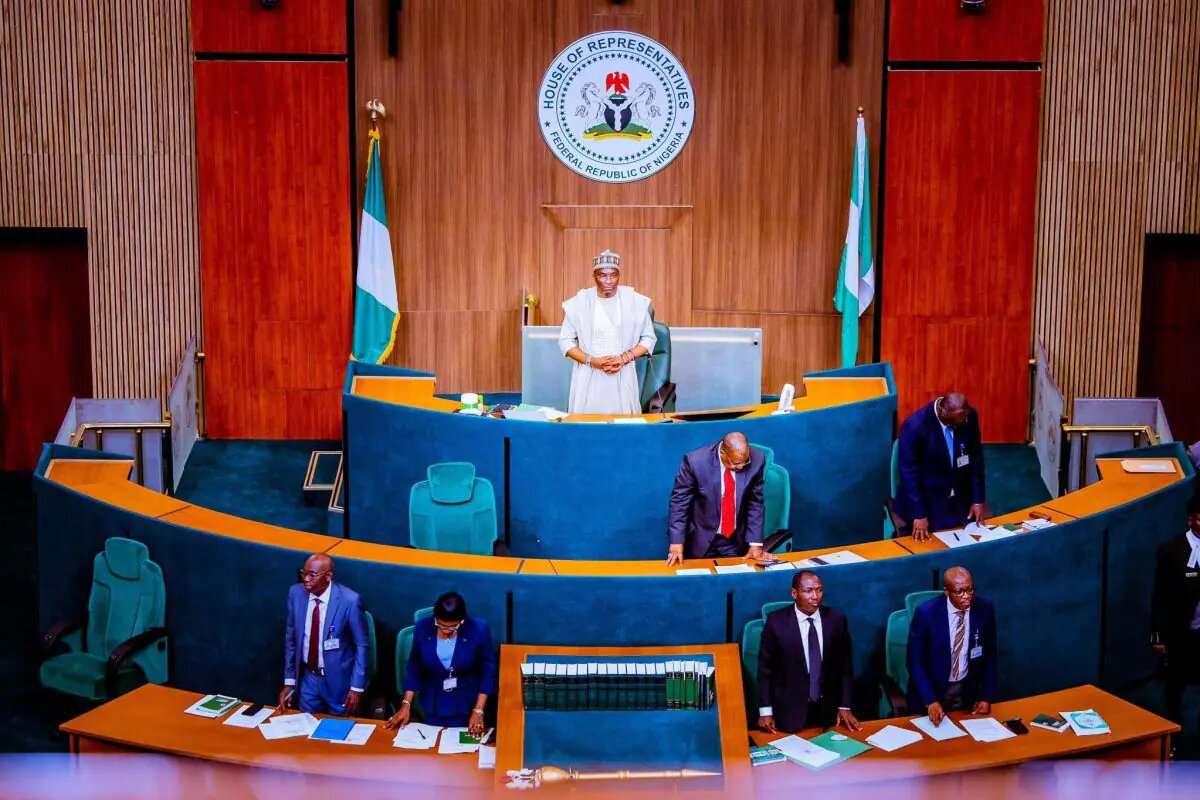
The Senate passed the proposal in June 2026, while the House of Representatives approved the executive version on 23 July. The Constitution of the Federal Republic of Nigeria, 1999 (Sixth Alteration) Bill, 2026, was subsequently transmitted to the 36 State Houses of Assembly on 16 September for consideration under Section 9 of the Constitution.
Section 9(2) requires constitutional alterations to secure the support of at least two-thirds of members of each chamber of the National Assembly and approval by resolutions of at least two-thirds of the state legislatures. For Nigeria’s 36 states, that means at least 24 approvals.
The required state threshold was crossed by 22 October, according to legislative tracking by Legis360. Its record showed that 24 assemblies had approved the proposal, although some approvals came with conditions or reservations.
Subsequent official announcements put the number higher, but the figures have not been entirely consistent.
On 3 November, the Clerk to the National Assembly, Kamoru Ogunlana, confirmed that his office had received and verified approval reports from 28 State Houses of Assembly.
On 4 November, Senate Leader Opeyemi Bamidele disclosed that 30 assemblies had approved the proposal. The Federal Ministry of Information reported that six states were yet to communicate their decisions, prompting the Senate to give them until 15 November.
On 5 November, however, the House Deputy Speaker, Benjamin Kalu, was reported as putting the number at 29.
These figures may reflect different reporting cut-offs and the arrival of additional legislative resolutions. Nevertheless, they underline the importance of a complete, publicly accessible record showing exactly which assemblies approved the amendment, when they did so and under what circumstances.
The political momentum is clear. The public record is not yet equally straightforward.
For GAFAMORG, the question is whether the speed of the legislative process was matched by meaningful engagement with the people whose lives will be affected.
Who was consulted before lawmakers voted?
In its statement, titled State Police and the Exclusion of the People: GAFAMORG’s Last Push for Democratic Participation and Public Accountability, the organisation questioned the extent to which ordinary Nigerians participated in the constitutional amendment process.
It specifically identified women, young people, workers, persons with disabilities, journalists, human rights defenders, civil society organisations and vulnerable communities as groups whose perspectives should have been sought.
“Where is the ordinary Nigerian in this process?” the organisation asked.
GAFAMORG wants each State House of Assembly to explain whether public hearings or consultations were held before members voted.
It is seeking the dates and venues of such meetings, public notices announcing them, details of the organisations and communities represented, and copies of memoranda, petitions and objections submitted by participants.
It also wants committee reports, Votes and Proceedings, resolutions and other legislative documents showing how lawmakers considered public recommendations.
These are important requests because a public hearing is not meaningful merely because a meeting was organised.
The quality of participation matters. Citizens must have reasonable notice, access to the proposed legislation, an opportunity to express concerns and some assurance that their submissions were considered.
A hearing attended predominantly by political officeholders, government officials and organisations close to the ruling establishment would not necessarily demonstrate broad public participation.
The central issue is whether those most likely to experience the consequences of State Police were genuinely represented.
GAFAMORG has announced that it will not automatically conclude that a public hearing never occurred simply because an assembly has not published evidence of one.
Instead, it intends to ask, verify, document and publish the responses.
That distinction is important. Failure to produce a record is a legitimate transparency concern, but it is not, by itself, proof that a hearing did not take place.
A legal distinction that cannot be ignored
There is also an important distinction between the constitutional requirements for altering the Constitution and the democratic standards expected of lawmakers.
Section 9(2) specifies the legislative majorities and state-level resolutions required for a constitutional alteration. It does not expressly make a separate public hearing in every State House of Assembly a condition for the validity of its resolution.
Consequently, the absence of published evidence of a hearing does not automatically establish that a state’s approval is unconstitutional.
That does not make public participation unimportant.
State legislatures remain accountable to the citizens they represent. Their internal procedures and applicable legislative rules also matter. More importantly, a reform of this magnitude should not be judged exclusively by whether lawmakers have satisfied the numerical requirements for constitutional approval.
There is a difference between meeting a constitutional voting threshold and securing informed public confidence.
A legislature can satisfy the first while leaving serious questions about the second.
GAFAMORG’s proposed investigation should therefore be understood primarily as an exercise in democratic accountability, transparency and public scrutiny rather than a declaration that the constitutional process is automatically invalid.
The consultation that happened, and the question it does not answer
The Federal Government has a potential response to accusations that Nigerians were excluded entirely from the wider policing reform.
On 4 August 2026, the Presidential Working Group on the proposed National Policing Bill announced a nationwide invitation for memoranda and policy proposals.
The initiative was intended to gather contributions from citizens, professional bodies, civil society organisations, security agencies, state and local governments, academics and other stakeholders.
Chief of Staff to the President and Chairman of the Working Group, Femi Gbajabiamila, said the proposed legislation would address recruitment, training, oversight, funding, human rights protection and state readiness.
The submission window was subsequently extended and closed on 21 August at 5pm. The official National Policing Bill portal states that every memorandum received was considered and contributed to the drafting process.
This is significant evidence that the Federal Government created a channel for public contributions to the proposed implementation framework.
But it does not answer the specific question GAFAMORG is raising.
The constitutional amendment had already passed through the National Assembly before the presidential working group opened its consultation. The public submissions exercise was directed towards developing the National Policing Bill, while state legislatures subsequently considered the constitutional alteration.
The two processes are related, but they are not interchangeable.
A national consultation organised by a presidential working group cannot, by itself, establish that every State House of Assembly consulted its own residents before endorsing the constitutional amendment.
Nor does the existence of an online submission portal establish how widely the opportunity was publicised, whether marginalised communities could participate effectively or how competing recommendations were resolved.
The government has demonstrated that a channel for public input existed. GAFAMORG wants evidence of how citizens were represented in the state-level constitutional decisions.
That is a question the two processes should not be allowed to obscure.
The danger is not decentralisation alone, but political control
The argument for State Police is compelling in a country where security threats are often local, while policing authority remains heavily centralised.
A police structure operating closer to communities could improve intelligence gathering, response times and cooperation with local authorities.
States facing kidnapping, banditry, communal conflicts and other security emergencies could have greater capacity to respond to circumstances that may not receive sufficient attention from a distant federal command.
But the concerns about political interference are equally important.
Governors control substantial political and administrative resources within their states. Giving them access to independent policing institutions without credible checks could create opportunities to influence law enforcement for partisan purposes.
Such risks could become particularly serious during elections, political protests, disputes between government officials and opposition parties, and investigations involving powerful individuals.
GAFAMORG warns that State Police must not become instruments for intimidating political opponents, suppressing peaceful protests, targeting journalists or silencing human rights defenders.
It also raises the possibility of ethnic, religious and political discrimination.
These concerns are not abstract. They go to the heart of the relationship between citizens and the state.
A police officer who has the power to arrest, detain, investigate and deploy force must be accountable to the law rather than the personal interests of whoever controls the government.
GAFAMORG describes the danger of unchecked political control as a potential “civilian dictatorship”.
The organisation’s position is not that security reform should be abandoned. It says the danger lies in creating powerful policing institutions without enforceable protection for citizens.
The proposed safeguards must survive implementation
The constitutional amendment itself contains provisions intended to address some of the concerns surrounding political interference.
Under the proposed framework, a State Police Service would be headed by a Commissioner of Police appointed by the governor on the recommendation of the National Police Council, subject to confirmation by the State House of Assembly.
The proposed arrangements also provide for independent State Police Service Commissions and a framework for regulating recruitment, promotions and disciplinary matters.
Another significant provision concerns funding. The amendment provides for money standing to the credit of a State Police Service to be paid directly to the service, reducing the risk that a governor could weaken the institution by withholding its funding.
The bill also proposes protections for oversight institutions against executive direction or control.
There are further provisions addressing the operational relationship between state and federal police.
The Federal Police Service would retain responsibility for national and federal matters, including terrorism, organised crime, cybercrime and border security. State Police Services would perform policing functions within their respective jurisdictions.
The proposed framework also contemplates community policing committees across local government areas, with representation from traditional institutions, women, youth organisations, persons with disabilities, civil society and professional bodies.
These are important institutional protections.
Yet provisions written into a constitutional amendment or proposed legislation cannot guarantee themselves effective enforcement.
The quality of appointments, the independence of police oversight bodies, access to justice, the credibility of complaints mechanisms and the willingness of political leaders to respect legal limits will determine whether the safeguards work.
A police commission that exists only on paper cannot protect a journalist facing unlawful detention.
An independent complaints mechanism that cannot investigate powerful officials cannot provide meaningful accountability.
And a prohibition against partisan policing will mean little if citizens cannot obtain an effective remedy when it is violated.
This is why GAFAMORG’s demands for independent oversight, transparent recruitment, enforceable disciplinary procedures, human rights protection and gender justice deserve attention.
The financial question is another test of accountability
Establishing and maintaining a police service requires substantial, sustained funding.
States will need to recruit and train personnel, provide equipment, establish communication systems, maintain vehicles, fund investigations and build secure detention facilities.
They must also provide salaries, pensions, medical support and professional training.
The proposed direct-funding provision is designed to protect State Police Services from political manipulation through financial control. But it does not, by itself, resolve the question of where the resources will come from or how spending will be audited.
Nigeria’s 36 states have different revenue bases and financial capacities.
A wealthy state may be able to finance sophisticated policing infrastructure, while a state with weak internally generated revenue could struggle to recruit, equip and maintain a professional force.
That disparity could create unequal policing standards across the federation.
It could also make some state police services more dependent on political officeholders, wealthy private interests or other unofficial sources of support.
GAFAMORG’s demand for transparent funding arrangements and accountable administration is therefore not simply an administrative concern. It is directly connected to the independence of policing institutions.
Without predictable funding and independent financial scrutiny, formal autonomy could become a constitutional promise without practical substance.
GAFAMORG launches a nationwide evidence test
The organisation says it is moving beyond public criticism with the launch of its GAFAMORG National State Police Democratic Participation and Accountability Assessment.
The initiative will cover all 36 State Houses of Assembly.
According to the organisation, formal letters will be sent to each legislature requesting documentary evidence of public hearings, consultations, stakeholder participation and the consideration of recommendations.
The exercise will also examine whether the assemblies documented concerns raised by civil society groups, labour organisations, women’s organisations, youth groups and human rights institutions.
GAFAMORG plans to establish a state-by-state accountability register, examine legislative responses, identify gaps and produce a national assessment report.
Its findings are expected to be made available to Nigerians, media organisations, civil society groups, labour movements, professional associations and relevant national institutions.
The approach could provide an important public record of how the constitutional process unfolded across the federation.
It could also expose differences between states that conducted detailed consultations and those that relied primarily on legislative deliberations.
The credibility of the exercise, however, will depend on its methodology.
The organisation will need to distinguish between assemblies that held hearings but failed to publish records, assemblies that conducted limited consultations and those that did not hold any identifiable public engagement.
It will also need to examine the quality of responses rather than simply count how many assemblies reply.
A generic letter claiming that consultations occurred would not adequately answer questions about who attended, what was discussed and whether the recommendations influenced the final decision.
The assessment will be most valuable if it publishes the supporting documents, records unanswered requests and gives each assembly a fair opportunity to explain its process.
The final test will be whether citizens can hold the police accountable
GAFAMORG says its campaign will continue beyond the constitutional amendment, with demands directed at the National Assembly, Federal Government and state governments over the proposed National Policing Bill and relevant state legislation.
That distinction is important because constitutional approval does not mean that state police services can immediately begin operations.
The official National Policing Bill portal describes the reform as a phased transition. Each state must enact its own enabling law, while its proposed police service must meet nationally prescribed minimum standards and obtain certification before commencing operational policing.
The implementation stage will therefore provide another opportunity to scrutinise the structure, powers, funding and accountability of each proposed service.
GAFAMORG says it has developed a document titled GAFAMORG’s 46 Safeguards for Democratic Accountability in State Policing, alongside a proposed Gender Justice and Accountable Policing Supplement.
It argues that women must be protected both as members of the public and as participants within policing institutions.
The organisation’s appeal draws on the legacy of late human rights lawyer and activist Chief Gani Fawehinmi, whose public life was associated with challenging arbitrary power and defending fundamental rights.
It is calling on civil society organisations, labour movements, professional associations, women’s rights groups, youth organisations, community leaders, journalists and human rights defenders to support its assessment.
For Nigeria, the challenge is no longer simply whether to replace an exclusively centralised policing structure with a dual system.
It is whether decentralisation will produce more accountable security institutions or create additional centres of coercive political power.
State Police may offer Nigeria a better chance of responding to local insecurity. But the success of that reform cannot be measured only by the number of state legislatures that vote in favour or the speed with which a new institutional structure is established.
It must also be measured by whether an ordinary citizen can challenge an unlawful arrest, report police brutality, question a governor’s directive, protest peacefully and demand justice without fear of retaliation.
GAFAMORG’s message is that constitutional reform must not reduce citizens to spectators.
The organisation’s most important test may ultimately be whether Nigeria’s emerging State Police system can demonstrate that the people it is empowered to police have a meaningful voice in holding it accountable.
Follow us on our broadcast channels today!
- WhatsApp: https://whatsapp.com/channel/0029VawZ8TbDDmFT1a1Syg46
- Telegram: https://t.me/atlanticpostchannel
- Facebook: https://www.messenger.com/channel/atlanticpostng


Join the debate; let’s know your opinion.