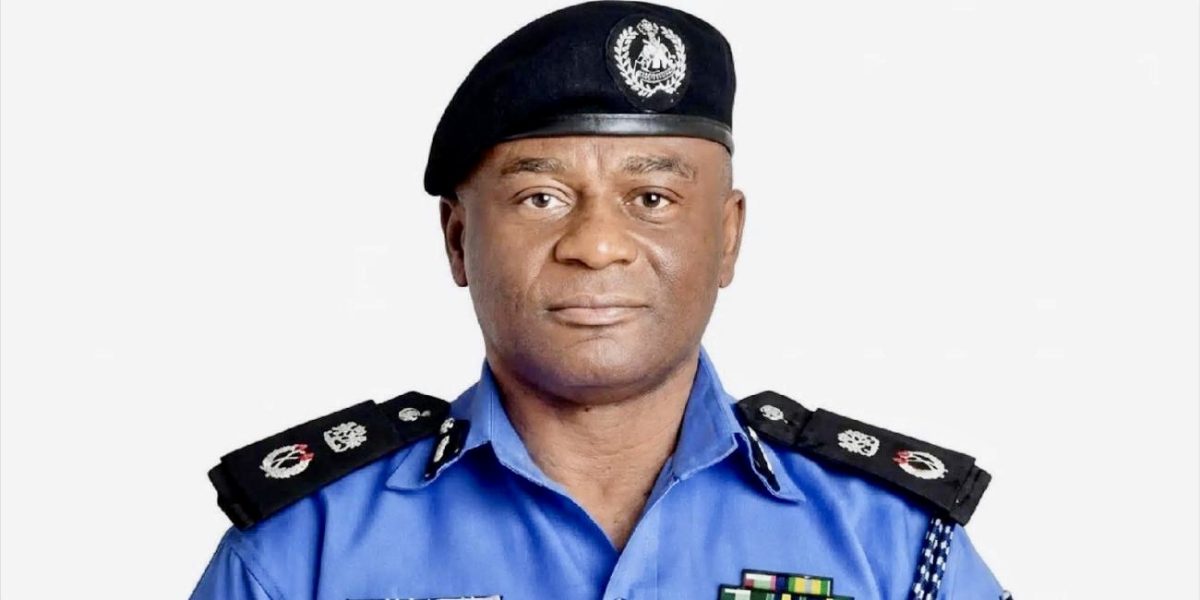
A businessman says police authorities failed to return his recovered luxury car and allegedly released it to individuals suspected of involvement in its disappearance. A seven-day ultimatum to IGP Tunji Disu now raises uncomfortable questions about police accountability, evidence handling and the protection of property rights in Nigeria.
A Nigerian businessman’s seven-day final notice to Inspector-General of Police Olatunji Rilwan Disu has brought renewed attention to disturbing allegations surrounding the handling of a ₦600 million Rolls-Royce Phantom Convertible reportedly recovered during a police investigation.
At the centre of the controversy is a fundamental question that goes beyond the disappearance of an expensive automobile: how can the police recover allegedly stolen property, examine evidence establishing its ownership and subsequently become embroiled in a dispute over who should receive it?
The businessman, Cyril Obazuaye, through his solicitors, Adeboro Adamson, SAN & Co., is demanding an investigation into alleged misconduct, abuse of office and obstruction of justice involving senior officers of the Federal Criminal Investigation Department (FCID), Abuja.
In a final notice dated October 27, 2026, addressed to IGP Disu, the lawyers demanded an urgent investigation into allegations that officers frustrated efforts to return their client’s recovered 2013 blue Rolls-Royce Phantom Convertible, bearing Vehicle Identification Number (VIN) SCA682DS4DUX75170.
The latest correspondence follows an earlier petition submitted to the Inspector-General on June 2, 2026, which the lawyers said was acknowledged by the IGP’s office on June 9.
Despite subsequent reminder letters, Obazuaye’s legal representatives maintained that their client had not received a formal response or been informed of any meaningful investigative action.
The solicitors expressed concern over what they described as the continued silence of police authorities despite the seriousness of the allegations.
“Despite our repeated correspondence and the seriousness of the allegations raised, our Client has yet to receive any formal response or be informed of any discernible action taken on the petition.
“This continued silence is a matter of grave concern, particularly given the allegations surrounding the release of our Client’s recovered 2013 Blue Rolls-Royce Phantom Convertible, with Vehicle Identification Number SCA682DS4DUX75170.”
The lawyers asked Disu to ensure that the allegations were investigated and that their client received a written account of the action being taken.
“Accordingly, we hereby issue this final notice and respectfully request that your office urgently cause the petition to be investigated and provide us with a written update on its status and the steps being taken to address the issues raised,” the letter stated.
They warned that failure to provide a satisfactory response within seven days of receiving the correspondence would leave their client with no option but to pursue available legal remedies.
“Take notice that, unless we receive a satisfactory written response and confirmation of appropriate action within seven (7) days of receipt of this letter, our Client shall proceed to pursue all available legal and judicial remedies for the protection and enforcement of his rights, without further notice or reference to your office.”
The demand places the responsibility on the leadership of the Nigeria Police Force to explain how the disputed vehicle was handled and whether the officers involved acted within the law.
How a ₦600 Million Rolls-Royce Allegedly Disappeared
The dispute reportedly began in April 2022 when Obazuaye entrusted the vehicle to car dealer Henry Udubriah for the limited purpose of presenting it to a prospective buyer.
According to the businessman’s earlier petition, the arrangement did not authorise Udubriah to sell, transfer or otherwise dispose of the Rolls-Royce without his express consent.
However, Udubriah allegedly disappeared with the vehicle and remained unreachable for several months.
After repeated attempts to contact the dealer failed, Obazuaye reportedly sent someone to his address, only to discover that neither the dealer nor the automobile could be found.
The businessman subsequently initiated police action.
On May 16, 2022, he reportedly submitted a formal complaint to the Deputy Inspector-General of Police at the FCID, Abuja, through the Force Intelligence Bureau/Intelligence Response Team (FIB/IRT) Commander at Gusape.
The complaint was submitted through his then solicitors, Shinaba, Ogon & Co.
Obazuaye also reportedly announced a ₦2 million reward for information that could lead to the recovery of the missing vehicle.
A further petition followed on June 21, 2022, addressed to the Assistant Inspector-General of Police at the FCID Annex, Alagbon, Lagos, through Rawling & Partners.
The legal team also stated that the Federal High Court in Lagos granted an order on July 20, 2022, through police channels, directing that the suspect’s bank accounts be blocked pending the determination of the matter.
The court order, as described by the solicitors, represents another potentially important part of the investigative record.
Its terms, implementation and present status should be established through certified court documents rather than competing accounts of what the police were instructed to do.
Police Recovered the Vehicle. Then the Real Dispute Began
According to the businessman’s petition, police investigations eventually led to the recovery of the Rolls-Royce from two individuals allegedly preparing to sell it.
Obazuaye reportedly presented documents to establish ownership, including the original purchase invoice, certified shipping and customs clearance documents, a United States automobile dealership licence and other identification materials.
The lawyers maintained that then Assistant Inspector-General of Police Frank Mba examined the documentation and directed that the recovered vehicle be released to their client.
But the alleged directive was not implemented before Mba’s subsequent promotion to Deputy Inspector-General of Police and transfer to Abuja.
The solicitors further alleged that the individuals from whom the car was recovered were subsequently released without their client receiving formal notification.
This is where the matter assumes greater significance for police accountability.
Recovering a vehicle is only one stage of a criminal investigation. Investigators must also establish its ownership, document the circumstances of recovery, preserve relevant evidence and account for every subsequent decision affecting the property.
The central allegation here is that those responsibilities were not properly discharged.
If an AIG examined the ownership documents and ordered the vehicle’s release to the businessman, who subsequently authorised a different outcome?
Was the earlier directive formally withdrawn?
Was another instruction issued by a superior officer?
Was a court order, ownership dispute or other legal consideration relied upon to justify withholding or releasing the vehicle?
These questions cannot be settled by informal explanations. They require documentary evidence.
The police should be able to produce the recovery report, custody records, investigation diary, written directives and any document authorising the eventual release of the Rolls-Royce.
Without those records, it becomes difficult for the public to distinguish a legitimate investigative decision from the alleged misuse of official authority.
The ₦30 Million Dispute: Was the Owner Asked to Pay for His Own Property?
Another troubling dimension of the controversy concerns an alleged ₦30 million transaction involving the dealer and the individuals said to have possessed the vehicle when police recovered it.
According to Obazuaye’s lawyers, the individuals claimed they had paid Udubriah ₦30 million for the Rolls-Royce.
The businessman disputed the transaction, maintaining that he never authorised the sale and did not receive the money.
His solicitors also questioned the documentary evidence allegedly presented by Emmanuel Olabode to establish that payment had been made.
The lawyers said three receipts presented by Olabode were dated 2021, several months before the vehicle was allegedly entrusted to Udubriah in April 2022.
They also challenged the absence of verifiable bank transfer records or other credible evidence establishing the alleged payment.
The timing of those receipts raises questions that deserve independent examination.
What transaction did the receipts represent? Who issued them? Who received the money? Were the documents connected to an earlier arrangement involving the vehicle, or were they presented as evidence of a purchase that supposedly occurred later?
Their dates alone do not establish that the receipts are false. Their authenticity, purpose and connection to the disputed transaction must be independently verified.
More seriously, Obazuaye’s lawyers alleged that police officers demanded that their client refund the ₦30 million reportedly paid by the individuals before his recovered vehicle could be released to him.
If established, such a condition would raise fundamental questions about the legal basis for requiring an alleged victim of unauthorised disposal of property to reimburse third parties before recovering his automobile.
The question is not simply whether someone paid money to a car dealer.
It is whether that payment can lawfully establish ownership against a person who says he never authorised the transaction, and whether police officers had any legal basis for making reimbursement a condition of releasing the recovered vehicle.
A transparent investigation should establish whether the ₦30 million changed hands, identify the recipient and establish whether any officer made the alleged demand.
Commissioner Zungura Denies Collecting Money, But Important Questions Remain
One of the officers named in the controversy is Ibrahim Zungura, who was a Deputy Commissioner of Police during the events in question and has since become a Commissioner of Police.
In an earlier response to SaharaReporters, Zungura denied collecting money from anyone in connection with the matter and challenged Obazuaye to provide evidence supporting the bribery allegation.
He insisted that allegations of financial misconduct must be backed by verifiable evidence.
“I don’t know who gave me money, but it’s very simple. If somebody alleges you collect or give you bribe, let him just prove it. Either he gave you cash or through somebody or through account or whatever it means, let him just prove it,” Zungura said.
“And that’s all. If he does not prove it, then it will be against him. I’m not leaving it like that,” he added.
He further stated:
“I will never collect anybody’s money. But let him just prove it.”
Zungura’s response is relevant because it places his denial on the public record.
Nevertheless, denying that he collected money does not independently resolve the separate questions surrounding the alleged release of the recovered vehicle.
In that earlier exchange, he did not directly explain the circumstances under which the Rolls-Royce was allegedly released to the individuals from whom it had been recovered.
He also did not directly address the allegation that Obazuaye was required to refund the disputed ₦30 million before the vehicle could be returned.
These are distinct issues and should not be treated as interchangeable.
The businessman must substantiate any allegation of financial impropriety. Equally, the police should be able to explain the documentary and administrative basis for their handling of a recovered vehicle.
Investigating Officer Confirms He Handled the Case
The investigating officer identified in the earlier reporting as Aliyu Yusuf Abulde also confirmed to SaharaReporters that he handled the matter from its beginning until it was transferred following a request from the Inspector-General’s office.
His response is significant because it establishes that the officer acknowledged having firsthand knowledge of the investigation.
“I have the first-hand information about the case and I can be able to say a lot on it because I investigated the case from A to Z,” he told SaharaReporters.
However, Abulde declined to provide further details, citing the Nigeria Police Force’s media policy.
He directed the newspaper to the appropriate police authority for an official response.
His statement makes the investigative records particularly important.
If an officer who handled the matter from beginning to end can account for the recovery, ownership documentation, subsequent directives and transfer of the investigation, a formal examination of his records should help establish what happened.
It should also identify the officers who assumed responsibility after the investigation was transferred.
A transfer of investigative responsibility should not create a gap in accountability.
The movement of a case between officers does not remove the obligation to preserve its records or explain decisions already taken.
What Nigeria’s Police Accountability Framework Requires
The controversy comes at a time when police authorities have publicly emphasised accountability, transparency and improved complaint-handling procedures.
The Nigeria Police Act 2020 identifies accountability and transparency as fundamental principles of policing. It also establishes the protection of lives and property as a primary responsibility of the Force.
These obligations are especially relevant where allegations concern the handling of property recovered during a criminal investigation.
The Police Service Commission also has an established Police Discipline Department responsible for disciplinary matters, appeals, petitions and public complaints involving police personnel.
Its stated responsibilities include referring cases with serious criminal content or police operational implications to the Inspector-General for investigation and reviewing disciplinary decisions involving senior officers.
The Federal Ministry of Police Affairs also operates the Police Public Complaints Committee, which provides a mechanism for reporting police abuses and seeking independent examination of qualifying complaints.
These mechanisms make it important that allegations against serving officers are not simply treated as disputes between individual citizens and police formations.
They must be assessed through established procedures that can produce credible findings and appropriate disciplinary or criminal consequences where wrongdoing is established.
The Nigeria Police Force itself has also made public commitments to strengthening its accountability architecture.
On March 4, 2026, during his inaugural conference with senior officers, IGP Disu announced the strengthening of internal accountability mechanisms, including the Complaints Response Unit and the X-Squad.
In a separate development reported by TheCable on July 25, 2026, the Force said it was strengthening the Complaints Response Unit to improve the handling of misconduct allegations.
The Force Public Relations Officer, Anietie Edem, described the unit as a central accountability mechanism.
“The CRU is our number one accountability body. It is a digital platform where we receive complaints from members of the public against police officers,” he said.
He added:
“We treat the complaints immediately, except when we want to go into investigation; then we seek the approval of the IG to investigate such.”
The institutional question is whether those accountability arrangements can deliver a transparent investigation when allegations involve senior officers and a case that has already passed through different levels of police authority.
An effective complaints system must do more than acknowledge petitions. It must provide traceable case records, communicate decisions and demonstrate that allegations are investigated without favour or interference.
The Evidence the Inspector-General Must Examine
The seven-day notice provides IGP Disu with an opportunity to establish the facts through a properly documented investigation.
At the very least, an inquiry should establish:
- The precise circumstances in which the Rolls-Royce was recovered, including the identities of the individuals from whom it was recovered.
- The original ownership and importation records presented by Obazuaye and their verification by investigators.
- The identity of the officer who authorised the vehicle’s release and the written authority relied upon.
- Whether AIG Frank Mba issued a formal directive for the vehicle to be returned to Obazuaye and whether another instruction subsequently superseded it.
- The circumstances surrounding the alleged ₦30 million payment, including bank records, receipts, transaction dates and the identities of the parties involved.
- Whether any officer demanded reimbursement from Obazuaye as a condition for releasing the vehicle.
- The present location and custody status of the Rolls-Royce.
- Whether the earlier Federal High Court order was implemented and how it affected the investigation.
A credible investigation should also establish whether the officers concerned followed appropriate procedures and whether any criminal or disciplinary wrongdoing occurred.
Given that some of the officers named in the petition were involved in the original investigation, the Inspector-General should consider an investigative arrangement that is sufficiently independent to avoid any appearance of institutional self-protection.
The individuals named in the allegations must also have an opportunity to respond and present relevant evidence.
IGP Disu Faces a Test of Institutional Accountability
The petition places IGP Olatunji Disu in a position where a clear institutional response is necessary.
The question is not whether every allegation in a petition should automatically be accepted as true.
It is whether serious allegations supported by identifiable documents, named officers and a traceable investigative history should receive a documented and impartial examination.
Obazuaye’s lawyers have said their client submitted repeated petitions without receiving a satisfactory update.
Their latest notice demands action within seven days of receipt, failing which the businessman intends to pursue judicial remedies.
The allegations against the named officers and other individuals remain unproven. Zungura has denied collecting money, while Abulde has confirmed handling the investigation but declined to discuss its details publicly.
No judicial finding establishing the alleged misconduct has been presented in the material available for this report.
Yet the questions surrounding the reported recovery and subsequent handling of the automobile demand answers.
If the police recovered the vehicle, there should be records showing where it was kept, who controlled its custody, who examined the ownership documents and who authorised its eventual release.
If a competing ownership or payment claim arose, there should be documentary evidence showing how it was assessed and what legal considerations informed the decision.
And if an officer demanded that the original owner reimburse an alleged third-party payment, the authority and circumstances behind that demand should be established.
For Nigeria’s law enforcement system, the stakes extend beyond a luxury automobile.
Public confidence depends on citizens believing that police investigations will protect their rights rather than expose them to further uncertainty.
The ₦600 million Rolls-Royce dispute therefore presents a straightforward test: can the Nigeria Police Force account for a vehicle it reportedly recovered, identify who authorised its subsequent handling and establish whether every officer involved acted within the law?
For IGP Disu, the credibility of the response may matter far more than the value of the car.
Until those questions are answered through verifiable records and an impartial investigation, the most important missing asset in the Rolls-Royce controversy will remain public confidence in police accountability.
Follow us on our broadcast channels today!
- WhatsApp: https://whatsapp.com/channel/0029VawZ8TbDDmFT1a1Syg46
- Telegram: https://t.me/atlanticpostchannel
- Facebook: https://www.messenger.com/channel/atlanticpostng



Join the debate; let’s know your opinion.