Attorney-General Lateef Fagbemi says Nigeria’s latest mass terrorism trials have produced 653 convictions. But an incomplete breakdown of court outcomes, allegations of secret detention and concerns over the release of discharged defendants raise questions about how the country measures justice in its war against terrorism.
The Numbers Behind Nigeria’s Biggest Terrorism Trial Yet
Nigeria’s government has announced 653 convictions in the latest phase of its mass terrorism trials, presenting the exercise as a major step in efforts to prosecute people accused of supporting terrorism and insurgency.
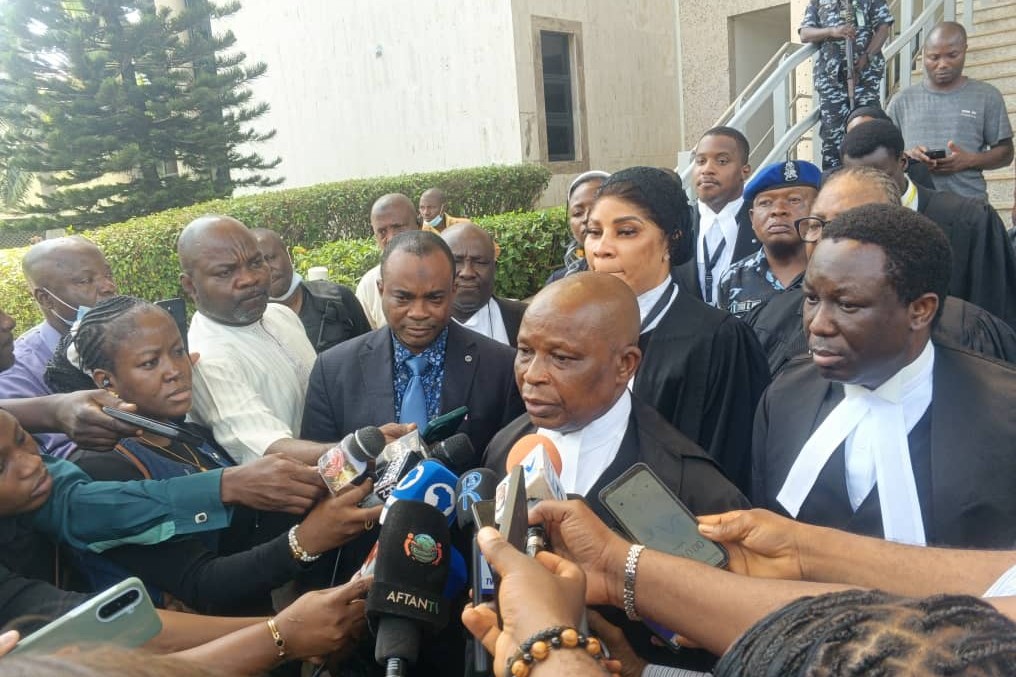
The Attorney-General of the Federation and Minister of Justice, Lateef Fagbemi, SAN, disclosed the figures on Friday, 23 October 2026, during the 11th phase of the proceedings at the Federal High Court in Abuja.
According to Fagbemi, 1,060 defendants had been brought before the courts during the exercise, which was scheduled to run from 19 to 24 October. By about 12.15pm on Friday, 880 cases had been handled, producing 653 convictions, seven acquittals and 27 discharges.
He described the exercise as the largest since the government began the mass trials.
“This is the third phase this year alone. But generally, this is the 11th phase,” he said.
Fagbemi added that the outcome figures remained provisional because the proceedings had not concluded.
“For this 11th phase… we have 1,060 suspects brought for trial. We are not through with it. As at quarter after 12 today, we have had about 880 trials. Of these 880, 653 have been convicted, seven acquitted, 27 discharged.”
The government’s position is straightforward: bringing large numbers of terrorism-related cases before the courts demonstrates progress against a security threat that has devastated communities, displaced families and placed enormous pressure on Nigeria’s security institutions.
But the announced figures also raise questions about the completeness of the public accounting.
193 Cases Need a Clearer Explanation
The three categories Fagbemi disclosed — convictions, acquittals and discharges — account for 687 defendants.
That leaves 193 of the 880 cases reportedly handled without an outcome specified in his public breakdown.
A further 180 defendants would remain outside the 880 already handled if the figure of 1,060 represents the same unit of cases and the counts are directly comparable.
These differences do not, by themselves, establish that the courts acted improperly. The proceedings were still under way, and cases may have been at different stages of determination. The word discharged also does not necessarily carry the same legal meaning as acquitted; its effect depends on the circumstances and the court’s order.
But the figures require clarification.
Did the 193 cases have judgments that had not been included in the briefing? Were some adjourned, awaiting further proceedings or otherwise unresolved? How many of the 1,060 defendants ultimately received a final determination during the exercise?
Those questions matter because a conviction tally is not a complete account of a mass trial.
To evaluate the process, the public needs to know how many defendants were convicted, acquitted, discharged or left awaiting further proceedings. It also needs information about the offences proved, the sentences imposed and the legal basis for decisions affecting each defendant.
The government had said final statistics would follow the conclusion of the exercise. The figures announced on Friday should therefore be treated as an interim snapshot, not the definitive record.
The final breakdown is essential to understanding what the courts achieved.
Convictions Are Not the Only Measure of Counter-Terrorism Justice
The need for transparency does not diminish the seriousness of terrorism or the importance of prosecuting those responsible.
Boko Haram and other armed groups have committed devastating attacks against civilians, abducted children, recruited fighters and displaced millions of people across Nigeria and the wider Lake Chad region. The government has a legitimate responsibility to investigate these crimes, bring suspects before independent courts and secure convictions where the evidence establishes guilt.
The challenge is to ensure that the urgency of the security crisis does not weaken the safeguards that distinguish judicial proceedings from punishment by executive decision.
The mass-trial format may enable courts to address a large backlog of terrorism-related cases. It does not remove the need to establish individual responsibility, provide meaningful legal representation and give each defendant a fair opportunity to challenge the evidence.
Fagbemi credited the judges, prosecutors, defence lawyers, security agencies and other institutions involved in the exercise.
He singled out the judges sitting under Justice Binta Nyako, who he said had been holding forth for the Chief Judge of the Federal High Court.
He also acknowledged the contributions of the Office of the National Security Adviser, the Department of State Services, the military, the police, correctional centres and the Legal Aid Council.
These institutions have important but distinct responsibilities. Security agencies investigate and arrest; prosecutors present cases; defence lawyers challenge the evidence; and judges determine guilt under the law.
A large number of convictions may demonstrate prosecutorial productivity. It cannot, without more information, establish whether every stage of the process met the required standard.
What Happened Before the Defendants Reached Court?
The public announcement focuses on cases handled by the courts. Yet human-rights concerns about Nigeria’s counter-terrorism operations extend beyond the courtroom to the circumstances of arrest, detention, transfer and release.
In a communication dated 2 June 2025, United Nations human-rights experts raised concerns about the prolonged detention of people accused of terrorism-related offences and the lack of transparency surrounding their treatment.
The experts referred to information they had received alleging that some detainees had spent years in custody without adequate access to legal representation or effective opportunities to challenge their detention. They also raised concerns about people whose cases had reportedly been dismissed but who remained detained.
The communication acknowledged the serious threat posed by Boko Haram and the difficulties facing Nigerian authorities. Its central point was that security and human rights should not be treated as competing objectives.
“Effective counter-terrorism measures and the protection of human rights are not conflicting goals, but are complementary and mutually reinforcing,” the experts stated.
These concerns are not proof that defendants in the October 2026 proceedings were unlawfully detained or denied fair trials. They concern a broader pattern of alleged abuses and unresolved safeguards that deserves separate investigation.
Previous mass terrorism proceedings have also drawn attention to detention at military facilities, including Wawa Military Cantonment in Niger State and Giwa facilities in Borno State.
In its 2025 communication, the UN experts discussed longstanding concerns involving detainees at military facilities, including people whose cases had reportedly been dismissed but whose release remained unresolved.
Such accounts underscore a basic question: what happens to a person after the legal basis for detention changes or disappears?
A judicial process cannot be evaluated solely by counting how many defendants pass through a courtroom. It must also account for people who are acquitted, discharged, awaiting trial or serving sentences.
Families should be able to establish whether their relatives are in custody, where they are held and what legal order authorises their continued detention.
The authorities must investigate credible allegations of secret detention, torture or enforced disappearance rather than allowing them to remain unresolved alongside the prosecution statistics.
Nigeria Has Ratified the Disappearance Convention, but a Legal Gap Remains
The legal framework adds another dimension to the accountability question.
Nigeria is a party to the International Convention for the Protection of All Persons from Enforced Disappearance. But ratifying an international treaty is not the same as fully incorporating its requirements into domestic criminal law.
In its concluding observations published on 20 October 2023, the UN Committee on Enforced Disappearances expressed concern that Nigerian legislation did not criminalise enforced disappearance as an autonomous offence.
The committee said that existing offences cited by the Nigerian government did not fully capture the elements and specific nature of enforced disappearance under the Convention. It recommended that Nigeria incorporate the offence into national law.
That finding provides important context for allegations that people arrested during security operations have subsequently become unaccounted for.
Enforced disappearance is not simply a case in which relatives cannot locate somebody. Under the Convention, it involves deprivation of liberty by state agents, or by persons acting with state authorisation, support or acquiescence, followed by a refusal to acknowledge the detention or concealment of the person’s fate or whereabouts.
The distinction matters. An allegation must be investigated on its evidence, and missing-person cases can have different causes. But where credible evidence suggests state-linked detention followed by concealment, the authorities must establish what happened.
The absence of a dedicated domestic offence, as identified by the UN committee, creates a specific legislative and accountability concern. The committee called for that gap to be addressed.
A government seeking to demonstrate the strength of its counter-terrorism justice system should therefore be judged not only by prosecutions but also by whether it can account for people in state custody and investigate suspected abuses.
The Defence Must Be More Than a Name on a Court Record
Fagbemi has defended the provision of legal representation to defendants in the mass trials.
He said the Legal Aid Council was not the only organisation supplying defence lawyers, adding that private legal practitioners had also participated. According to the Attorney-General, lawyers had visited detention facilities and engaged defendants before trial to prepare their cases.
He also noted that some preparatory activities were not open to public scrutiny because of the security sensitivity surrounding the proceedings.
There may be legitimate reasons to protect sensitive operational information. But security concerns do not remove defendants’ rights to confidential consultations with their lawyers, adequate preparation time and a meaningful opportunity to challenge prosecution evidence.
The relevant issue is not simply how many lawyers participated. It is whether each defendant had effective representation.
A lawyer’s presence in a courtroom does not, by itself, demonstrate that the lawyer had adequate time to obtain instructions, examine the prosecution’s case or prepare a defence.
The same is true of access to case files, interpreters where necessary, opportunities to challenge evidence and the availability of remedies for unlawful detention.
These safeguards are particularly important where large numbers of cases are processed in a compressed period.
Nigeria’s Constitution protects personal liberty and guarantees fair hearing. Those protections are not suspended merely because an allegation involves terrorism.
The authorities should publish sufficient information about the case-management process to demonstrate how the defendants’ individual rights were protected, without exposing genuinely sensitive security information.
The Deradicalisation Question: Rehabilitation or Indefinite Detention?
One of the most consequential elements of Fagbemi’s briefing concerned the treatment of defendants who are discharged.
The Attorney-General insisted that discharge should be followed by deradicalisation before reintegration into society.
“There’s no way you can be discharged without going through that recommendation. You must be deradicalised,” he said.
He argued that rehabilitation was needed to help individuals reintegrate and avoid returning to extremist activities.
The principle of rehabilitation is not inherently objectionable. Properly designed programmes can support former members of armed groups, address extremist beliefs and help people rebuild their lives.
But a difficult legal question arises when a person whose case has been dismissed or who has been discharged remains in custody solely because a rehabilitation programme has not been completed.
In its June 2025 communication, the UN experts raised concerns about earlier cases in which people whose charges had reportedly been dismissed remained detained pending deradicalisation. They questioned the legal basis for continued detention where the relevant criteria, duration and arrangements were unclear.
Those allegations concerned earlier proceedings, not necessarily the defendants in the present trial. They nevertheless expose a potential weakness in the policy.
If a court has determined that a defendant should be discharged, what authority permits continued detention? Is the requirement supported by a clear legal order? How is the programme administered, how long does it last and what happens when a place is unavailable?
A rehabilitation process should not become a substitute for a lawful basis for detention.
The distinction is crucial: rehabilitation can be a legitimate public-safety objective, but it must operate within a clear legal framework that protects liberty and allows individual decisions to be challenged.
Otherwise, a person can emerge from court with a favourable ruling yet remain unable to return home.
The Accountability Test for the Federal Government
The 11th phase of Nigeria’s terrorism mass trials may ultimately produce a significant number of convictions. The government’s claim that the exercise is the largest yet should be assessed against the final figures and the records of the proceedings.
The immediate requirement is a complete, reconciled breakdown of all 1,060 defendants: the final number convicted, acquitted, discharged, awaiting further proceedings or otherwise dealt with, together with the sentences and relevant legal outcomes.
The next requirement is transparency about detention. Authorities should maintain accessible, accurate records of people deprived of their liberty, including their legal status, location and the basis for continued detention. Families and authorised legal representatives need effective ways to obtain this information.
The government should also explain how its deradicalisation policy applies to people whose cases have been dismissed or who have been discharged, and what safeguards prevent rehabilitation requirements from turning into indefinite detention.
Finally, credible allegations of torture, unlawful detention and enforced disappearance require independent investigation and appropriate remedies where violations are established.
These are not demands to weaken Nigeria’s response to terrorism. They are tests of whether the response is lawful, accountable and capable of earning public confidence.
The government has announced 653 convictions. The next step is to show, through clear and verifiable records, what happened to every other defendant and how the rights of all those brought before the courts were protected.
The real measure of a counter-terrorism justice system is not only how many people it convicts. It is whether it can prove guilt lawfully, protect the innocent, account for those in custody and release people when the law requires it.
Follow us on our broadcast channels today!
- WhatsApp: https://whatsapp.com/channel/0029VawZ8TbDDmFT1a1Syg46
- Telegram: https://t.me/atlanticpostchannel
- Facebook: https://www.messenger.com/channel/atlanticpostng