Nigerian military unmasks ISWAP commanders in major intelligence breakthrough, dangles ₦60m bounty
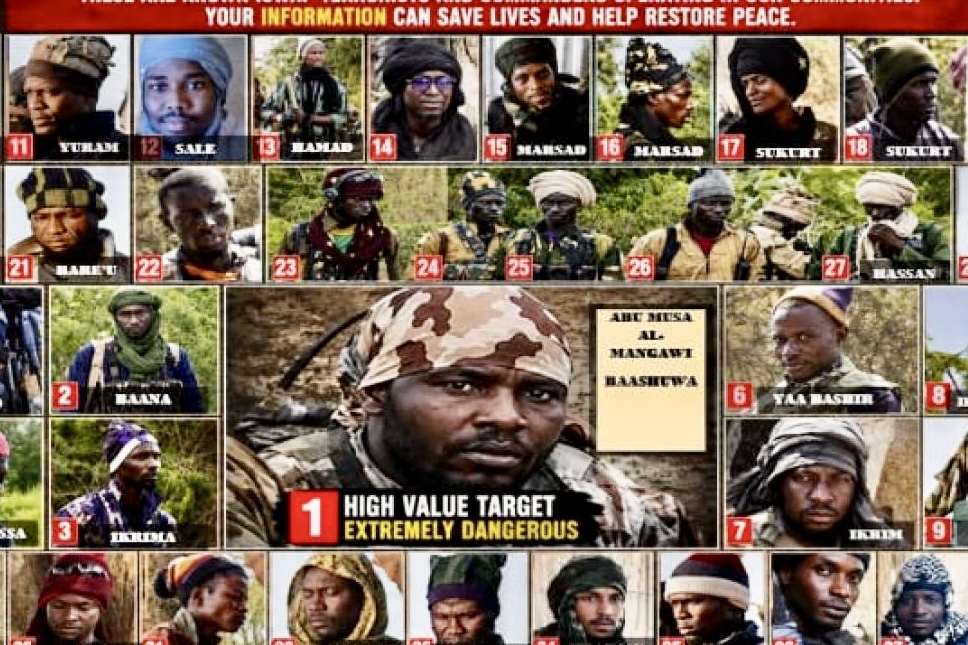
The Nigerian military says it has scored a significant intelligence breakthrough against the Islamic State West Africa Province (ISWAP), naming 38 suspected commanders and fighters believed to be active across northern Borno and the Lake Chad Basin, while placing a combined ₦60 million reward on two of the group’s most wanted leaders.
The notice, released by Operation HADIN KAI in Maiduguri on Wednesday, marks one of the most public efforts yet to expose the insurgency’s command structure in the North-East.
According to the military, the breakthrough followed recent offensive operations in the Lake Chad theatre, where troops recovered technical devices and other high-value intelligence materials, including a camcorder allegedly used by ISWAP fighters to record propaganda videos and document their activities.
Officials say forensic exploitation of the seized equipment yielded actionable intelligence that exposed hideouts, movement corridors and the identities of senior figures operating along the Mangari–Metele–Dogon Chukun axis in Abadam and Kukawa local government areas.
At the centre of the wanted notice is Abu Musa Al-Mangawi Baa Shuwa, described by the military as the group’s most wanted leader in the Lake Chad Basin. The poster and related notices also name other suspected commanders and operatives, including Muhammad Jidda, Hamad Abu Hanifa and Ibn Muhammad.
The military says Jidda, identified as commander of the Jaish unit, is linked to a ₦10 million bounty, while Ibn Muhammad, described as commander of the Amniyya unit, has a ₦50 million reward attached to information leading to his arrest.
The wording of the appeal is as important as the names on the poster. Operation HADIN KAI is not simply asking for sightings; it is trying to turn public intelligence into a weapon. In the military’s own language, informants are promised “utmost confidentiality”, and members of the public are warned not to confront the suspects.
That language suggests the command believes the insurgents’ shield of secrecy has been weakened enough to justify a public hunt rather than a purely covert pursuit.
This development also fits into a broader pattern of pressure on ISWAP’s media and command wings. In recent related reporting, Operation HADIN KAI said it killed Abu Salim al-Barnawi, a senior propagandist and former raid commander, during a failed attack in Cross Kauwa, and recovered a video camera from the scene.
The military said that operation damaged ISWAP’s propaganda machinery and command structure, a claim echoed by other recent coverage which described the offensive as a blow to the group’s media network and foreign accomplices.
That context matters because insurgent groups in the Lake Chad theatre rarely collapse only through battlefield losses; they are also weakened when logistics, propaganda, communication and local support chains are disrupted at the same time.
The public release of names, photographs and aliases suggests the military is now trying to do exactly that: deny ISWAP the anonymity it needs to move, recruit, tax communities and stage attacks. It is an inference, but a strong one, given the combination of forensic device recovery, targeted naming of commanders and cash rewards for arrest information.
The military’s public hotline, 0708 498 8859, and its insistence that civilians should not attempt to arrest suspects themselves, also show an effort to keep the operation intelligence-led rather than mob-driven.
In a theatre where terror cells often exploit fear, silence and local distrust, Operation HADIN KAI appears to be betting that the promise of protection, money and anonymity for informants can crack the support network around the insurgents faster than force alone.
For Borno residents, the latest notice is a reminder that the war in the North-East is still being fought not only with rifles and air power, but with data, devices and human intelligence.
The military says follow-up operations are ongoing, and that the identified suspects are believed to be active across the Lake Chad corridor. Whether this public exposure translates into arrests will depend on one thing the insurgents cannot easily control: who talks first.
Follow us on our broadcast channels today!
- WhatsApp: https://whatsapp.com/channel/0029VawZ8TbDDmFT1a1Syg46
- Telegram: https://t.me/atlanticpostchannel
- Facebook: https://www.messenger.com/channel/atlanticpostng