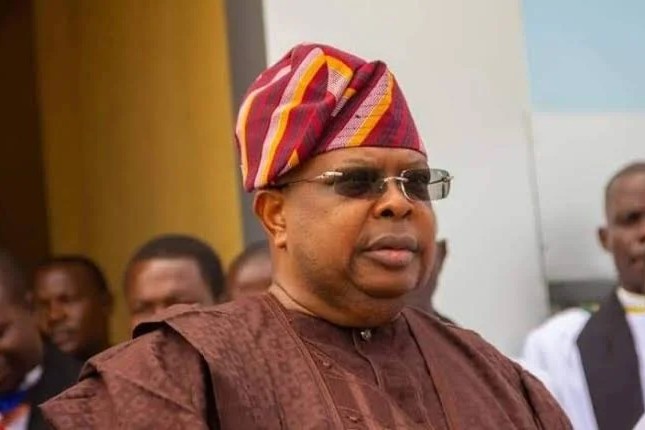
ABUJA, Nigeria — Peter Obi’s reaction to the Lokoja ruling was not merely a defence of his party. It was a direct attack on what he sees as a worsening erosion of democratic trust in Nigeria.
In a strongly worded statement issued on Friday, the Nigeria Democratic Congress presidential candidate described the Federal High Court decision as “an unnecessary serious setback for Nigerian democracy” and warned that “democracy cannot thrive where institutions lose their independence and credibility.”
His framing was deliberate. He cast the judgment as part of a wider institutional crisis, not an isolated legal dispute.
Obi said he received the news while at Madonna University in Imo State, after a day that took him from Lagos to Emekuku, where he visited the School of Nursing Sciences and inspected projects he said had been funded through his earlier interventions.
He also attended the 80th birthday of the Emeritus Archbishop of Owerri, Most Rev. Dr Anthony Obinna, before proceeding to the university. According to him, it was there that “Senator Rabiu Musa Kwankwaso” relayed the court news to him.
That detail is important politically because it shows how quickly this judgment travelled beyond the courtroom and into the centre of opposition politics.
The legal issue at the heart of the controversy is narrower than the political outrage surrounding it. Justice Isah Dashen of the Federal High Court in Lokoja set aside the court’s earlier December 10, 2025 judgment that had ordered the Independent National Electoral Commission to register the NDC as a political party.
The court held that the earlier decision affected the rights of the Peace Movement Party, which said it owned the logo used in the registration dispute, but was not joined in the suit.
Counsel to the applicant, C.S. Ekeocha, said the court ordered all parties to return to the position they occupied before the December ruling and directed that all necessary parties be joined before the case is heard afresh. That means the real fight is now over due process, joinder and the validity of the earlier registration order.
Obi’s language went well beyond legal technicalities because he understands the political symbolism of this kind of case. He warned that “some who claim to champion democracy now appear determined to weaken the very institutions that sustain it” and said the legislature and judiciary were being drawn into “institutional decline”.
He then drew a line between this matter and a similar dispute involving the African Democratic Congress, insisting that his position was “guided by principle”.
That is a significant political move. He is trying to present himself as a defender of democratic process rather than a beneficiary of party litigation.
INEC, for its part, has not yet taken a definitive position. The commission said it had not received the Certified True Copy of the judgment and would wait for its legal department to study the document before deciding its next move.
INEC also urged the public to await its formal response. That caution is important. It shows the commission is not yet rushing to act on media reports, even though the practical effect of the ruling, according to the applicant’s counsel, could reverse the recognition previously given to the NDC.
The political reaction has been immediate and combative. The NDC said it would appeal, insisting that it had not been deregistered and that the trial court had gone too far.
Its chairman, Moses Cleopas, argued that the court had become functus officio after its earlier final judgment and lacked jurisdiction to revisit the matter. Opposition figures and caucuses have turned the case into a bigger warning about the state of plural politics.
The NDC lawmakers accused the plaintiffs of “forum shopping” and called the ruling “lawfare, the weaponisation of the judiciary against political opponents.” They also said the timing was suspicious because it coincided with a critical electoral phase.
That is why the dispute now reaches beyond the NDC. Other opposition voices, including figures linked to the PDP and ADC, have already framed the ruling as a threat to multiparty democracy.
In an earlier wave of backlash over the separate deregistration case involving five parties, opponents said such judgments could deepen public mistrust in both INEC and the courts.
The language is striking because it points to a growing fear in opposition circles that the legal system is becoming a battleground for political containment rather than impartial arbitration.
The deeper implication is this. If the Lokoja ruling stands, it may create fresh uncertainty around party registration, ballot access and opposition readiness ahead of 2027. If it is overturned on appeal, it will still leave behind a damaging impression that court processes can be weaponised in party politics.
Obi’s broader warning, therefore, is not just about one judgment. It is about a democracy in which legal disputes are increasingly read through the lens of political survival, and where every court pronouncement is immediately tested against fears of one party dominance, institutional compromise and declining public confidence.
In that sense, his line that “the survival of our institutions is inseparable from the survival of our nation” is less rhetoric than a political alarm bell.
Follow us on our broadcast channels today!
- WhatsApp: https://whatsapp.com/channel/0029VawZ8TbDDmFT1a1Syg46
- Telegram: https://t.me/atlanticpostchannel
- Facebook: https://www.messenger.com/channel/atlanticpostng