AAn explosive new allegation from Borno has reopened one of Nigeria’s most sensitive national security disputes: whether former Boko Haram fighters are being trusted too quickly, and whether the state’s reconciliation model is colliding with the hard realities of an unfinished war.
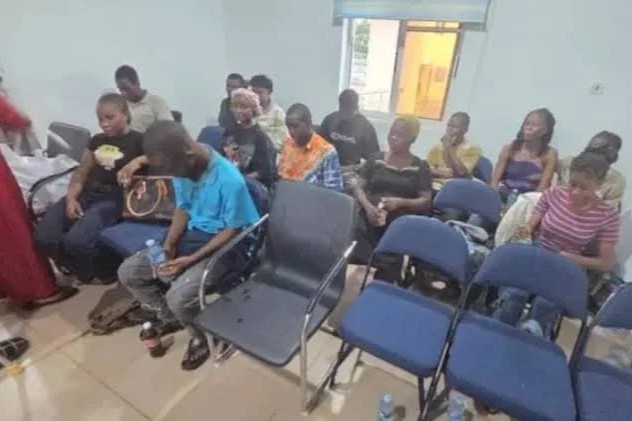
SaharaReporters claimed that about 40 “repentant” insurgents were shortlisted for the Nigerian Army’s 91st Regular Recruits Intake and taken for medical screening at the 7 Division Military Hospital in Maiduguri, a report that has intensified unease inside the security space even though the Army has not publicly confirmed the allegation.
According to SaharaReporters, the men were allegedly brought in by the Borno State government and medically examined as part of the recruitment process.
The outlet quoted a serving Army Major who said he could “categorically confirm” that the group had been taken for medicals, while another officer questioned how they were shortlisted at all.
The report also said the candidates were said to be part of the 3,740 former Boko Haram members earlier reintegrated by the Borno State government under its deradicalisation programme.
The reaction attributed to soldiers on the front line was blunt and revealing. One source told SaharaReporters, “Trust is a major issue,” while another warned that “convicted criminals can join the Army easily.”
A separate officer reportedly said the issue raised serious questions about the shortlisting process, and another alleged that the men were brought in by a bus provided by the Borno government.
Whether the allegation stands up to formal scrutiny or not, the episode has clearly landed in the middle of a credibility crisis over how Nigeria manages defections, rehabilitation and security vetting in the North-East.
The wider context makes the story more combustible. In June, Borno State said it had reintegrated 720 men, 992 spouses and 2,050 children, bringing the latest batch under its “Borno Model” to 9,680 reintegrated persons across nine batches.
The programme, officials said, is built around documentation, profiling, deradicalisation, counselling, vocational training and rehabilitation before former fighters are returned to civilian life.
Borno officials also say that more than 350,000 people have left insurgent camps and surrendered since the programme began in July 2021.
Governor Babagana Zulum’s security aide and member of the state’s deradicalisation committee, retired Brigadier General Abdullahi Ishaq, has strongly defended the policy.
He described the Borno Model as “one of the most effective non-kinetic programmes” and said the latest beneficiaries had undergone Islamic teachings, counselling, hygiene education, drug abuse awareness and vocational training.
He also said some insurgents only surrendered after appeals from former colleagues who had already embraced peace and reunited with their families.
For Borno, this is an argument for recovery. For critics and many victims, it remains a gamble with unfinished consequences.
That tension matters because the North-East is still an active battlefield, not a post-conflict museum. Reuters reported on 9 March that Islamist militants killed at least 12 soldiers and three civilians in coordinated attacks in north-east Nigeria, underscoring the continuing ability of Boko Haram and ISWAP to strike military and civilian targets.
Reuters later reported on 18 March that troops in Borno, backed by air support, killed at least 80 insurgents in a major assault in Mallam Fatori, with the army saying the attackers used armed drones and that four soldiers were wounded.
AP separately reported on 7 June that the army freed 360 abducted people in Borno, including children, after a raid in the Mandara mountains.
That recent violence helps explain why the latest allegation has triggered alarm far beyond Maiduguri. This is a theatre where insurgents have shown they can still mass, adapt tactics and exploit intelligence gaps.
When soldiers believe operational details may leak, the result is not merely mistrust; it is a direct threat to lives, ambushes, and mission success.
That is why the words attributed to one frontline source carry such weight: “We don’t trust them completely.” Another soldier said the worry is that operational details could again reach active cells, making collaboration with former insurgents deeply risky.
There is also historical baggage. In 2020, the Presidency publicly rejected claims that repentant Boko Haram members were being absorbed into the military, saying “nobody has ever been absorbed into the military” from the federal deradicalisation programme and insisting there was no such plan.
That earlier denial is important because it shows how politically charged the question has long been. Any suggestion that former insurgents could enter the armed forces does not merely spark debate; it touches a nerve that cuts across victims’ memory, military morale and public trust.
As of the SaharaReporters filing, the Nigerian Army had not issued a public response. The outlet said its calls to the Director of Army Public Relations, Colonel Appolonia Anele, went unanswered and that a text message was delivered without a reply at the time of publication. That silence leaves the story suspended between allegation and official confirmation, but it does not remove the underlying problem:
Borno’s reintegration drive may be winning numbers, yet the Army’s own front line appears unconvinced that trust has been rebuilt as quickly as the programme suggests.
In the end, the controversy is not only about one alleged shortlist. It is about whether Nigeria can run a rehabilitation policy alongside an active counter-insurgency without eroding troop confidence, leaking intelligence or deepening public scepticism. Until the Army and the Borno authorities speak clearly, the suspicion will remain that the country is asking soldiers to fight a war whose rules have become dangerously blurred.
Follow us on our broadcast channels today!
- WhatsApp: https://whatsapp.com/channel/0029VawZ8TbDDmFT1a1Syg46
- Telegram: https://t.me/atlanticpostchannel
- Facebook: https://www.messenger.com/channel/atlanticpostng