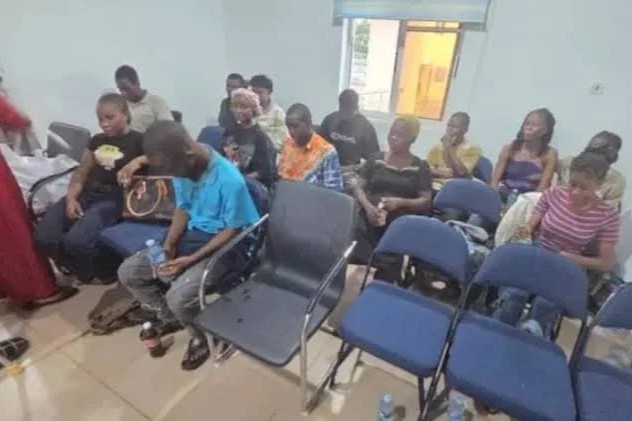
A fatal mob attack in Maraban Jos, Kaduna State, has ignited fresh outrage over jungle justice, police accountability and the deadly ease with which rumours can turn into murder. The victim, identified by police and local reports as a woman accused of child theft, was first rescued from an angry crowd and taken into police custody before a mob later overran the station, dragged her out and set her ablaze, according to the Kaduna State Police Command.
The command has described the killing as “barbaric” and a “direct assault on the rule of law”, and says several suspects have already been arrested.
But a separate account from an eyewitness, relayed in later reporting, has raised a darker and more troubling allegation. The witness claimed that a Divisional Police Officer took the woman by the hand out of the station gate and towards the mob, despite warnings that she would be killed.
That allegation remains unverified by the police version of events, but it has intensified public anger and sharpened questions over whether the woman was sufficiently protected once she was in custody.
The widower of the deceased, Muhammad Aliyu, has also described the family’s devastation in painful detail. In the account carried by Sahara Reporters from his BBC Hausa interview, he said his children broke the news to him when he returned home and asked where their mother was.
He said the family had been shattered by the killing and that his 14-year-old child is still struggling to cope with the loss. The testimony underlines the human cost of a case that has already become a national symbol of mob law and institutional failure.
According to the witness account, the violence escalated in stages. She said police first fired warning shots to disperse the crowd, but stones were thrown back at officers.
She then alleged that the DPO arrived, asked where the suspect was, and personally escorted the woman out of the station despite repeated pleas not to do so.
Another woman who witnessed the attack said she tried to intervene, begging the crowd not to kill the victim, only to be threatened and told she too would be burnt if she came closer.
Those claims are deeply serious, but they stand in direct tension with the police statement that officers had rescued the woman for her safety and investigation before the station was stormed later by a crowd said to number in the hundreds.
The police account is clear on one point. The command says the allegation of child theft had not been proved, and that officers responded after a distress call around 10am. It says the DPO led men to the scene, rescued the woman and took her to the station for protection.
The command then says the mob overpowered officers, forcibly removed the woman, killed her and set her body ablaze. It has promised a full investigation, said several suspects have been arrested and warned that no person or group has the right to take the law into their own hands.
This is the point at which the case moves beyond a single killing and becomes a test of state authority. If the police version is accurate, the Maraban Jos station was overwhelmed by a violent crowd in a shocking breakdown of public order.
If the eyewitness allegation is accurate, then the matter points to an even more alarming scandal in which a woman was effectively delivered into the hands of her killers.
Either way, the episode exposes how fragile protection can become when mob panic meets weak crowd control and community rumour outruns evidence. That wider concern has already been echoed in reporting that frames the incident as part of Nigeria’s continuing problem with mob justice.
The location matters too. Maraban Jos sits along a major corridor in Kaduna State, where crowd disturbances can spread quickly and where local fears of theft, kidnapping and child trafficking often trigger instant violence. In such an atmosphere, allegations alone can become a death sentence.
That is why the police insist that no evidence was presented to support the child theft claim, and why rights advocates and observers are likely to demand a transparent probe into both the mob and the conduct of officers at the station.
For the family, the issue is not only justice but also closure. Aliyu’s account shows a household turned instantly into mourners, with children left asking where their mother is and why she never came back.
For the authorities, the issue is whether arrests will lead to genuine accountability or simply another short-lived wave of outrage followed by silence.
The command has promised prosecution. That promise now needs to be matched by visible action, because every unresolved mob killing tells the public that rumours still kill faster than the law can protect.
Follow us on our broadcast channels today!
- WhatsApp: https://whatsapp.com/channel/0029VawZ8TbDDmFT1a1Syg46
- Telegram: https://t.me/atlanticpostchannel
- Facebook: https://www.messenger.com/channel/atlanticpostng