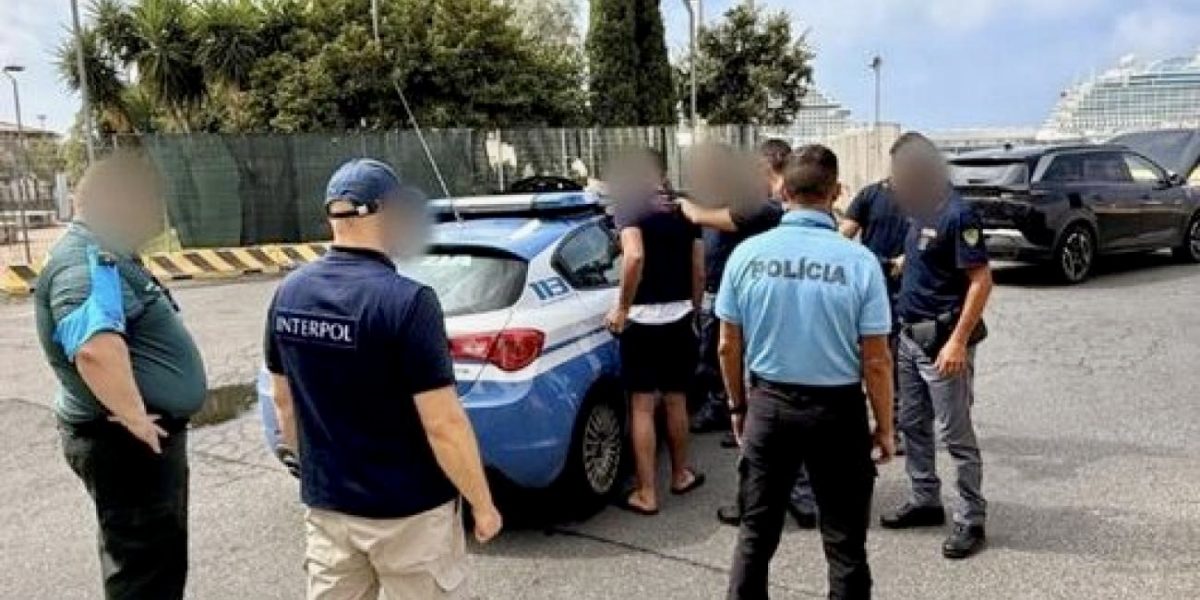
Operation Neptune VIII brought 18 countries together, generated hundreds of terrorism-related intelligence leads and exposed suspected criminal networks spanning Europe, North Africa and the Middle East. But behind the arrest figures lies a bigger question: how much of the intelligence gathered will translate into successful prosecutions and lasting disruption of terrorist networks?
41 Million Searches, 65 Arrests: INTERPOL’s Mediterranean Operation Exposes the Scale of Cross-Border Security Threats
An international police operation involving 18 countries has exposed the increasingly interconnected nature of terrorism investigations and organised crime across Europe, North Africa and the Middle East, raising fresh questions about how effectively governments are monitoring the movement of suspected extremists and criminal networks across national borders.
The operation, coordinated by the International Criminal Police Organisation (INTERPOL) under the name Operation Neptune VIII, resulted in 65 arrests, including individuals connected to ongoing terrorism investigations.
Yet the most significant revelation may not be the number of people detained. It is the scale of international intelligence surveillance behind the operation.
According to INTERPOL, participating law enforcement agencies conducted more than 41 million searches against its global criminal databases, generating 395 hits. Of these, 89 were linked to individuals sought in connection with terrorism-related offences through INTERPOL Notices and Diffusions.
Authorities identified another 281 terrorism-related hits through national databases and the Schengen Information System (SIS), Europe’s principal cross-border security information platform.
The findings reveal a security environment in which suspected terrorists, criminal facilitators, forged travel documents, drug trafficking and vehicle smuggling increasingly intersect across international travel routes.
But the figures also expose an important distinction that deserves scrutiny: an intelligence match is not necessarily an arrest, a confirmed terrorist affiliation or a criminal conviction.
INTERPOL’s announcement does not establish how many of the 65 arrests were specifically terrorism-related, how many individuals were subsequently charged or how many investigations have resulted in convictions.
That distinction matters when measuring the actual success of one of the organisation’s major Mediterranean security initiatives.
The Intelligence Network Behind Operation Neptune VIII
Operation Neptune VIII was conducted with support from the European Border and Coast Guard Agency, Frontex.
The participating countries were Albania, Algeria, Bosnia and Herzegovina, Bulgaria, Croatia, Cyprus, France, Greece, Italy, Jordan, Lebanon, Malta, Montenegro, Morocco, Portugal, Slovenia, Spain and Tunisia.
Security personnel conducted checks at airports, seaports and land border crossings, using international and national databases to identify individuals and movements that might be connected to ongoing criminal investigations.
The operation demonstrates the strategic importance of information-sharing between countries that may have different intelligence capabilities, legal systems and levels of border surveillance.
An individual wanted by authorities in one country may travel through several others before investigators establish their whereabouts.
This is precisely the vulnerability international police cooperation is designed to address.
INTERPOL’s Counter-Terrorism Director, Maria Carmen Munoz, described the challenge confronting law enforcement agencies.
“Terrorist networks do not respect borders, and those seeking to evade justice can exploit gaps between national jurisdictions,” she said.
“Operation Neptune VIII demonstrates the value of connecting frontline border officers with international police intelligence in real time.”
She added:
“By bringing countries together and integrating INTERPOL’s global databases into routine border security operations, we can identify persons of interest, disrupt movements and provide investigators with the intelligence they need to advance complex counter-terrorism investigations.”
The statement highlights an increasingly important principle in international security: effective counter-terrorism operations depend not only on identifying threats but also on ensuring that intelligence reaches officers capable of acting on it.
Algeria: International Intelligence Exchange Leads to Arrest
One of the most significant cases involved Algeria, where police arrested a suspected member of a terrorist organisation who was internationally wanted under an INTERPOL Red Notice.
The arrest followed intelligence exchanges between Algerian and Italian law enforcement officers.
The cooperation enabled Algerian authorities to identify the suspect’s location, place the individual under surveillance and subsequently carry out the arrest.
The case demonstrates how intelligence originating in one country can become operationally useful in another.
It also highlights the importance of monitoring international travel routes used by individuals wanted in connection with terrorism investigations.
However, INTERPOL did not disclose the suspect’s identity, the organisation allegedly involved, the specific charges or the next stage of the legal proceedings.
Those details would help establish the significance of the arrest and whether it represents a breakthrough in a wider investigation.
Tunisia: Passenger Manifest Exposes Suspected Terrorism Links
In Tunisia, security operatives arrested a terrorism suspect allegedly involved in providing logistical support to terrorist activities.
The individual was identified through the passenger manifest of a vessel travelling from Italy.
INTERPOL said the suspect was wanted through a Diffusion and was also linked to an Orange Notice warning authorities about an imminent terrorist threat.
This case illustrates why passenger information and maritime surveillance have become important elements of modern counter-terrorism investigations.
Airports and seaports are not simply transportation facilities. They can also provide critical intelligence about the movement, identity and connections of individuals being investigated by security agencies.
The use of passenger manifests in the Tunisian operation also demonstrates the value of integrating travel information with international police intelligence.
Nevertheless, INTERPOL has not publicly identified the alleged terrorist organisation or explained the precise nature of the logistical assistance under investigation.
Albania: Turkish Red Notice Leads to Airport Arrest
Albanian authorities recorded another significant arrest when a woman wanted by Türkiye was apprehended during routine border checks at Tirana’s Rinas Airport.
She had arrived on an international flight and was wanted under an INTERPOL Red Notice following her conviction for membership of a terrorist organisation.
The arrest demonstrates how routine immigration procedures can become an important element of international law enforcement cooperation.
In a separate development, Albanian officers identified individuals linked to terrorism-related INTERPOL Blue Notices and a United States Diffusion concerning a suspected foreign terrorist fighter.
The information gathered provided investigators with additional intelligence about the individuals’ identities, movements and international connections.
INTERPOL also disclosed that 19 terrorism-related Blue Notices and one Diffusion were updated during the operation to obtain further information about individuals’ identities, locations and activities.
These developments show that the operation was not exclusively about making arrests. It was also designed to strengthen investigations that may require prolonged intelligence gathering before enforcement action becomes possible.
Forged Passports: A Serious Weakness in International Border Security
Perhaps one of the most concerning discoveries involved two travellers detained at Ljubljana Airport in Slovenia.
The individuals were found carrying forged Indian passports and Spanish visas.
Their discovery prompted investigations into their identities and possible connections to foreign terrorist fighter activities.
The case raises important questions about the reliability of international travel documents and the security procedures used to verify them.
A forged passport can provide an individual with an assumed identity, potentially complicating investigations into travel histories, nationality and international movements.
It can also expose weaknesses in document verification systems when fraudulent identities are presented at different border crossings.
The Slovenian discovery does not establish that the two travellers were terrorists. INTERPOL said their possible connections to foreign terrorist fighter activities were under investigation.
Nevertheless, the incident illustrates why document fraud remains a security concern beyond conventional immigration enforcement.
The United Nations has repeatedly emphasised the importance of effective border controls, information exchange and verification of travel documents to prevent the movement of foreign terrorist fighters.
Italy-Algeria Vehicle Route Exposes Another Criminal Corridor
The operation also uncovered suspected vehicle trafficking involving Italy and Algeria.
INTERPOL and Frontex officers identified three vehicles travelling between the two countries with altered vehicle identification numbers (VINs).
The discovery revealed a suspected vehicle trafficking route through North Africa.
Altered identification numbers can complicate efforts to establish vehicle ownership, trace stolen property and identify the networks responsible for moving illicit vehicles across international borders.
The findings also demonstrate why counter-terrorism investigations increasingly intersect with wider organised crime enforcement.
Criminal networks operating across borders can exploit established smuggling routes, fraudulent documentation and weaknesses in customs enforcement.
However, INTERPOL has not established that the suspected vehicle trafficking activities were directly connected to the terrorist suspects identified during the operation.
That distinction is important. Evidence of organised crime and evidence of terrorist financing or logistical support must be established separately rather than assumed from the existence of overlapping routes.
Portugal: Cocaine Seizure Adds Another Dimension
In Portugal, two individuals were arrested on suspicion of drug trafficking during airport security checks following the seizure of approximately 290 kilogrammes of cocaine.
The discovery added another dimension to Operation Neptune VIII, which was designed to identify terrorism suspects while exposing other forms of transnational criminal activity.
Drug trafficking networks operate across international transport systems, relying on logistics, concealment methods and connections that can extend across multiple jurisdictions.
Their activities can create investigative opportunities for law enforcement agencies seeking to identify wider criminal relationships.
But the reported cocaine seizure should not automatically be interpreted as evidence of terrorist financing. INTERPOL has not publicly established such a connection in this case.
The significance lies in the ability of coordinated border operations to expose multiple categories of criminal activity through the same enforcement framework.
The Red Notice Question: What Does an International Alert Actually Mean?
One important issue in understanding Operation Neptune VIII is the difference between an international police alert and a judicial finding of guilt.
An INTERPOL Red Notice is a request to law enforcement agencies worldwide to locate and provisionally arrest a person pending extradition, surrender or similar legal action.
It is based on an arrest warrant or court order issued by the requesting country’s judicial authorities.
Crucially, a Red Notice is not itself an international arrest warrant. Individual countries determine whether and how an arrest can be made under their domestic laws.
An INTERPOL Blue Notice serves a different purpose. It is used to collect additional information about an individual’s identity, location or activities in connection with a criminal investigation.
An Orange Notice warns of an event, person, object or process representing a serious and imminent threat to public safety.
These distinctions are important because being identified through a Blue Notice does not establish criminal guilt, while an arrest based on a Red Notice does not automatically mean the person has been convicted.
INTERPOL also subjects Notices to compliance reviews under its rules, including safeguards against activities of a political, military, religious or racial character.
The Accountability Gap: What Happens After the Arrests?
Despite the extensive intelligence generated by Operation Neptune VIII, the announcement leaves several questions unanswered.
First, how many of the 65 arrests involved suspected terrorism offences, as opposed to drug trafficking, document fraud, vehicle crime or other criminal investigations?
Second, how many of the 89 terrorism-related INTERPOL database hits and 281 additional national and Schengen database hits represented unique individuals?
Third, how many suspects have been formally charged, prosecuted or convicted?
And how many of the intelligence leads resulted in the dismantling of operational criminal or terrorist networks?
These questions are essential because database matches measure the capacity to identify potential threats, while prosecutions and convictions provide a clearer indication of progress through the justice system.
The figures must also be interpreted carefully. The 89 international terrorism-related hits and 281 additional terrorism-related matches should not automatically be treated as 370 unique suspects or 370 arrests.
The announcement does not provide a country-by-country breakdown of arrests, a detailed operational timetable or the eventual legal outcomes of the investigations.
There is also an important question of accountability surrounding the extensive use of personal information in international security systems.
The European Commission confirms that individuals whose information is processed through the Schengen Information System have rights to request access, correction or deletion of data in circumstances provided under applicable law.
Effective border security must therefore operate alongside legal safeguards, data accuracy and the right to challenge unlawful processing.
A Security Strategy That Must Deliver More Than Intelligence
Operation Neptune VIII builds on an established pattern of international counter-terrorism cooperation across the Mediterranean.
In Operation Neptune VII, announced in October 2025, INTERPOL reported 153 arrests across 20 participating countries, alongside more than 30 million searches against its databases.
That operation identified 328 individuals subject to INTERPOL Notices and Diffusions, including 57 with suspected links to terrorism.
The two operations demonstrate the continuing importance placed on international border intelligence and cooperation.
Their results should not be directly compared as a measure of improved or declining security performance, because the operational periods, geographical coverage and enforcement conditions are not identical.
The wider international framework is also clear.
United Nations Security Council Resolution 2396 calls on member states to strengthen border controls, improve information-sharing and prevent the movement of foreign terrorist fighters.
It also emphasises the need for evidence-based assessments, respect for international law and the protection of human rights.
The challenge is translating those obligations into intelligence-led operations that produce measurable security outcomes without undermining fundamental rights.
For INTERPOL and the 18 participating countries, Operation Neptune VIII has demonstrated that international police cooperation can identify individuals and suspected criminal activities that might otherwise remain hidden across national borders.
But 41 million database searches and 65 arrests are only part of the story.
The more consequential test will be whether investigators can convert the intelligence generated into credible prosecutions, dismantle the criminal networks involved and prevent the same routes from being exploited again.
International security cannot be measured by the number of times police databases are searched.
Ultimately, its success must be measured by the threats prevented, the criminal networks disrupted, the evidence established and the justice delivered.
Follow us on our broadcast channels today!
- WhatsApp: https://whatsapp.com/channel/0029VawZ8TbDDmFT1a1Syg46
- Telegram: https://t.me/atlanticpostchannel
- Facebook: https://www.messenger.com/channel/atlanticpostng



Join the debate; let’s know your opinion.