An Atlantic Post investigation examines how additional infrastructure costs of $400 million and a separate capital shortfall exceeding $700 million emerged after federal funding was announced, raising questions about due diligence, public spending and oversight.
Chicago’s controversial plan to relocate Amtrak’s Midwest maintenance operations into the residential Bridgeport neighbourhood has collapsed following a dramatic federal funding reversal, exposing financial weaknesses that could have far-reaching consequences for the city’s transport infrastructure and redevelopment ambitions.
The Federal Railroad Administration (FRA) announced on 23 November that it was withdrawing up to $87 million allocated for bridge and viaduct improvements at the proposed Canal Street Yard site while rescoping a separate $572 million federal grant selection for more limited improvements at Amtrak’s existing 14th Street Yard in the South Loop.
The decision effectively ends the proposed relocation to Bridgeport and undermines a wider redevelopment arrangement that was expected to free valuable South Loop railway land for a potential new Chicago White Sox stadium.
But the most consequential revelation is not simply that the project has been stopped.
It is that subsequent financial and engineering assessments identified substantial infrastructure liabilities and additional capital requirements that had not been properly accounted for when the project advanced towards implementation.
The FRA described the relocation as financially “fiscally untenable” after discovering what its administrator called major previously unquantified costs.
The reversal raises an uncomfortable question for American infrastructure planners: how can a project supported by hundreds of millions of dollars in federal grants reach an advanced stage before its true financial requirements become apparent?
The $659 million decision that changed everything
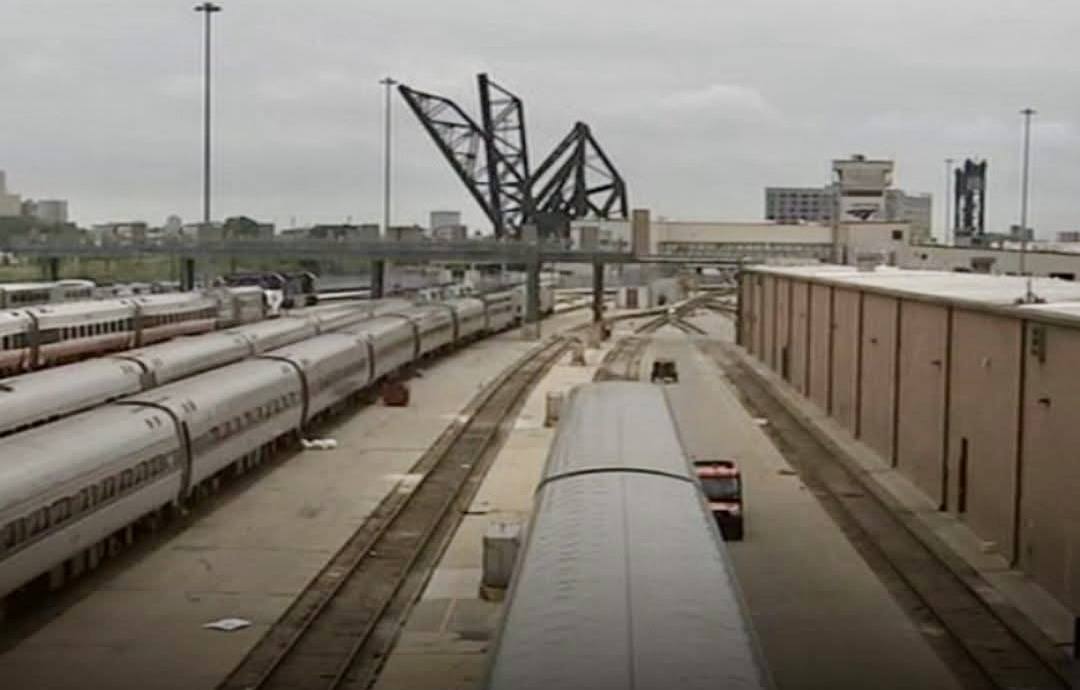
The original project involved relocating Amtrak’s Chicago maintenance operations from its existing 14th Street Yard to the Canal Street Yard in Bridgeport.
The proposed facility was designed to consolidate train maintenance, inspection, servicing and storage operations in a modern complex capable of supporting Amtrak’s expanding Midwest and long-distance passenger services.
Amtrak argued that its existing facility was increasingly inadequate.
Its infrastructure lacked sufficient indoor maintenance capacity, modern equipment and the space required to service newer trainsets efficiently.
The Canal Street location offered longer tracks, improved operational arrangements and the potential to reduce maintenance delays.
On 14 August 2026, Amtrak announced that the FRA had awarded two grants of up to $572 million and $87 million respectively.
Together, the awards represented a potential federal contribution of $659 million towards the approximately $900 million development.
The project was being delivered through a public-private arrangement involving Canal Edge LLC, associated with White Sox minority owner Justin Ishbia.
Amtrak said the investment would support thousands of construction jobs and strengthen passenger railway operations across the Midwest.
But less than four months after the announcement, the arrangement unravelled.
There is an important distinction here. The federal government has not simply abandoned all funding for Chicago’s rail modernisation. The $87 million allocation for the Bridgeport-related structural work was withdrawn, while the $572 million grant selection is being reconsidered for a different project scope at 14th Street.
That distinction matters because the revised arrangement could still preserve substantial federal investment in Chicago’s passenger rail network.
The $400 million infrastructure problem
The first major financial warning concerns 17 bridges and viaducts supporting the proposed Canal Street Yard.
According to FRA Administrator David Fink’s letter to interim Amtrak President Byl Herrmann, an independent life-cycle analysis estimated approximately $400 million in cumulative additional costs over 50 years to stabilise the structures.
These costs were beyond the work originally expected to be covered by the federal grant.
The figure represents a long-term infrastructure burden, not simply a $400 million construction bill payable immediately.
Nevertheless, it fundamentally altered the financial calculations underpinning the relocation.
The engineering concerns were substantial.
Amtrak’s November environmental assessment disclosed that inspections and structural load-rating work undertaken by engineering firm WSP in February and March 2026 identified extensive deterioration.
Some bridge decks exhibited concrete deterioration affecting as much as 90 per cent of their surface areas.
The inspections also identified exposed and corroded reinforcement, full-depth holes, deteriorated steel girders and local structural section losses reaching 100 per cent in certain components.
The structures date largely from the early twentieth century, with original construction between 1905 and 1907 and subsequent alterations during the following two decades.
Without rehabilitation, continued deterioration could threaten motorists, pedestrians and cyclists using the streets beneath the elevated railway structures.
It could also compromise the reliability of the proposed maintenance operations.
The discovery raises a fundamental question.
If the structural condition of the viaducts was being investigated months before the federal grant announcement, when did the full life-cycle financial implications become apparent?
The distinction between identifying structural deterioration and accurately calculating its long-term financial consequences is important.
But taxpayers deserve to understand precisely when the additional estimates became available, who reviewed them and why the original project financial model could not accommodate them.
The separate $700 million funding shortfall
The second financial problem may prove even more consequential.
In the same letter, Fink identified a deficit in Amtrak’s required non-federal cash contribution.
The problem emerged after Amtrak revised its operational assessment of the A5 main-line segment.
Earlier pre-award assessments had indicated that the segment was unnecessary. Subsequent operational evaluations and additional due diligence concluded that Amtrak needed to retain it.
That decision meant Amtrak could no longer rely on the associated land-sale proceeds as originally anticipated.
Fink said delivering the additional scope required for a viable relocation would demand a further capital investment of at least $700 million.
The letter described the requirement as “a further capital investment of $700 million or more”.
This is a separate financing issue from the $400 million life-cycle estimate.
Taken together, the figures expose two different weaknesses: the long-term cost of maintaining the proposed railway structures and the additional capital needed to complete the relocation after operational requirements changed.
They should not be treated as a single verified $1.1 billion budget overrun.
But the underlying questions remain.
Why did the earlier assessments conclude that the A5 segment could be relinquished?
What changed during subsequent operational evaluations?
And why was the project’s financing so dependent on proceeds that could no longer be realised?
These are questions that require documentary answers, not simply explanations that the project became too expensive.
How a railway modernisation project became a property-development deal
Perhaps the most revealing aspect of the proposed development is the relationship between Amtrak’s transport objectives and the commercial redevelopment of its existing South Loop property.
Amtrak’s own environmental assessment acknowledged that securing the non-federal matching contribution for the project was a central challenge.
The Midwest states supporting Amtrak’s regional services could not commit sufficient money within their budgets.
Amtrak’s own non-federal revenues were also limited.
Consequently, the railway operator entered discussions with real estate developers about generating private investment and revenue through a commercial property-development arrangement.
The plan involved acquiring or purchasing the Canal Street Yard for the new facility while eventually selling the existing 14th Street property for redevelopment.
The environmental assessment explicitly identifies private real estate investment as part of the proposed funding solution.
That created an unusual intersection of public infrastructure policy and private commercial opportunity.
Canal Edge LLC, associated with Ishbia, was responsible for financing and delivering the approximately $900 million facility.
Ishbia had committed more than $125 million in personal capital to the development arrangement, according to Amtrak’s August announcement.
Amtrak would own the completed maintenance facility.
The redevelopment of the existing railway property, meanwhile, was expected to create an opportunity for a much larger mixed-use development.
This arrangement was not necessarily improper.
Public-private partnerships can provide capital and accelerate infrastructure delivery when properly structured.
But when the viability of a public transport project depends partly on the commercial value of another public asset, the financial assumptions, risks and competing interests require particularly rigorous scrutiny.
The central accountability question is whether the public benefits and commercial benefits were properly evaluated independently.
The White Sox stadium dream faces a major setback
The proposed railway relocation was also closely connected to the ambition to redevelop Amtrak’s South Loop property into a major sports and commercial destination.
Ishbia’s development concept, known as The Railyards, included a potential new home for the Chicago White Sox.
The proposed development was expected to transform approximately 47 acres along the Chicago River into a mixed-use destination incorporating a new ballpark and other commercial and residential facilities.
The stadium proposal was therefore dependent on the existing Amtrak maintenance operations moving elsewhere.
With Amtrak now shifting its focus towards redeveloping the 14th Street Yard, the proposed land transaction has lost its foundation.
The South Loop stadium ambition is consequently in serious jeopardy, although the wider future of the White Sox and alternative stadium proposals remains unresolved.
A spokesperson for Ishbia did not immediately comment on the latest reversal when approached by the Chicago Sun-Times.
The political implications are also significant.
Chicago has been exploring competing stadium and redevelopment possibilities, including proposals involving the South Loop and other locations.
The Amtrak decision has now reopened questions about what should happen to the 14th Street property and whether the White Sox will remain in their historic Bridgeport home.
Bridgeport residents’ victory and the environmental questions
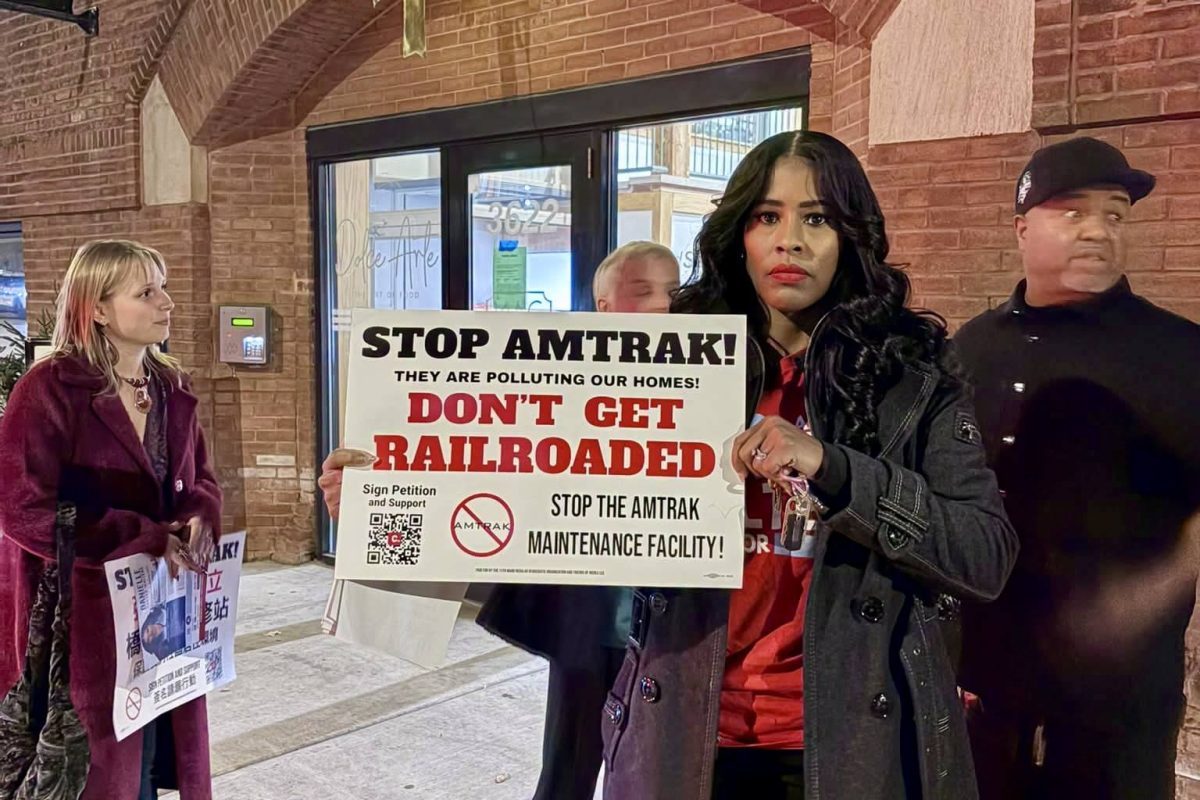
For residents who opposed the project, the federal decision represents a significant victory after months of organising, public criticism and demands for greater transparency.
Community members had argued that introducing a major maintenance operation into an area surrounded by residential properties would expose neighbourhoods to additional noise, diesel emissions, vibration, traffic and potential environmental hazards.
The concerns were not entirely hypothetical.
Amtrak’s November 2026 environmental assessment identified several existing environmental conditions at the Canal Street Yard.
A subsurface investigation involving 45 soil borings, four monitoring wells and laboratory analysis found contamination involving petroleum hydrocarbons, polycyclic aromatic hydrocarbons and certain metals.
The assessment also detected PFAS compounds in shallow groundwater at concentrations between 6.6 and 11 nanograms per litre, above the cited Illinois groundwater standard of 4 nanograms per litre.
The agency nevertheless concluded that the project would not cause significant environmental impacts provided the prescribed soil-management, groundwater-control and worker-protection measures were implemented.
The assessment also identified moderate operational noise impacts at four residential clusters.
Additionally, some homes near the southern part of the yard would experience new daily vibration events, although the predicted levels remained below the applicable Federal Transit Administration criterion.
This distinction is important.
The assessment did not establish that the proposed facility would cause widespread environmental harm. It did, however, acknowledge contamination, additional noise and changes in vibration exposure that residents believed deserved more rigorous examination.
Hannah Dembosky, a Bridgeport resident and leader of Bridgeport Environmentalists, captured the anger behind the opposition.
“This never made sense for Amtrak. It only made dollars and cents for Justin Ishbia,” she said during celebrations following the federal decision.
Her statement represents the community’s perspective, not an independently established finding of improper conduct by Ishbia or Canal Edge.
The dispute also exposed a fundamental disagreement about when residents should have been involved in decisions affecting their neighbourhoods.
According to the federal environmental assessment, the Canal Street location had appeared in public rail-planning documents since 2023. Amtrak publicly discussed the relocation in November 2024 and subsequently met with local elected officials.
However, the first dedicated community meeting listed in the assessment took place in August 2026, after the FRA had issued its initial categorical exclusion determination in May.
A second community meeting followed on 17 September.
On 7 October, Amtrak appeared before the Chicago City Council Committee on Transportation and Public Way, which adopted a resolution requesting a pause until environmental studies were publicly released.
Cook County commissioners had also approved a resolution opposing the proposed facility in its existing form and calling for comprehensive environmental review and meaningful community engagement.
The chronology explains why residents questioned whether consultation came sufficiently early to influence the decision.
Washington demands a new plan
The funding reversal has also attracted attention from senior Illinois lawmakers.
Senators Tammy Duckworth and Dick Durbin, alongside Representative Mike Quigley, welcomed the decision to reconsider the proposed project while insisting that federal investment should remain available for Chicago’s railway infrastructure.
Their joint statement highlighted the need for greater transparency and meaningful engagement with affected communities.
“Bottom line: this half of a billion in rail funding must remain in Illinois,” they said.
They also called on Amtrak to produce a detailed plan demonstrating how the investment would improve passenger services, safety and operational capacity.
The lawmakers’ position highlights an important distinction between rejecting the Bridgeport location and abandoning the underlying need to modernise Amtrak’s Chicago operations.
Chicago remains a critical hub for the national passenger railway network.
The existing 14th Street facility has acknowledged operational constraints, outdated infrastructure and insufficient indoor maintenance capacity.
Simply abandoning the relocation proposal does not resolve those problems.
What happens to the money and the 17 viaducts?
Amtrak has confirmed that it is shifting its focus to redevelopment of the existing 14th Street Yard.
Its statement described the move as a “better long-term approach” to modernising Chicago maintenance facilities.
The company says the existing site offers better operational access to Chicago Union Station and will support new trains and future Midwest service growth.
But several important questions remain unanswered.
First, the federal withdrawal of $87 million means the proposed funding arrangement for the 17 bridges and viaducts is no longer in place.
Those structures still have documented deterioration, regardless of whether the new Amtrak facility is constructed.
Chicago residents therefore need clarity about which agencies will assume responsibility for the necessary structural work and how it will be financed.
Second, the future of the $572 million grant depends on the revised project scope and the federal government’s approval of the new arrangement.
Third, the financial implications for the proposed South Loop redevelopment require clarification.
Finally, the FRA’s current project webpage presents an apparent procedural question.
Although the agency says it is terminating the environmental review for the Canal Street relocation, it continues to list public forums scheduled for 2 December, including an in-person session, and 3 December, with two virtual sessions. It also lists 7 December as the deadline for comments on the environmental assessment.
As of 25 November, the agency’s published information does not clearly explain whether those meetings will proceed or how the public-comment process will be handled following the termination decision. FRA should clarify this for residents and other stakeholders.
The accountability investigation is only beginning
The Bridgeport controversy should not end with celebrations over a cancelled railway relocation.
It should trigger a wider examination of the financial planning, engineering assessments and public-private arrangements behind the project.
There are several questions that deserve public answers.
Who commissioned the original financial assessments, and what did they establish?
When were the $400 million life-cycle costs and the additional $700 million capital requirement identified?
Why did earlier assessments conclude that the A5 main-line segment was unnecessary before later evaluations established that it needed to be retained?
What due-diligence documents were available when the federal grants were announced in August?
How were the financial risks allocated between Amtrak, Canal Edge and the federal government?
How much of the announced funding was actually disbursed, and what happens to any unspent funds?
Who will pay for the deteriorating viaducts?
And what happens to the redevelopment ambitions attached to Amtrak’s existing South Loop property?
These questions do not establish wrongdoing by any individual or organisation.
They establish the need for transparency.
The FRA’s decision has stopped a financially troubled relocation, but it has not settled the dispute over public accountability.
Bridgeport residents challenged a project they believed threatened their neighbourhood. Federal authorities subsequently identified major financial weaknesses and redirected the modernisation effort.
The result is a powerful reminder that infrastructure decisions are not merely engineering exercises.
They involve public money, private capital, environmental consequences, community rights and the long-term use of valuable urban land.
For Chicago, the immediate battle over the Bridgeport maintenance facility may be over.
The larger question remains: Who takes responsibility when a multimillion-dollar public infrastructure project reaches the funding stage before its true costs and financial risks are fully understood?
Follow us on our broadcast channels today!
- WhatsApp: https://whatsapp.com/channel/0029VawZ8TbDDmFT1a1Syg46
- Telegram: https://t.me/atlanticpostchannel
- Facebook: https://www.messenger.com/channel/atlanticpostng

Join the debate; let’s know your opinion.