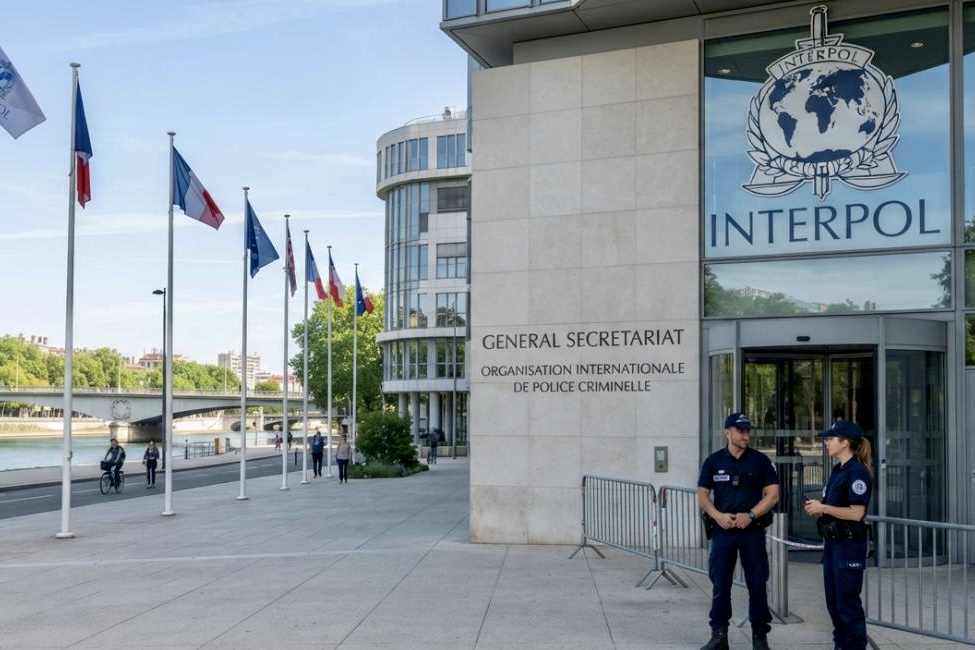
INTERPOL says an international investment fraud scheme promoted through messaging apps moved more than $2.4 million in suspected criminal proceeds. But the identities of the suspect and victims, the platforms involved and the amount recovered remain undisclosed.
The $2.4m trail: An arrest, but unanswered questions
An international investment fraud investigation in Nigeria has uncovered the movement of more than $2.4 million in suspected criminal proceeds, much of it allegedly laundered through cryptocurrency transactions, according to the International Criminal Police Organisation (INTERPOL).
The investigation led to the arrest of a suspect during Operation Serengeti III, a multinational crackdown on cybercrime that resulted in 1,462 arrests across 21 countries between 29 June and 31 August 2026.
But the financial trail raises questions that the public announcement has yet to answer.
INTERPOL has not named the suspect, identified the messaging applications used to promote the investment scheme or disclosed how many people may have lost money. It has also not specified which cryptocurrency platforms were allegedly used, where the funds travelled or whether any money from this particular investigation has been recovered.
Those omissions matter.
Tracing suspected criminal proceeds is not the same as recovering stolen money. An arrest is not a conviction, and the discovery of financial movements does not, by itself, establish the guilt of an individual.
For potential victims, the most important questions are whether their money can be traced, whether assets can be frozen before they disappear and whether the investigation will lead to restitution or prosecution.
The distinction is critical: INTERPOL reported more than $105 million recovered across the entire operation. It did not say that this amount, or any specific portion of it, came from the Nigerian investment fraud case.
How investment fraud moves from a message to a money trail
The Nigerian investigation highlights a growing challenge for law enforcement: investment fraud no longer necessarily begins with a website or an unsolicited email. A pitch delivered through a messaging application can become the starting point of a financial crime that crosses multiple jurisdictions.
Messaging applications make it possible to approach prospective investors directly, maintain repeated contact and circulate investment claims within groups. That accessibility can also complicate investigations when identities are concealed, accounts change or conversations disappear.
The precise tactics used in this Nigerian case have not been disclosed. There is no publicly established evidence in INTERPOL’s announcement identifying the scheme’s promised returns, supposed investment products or methods of persuading victims to transfer funds.
Those details should not be assumed.
Yet, INTERPOL’s wider assessment of financial fraud provides important context. Its March 2026 report identified investment fraud, romance fraud and business email compromise among major financial-fraud threats in Africa. The organisation also warned that criminal networks increasingly collaborate with specialised money-laundering groups, making it harder to identify the people controlling a scheme and the beneficiaries of its proceeds.
The central investigative challenge is therefore not simply to identify the account that received an investor’s money. Investigators must establish the relationship between the people promoting the scheme, the accounts receiving funds and any individuals or organisations that ultimately benefited.
That work can involve chat records, payment instructions, bank transfers, wallet addresses, transaction histories and information obtained from relevant service providers.
In cryptocurrency-related investigations, digital transaction records may help investigators follow funds between wallets. But tracing a transaction does not automatically establish who controlled a wallet, whether a particular transfer constituted criminal proceeds or whether the funds remain available for recovery.
Those conclusions require corroborating evidence.
Cryptocurrency is the trail, not the verdict
The reported use of cryptocurrency is one of the most significant features of the Nigerian case.
Digital assets can be transferred across borders without relying on conventional bank-to-bank transfers for every stage of a transaction. Depending on the blockchain and services involved, investigators may be able to follow movements between addresses and build a picture of how funds travelled.
That can produce valuable leads.
But a visible transaction is not the same as a known individual. Connecting a wallet address to a person may require records from exchanges, payment providers or other services, as well as evidence linking the person to the transaction.
Funds can also pass through multiple addresses and intermediaries, complicating efforts to establish who received the proceeds and who ultimately controlled them.
None of this means that cryptocurrency itself is evidence of wrongdoing. The question in this case is whether investigators can demonstrate that the particular transactions identified were connected to the alleged investment fraud.
INTERPOL has not disclosed the cryptocurrency assets involved, the wallet addresses under investigation or whether investigators have identified exchange accounts associated with the alleged proceeds.
It has also not explained whether funds were frozen, whether overseas authorities were asked to assist with tracing transactions or whether any suspected beneficiaries have been identified.
These are important distinctions between a financial investigation that has identified a substantial money trail and one that has progressed to the recovery of assets.
The second Nigerian investigation: 2.1 million email addresses
Operation Serengeti III also uncovered a separate Nigerian case involving alleged phishing and business email compromise.
Authorities arrested a suspect linked to an operation that allegedly harvested software credentials and accumulated approximately 2.1 million email addresses. Investigators also recovered a luxury vehicle suspected of having been purchased with criminal proceeds.
Business email compromise, commonly known as BEC, involves the misuse or impersonation of business email accounts to obtain money or sensitive information. In some schemes, criminals exploit compromised accounts or convincing impersonation tactics to interfere with legitimate business communications and divert payments.
The scale of the email collection reported in Nigeria raises questions about the operation’s reach, the security of the compromised accounts and the extent to which the collected information was used.
However, the figure of 2.1 million email addresses should not be presented as 2.1 million confirmed victims. INTERPOL’s announcement does not establish that every address belonged to a person who suffered financial loss, nor does it provide a breakdown of the affected organisations or individuals.
The luxury vehicle is a separate investigative lead. Its recovery may help authorities examine the suspected use of criminal proceeds, but the announcement does not disclose its value, the identity of its registered owner or whether it has been forfeited.
Together, the two investigations illustrate different aspects of digitally enabled financial crime. One concerns an investment scheme and a substantial suspected money trail. The other concerns the alleged harvesting of software credentials and a large collection of email addresses.
They should not be conflated, and the public figures from one case should not be attributed to the other.
1,462 arrests across 21 countries: The scale of the operation
The Nigerian arrests formed part of a much wider law enforcement effort.
According to INTERPOL, Operation Serengeti III resulted in:
- 1,462 arrests across 21 countries.
- 10,909 malicious networks disrupted.
- 65,929 victims identified as targets of cybercriminal networks.
- More than $105 million in illicit funds recovered across the operation.
- More than $385 million in losses linked to criminal activity identified by financial investigations.
The operation ran from 29 June to 31 August 2026, targeting cyber-enabled fraud, ransomware, business email compromise, online scams and digital extortion.
Investigators from 20 African countries and the United States received actionable intelligence on suspicious domains, internet protocol addresses and command-and-control infrastructure associated with criminal activity. Private-sector partners contributed intelligence, technical analysis and operational expertise.
The operation also exposed different forms of cybercrime across the continent. In Uganda, authorities dismantled two transnational fraud rings linked to online investment and pension fraud. In Angola, investigators dismantled illegal cryptocurrency mining centres and seized more than 2,000 mining devices. Authorities in Tanzania and Gabon acted against schemes involving a malicious mobile loan application and vehicle import fraud promoted through social media.
INTERPOL’s Director of Cybercrime, Neal Jetton, said:
“Cybercrime networks operate without regard for borders, exploiting technology to target victims on an unprecedented scale.”
He added:
“Operation Serengeti III reinforces a clear message: while cybercrime is increasingly borderless, international cooperation remains one of the most effective tools for disrupting criminal networks, recovering criminal assets and protecting communities from digital harm.”
The results demonstrate the importance of cooperation across national borders. They do not, by themselves, establish how many criminal networks have been permanently dismantled or how much of the financial loss identified in individual cases will ultimately be recovered.
The public safety gap: What happens after the arrest?
The most important next stage of the Nigerian investigation may be less visible than the arrest itself.
Authorities must establish how the investment scheme operated, determine the suspect’s alleged role, trace the suspected proceeds and identify anyone else who may have participated. Investigators may also need to coordinate with financial institutions and overseas service providers where the evidence points beyond Nigeria.
Yet the public information released so far does not provide enough detail to assess how far the investigation has progressed beyond the initial arrest and financial tracing.
Five questions remain particularly important.
First, how much money has actually been recovered? INTERPOL identified more than $2.4 million in suspected criminal proceeds, but has not disclosed any case-specific recovery figure.
Second, who lost money? The announcement does not identify the number of victims, their locations or the estimated losses suffered by individual investors. Protecting victims’ identities may be necessary, but anonymised information could help establish the scale of the suspected harm.
Third, where did the money go? The extent of the cryptocurrency trail, the service providers involved and the jurisdictions through which funds moved remain undisclosed.
Fourth, who else may be involved? Investigators have said that the wider operation’s investigations remain active, with authorities tracing funds, analysing seized digital evidence and identifying additional suspects.
Fifth, what happens next? The available announcement does not provide a prosecution timetable, disclose charges against the suspect or establish whether proceedings have begun.
These are not findings that the investigation has failed. They are outstanding questions that matter when assessing whether an enforcement operation can turn disruption into accountability.
INTERPOL’s continued investigation is an important step, but the outcome will depend on the evidence collected by the relevant national authorities and any subsequent legal proceedings.
What Nigerians should know before sending money to an online investment scheme
The case also offers a practical warning to prospective investors.
An investment pitch circulated through a messaging group is not automatically fraudulent, just as the use of cryptocurrency does not establish criminality. But promises of unusually high or guaranteed returns, pressure to transfer money quickly, difficulty withdrawing funds and demands for additional payments to unlock an account should prompt careful scrutiny.
Investors should independently verify the legal identity of an investment provider and check whether the relevant business is authorised by the appropriate regulator. A professional-looking website, testimonials, screenshots of supposed profits or claims of international partnerships are not substitutes for independent verification.
Anyone who suspects that they have been defrauded should preserve messages, account details, transfer receipts, wallet addresses and transaction references. They should contact their bank or relevant payment provider promptly and report the matter to the appropriate law enforcement authorities.
They should also be wary of people who promise to recover lost investments in exchange for upfront fees. A second payment can create another opportunity for exploitation.
For investigators, speed matters. Early access to transaction records and account information can be important when funds are still moving. For potential victims, reporting a suspected fraud promptly may preserve evidence and give authorities a clearer starting point.
The real measure of success is what can be recovered
Operation Serengeti III has delivered a substantial enforcement result, with arrests, disrupted infrastructure and more than $105 million in illicit funds recovered across the operation.
Nigeria’s $2.4 million investment fraud investigation, however, remains a case in progress.
The arrest gives authorities an opportunity to examine the alleged scheme, establish the suspect’s role and follow the suspected proceeds. It does not yet reveal how many investors were affected, who else may have benefited or how much money can be returned.
The second Nigerian investigation, involving the alleged harvesting of 2.1 million email addresses, presents a related challenge: determining how the collected information was used and whether further victims or criminal proceeds can be identified.
INTERPOL has said investigations remain active. That makes future disclosures important, especially on asset recovery, victim identification and the progress of national proceedings.
For Nigerians exposed to online investment fraud, the decisive result will not be the arrest figure alone. It will be whether investigators establish what happened, hold those responsible accountable through due process and recover money that can lawfully be returned to victims.
Follow us on our broadcast channels today!
- WhatsApp: https://whatsapp.com/channel/0029VawZ8TbDDmFT1a1Syg46
- Telegram: https://t.me/atlanticpostchannel
- Facebook: https://www.messenger.com/channel/atlanticpostng



Join the debate; let’s know your opinion.