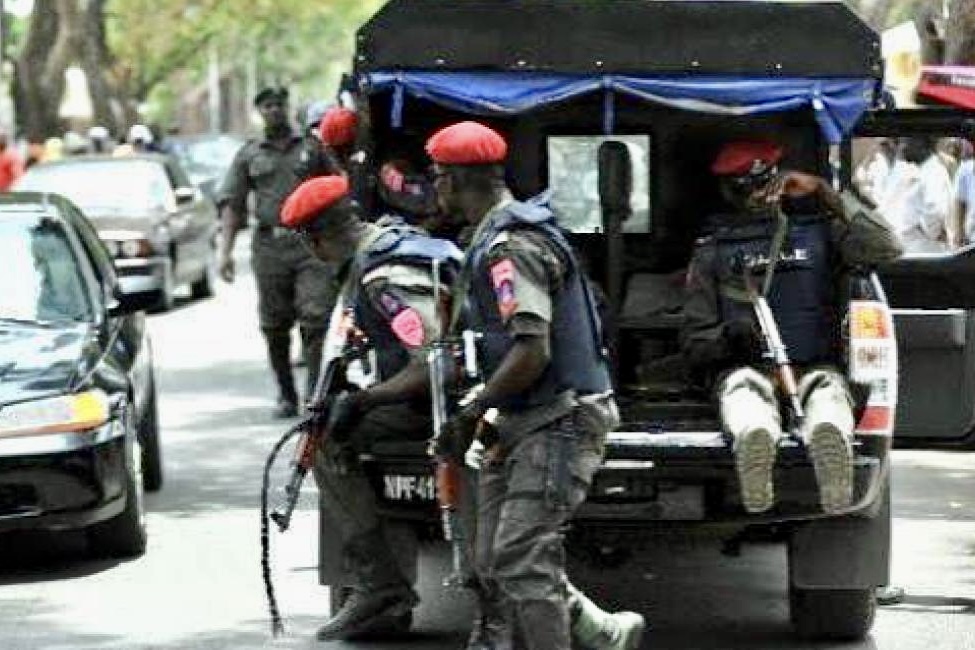
Police in Katsina arrest a terrorism financier and collaborators, marking a key breakthrough in the fight against terrorism and banditry in northern Nigeria.
KATSINA, Nigeria — On November 19, 2024, the Katsina State Police Command made a significant breakthrough in the fight against terrorism, banditry, and kidnapping when they apprehended a key suspect, Aminu Hassan, a 25-year-old resident of Dundubus in Danja Local Government Area. This arrest has ignited discussions on the ongoing security challenges faced by Nigeria, particularly in the northern region, and raised concerns over the growing sophistication of armed bandits and their links to organised criminal networks.

The arrest was made during a routine patrol along the Yantumaki and Kankara highway, which has become notorious for being a hotbed of criminal activity. Aminu Hassan was found in possession of two pairs of military uniforms, neatly concealed in a black polythene bag, an item that immediately raised suspicion. The uniforms, which are often a tool used by bandits to disguise their true identities and perpetrate acts of violence under the guise of military operations, pointed to a more alarming reality—the involvement of well-organised terrorist financiers in these crimes.
What followed was the unravelling of a deeper criminal conspiracy. During subsequent investigations, three other individuals—Lawal Ahmad, 29; Isma’il Dalhatu, 24; and Shafi’u Adamu, 28—were arrested in connection with Hassan. These suspects, all from the Sabon Gari region of Zaria in Kaduna State and surrounding areas, were found to have been involved in the illegal distribution of military uniforms to armed bandits operating in the northern regions. In total, the police recovered fourteen pairs of military uniforms and one police uniform, which they believe were intended to be used by the bandits to aid in their nefarious activities.
This discovery underscores the growing complexity of the banditry problem in Nigeria, especially in Katsina State, which has seen increasing instances of terror attacks and kidnappings in recent years. Armed bandits in the region often pose as members of the military or law enforcement to intimidate, abduct, and extort local communities. With the complicity of figures like Aminu Hassan, who have been found to be financing such operations, the scale of criminal activity is even more concerning.
The arrest and the subsequent recovery of these military uniforms signal a critical development in law enforcement’s efforts to combat terrorism financing. Hassan’s role as a terrorism financier, funding and aiding bandits who terrorize Danmusa and other parts of Katsina, illustrates the wider network that these criminal groups rely on to maintain their operations. These figures not only provide material support but are also key to maintaining the logistics of these violent campaigns.
The Katsina Police Command, through its Public Relations Officer Abubakar Sadiq, revealed that during questioning, all the suspects confessed to their involvement in the crimes. This admission of guilt has helped authorities piece together how deeply entrenched these networks have become. According to Sadiq, the uniforms recovered are integral to the bandits’ plans to carry out further criminal activities, positioning themselves as members of the Nigerian military or police to gain easier access to victims and resources.
The arrest of these individuals has sent a strong message about the vigilance and professionalism of the Katsina Police. Commissioner of Police Aliyu Musa commended the officers for their dedication to the task, urging the public to continue providing crucial information to further crack down on armed banditry. The proactive actions of the police have been vital in limiting the scope of the violence perpetrated by such groups, but questions remain about the long-term sustainability of these operations.
The problem of terrorism and banditry in northern Nigeria is far from solved. While law enforcement agencies continue to make notable arrests, the challenge remains formidable. Armed banditry has been exacerbated by poverty, lack of education, and the proliferation of illegal arms, which have found their way into the hands of criminals. Additionally, the role of financing in this criminal ecosystem is often overlooked. Individuals like Hassan are central figures in perpetuating violence, and their ability to operate with impunity has posed a substantial challenge to Nigerian authorities.
What makes this case particularly concerning is the continued use of military uniforms by criminals to perpetrate their violence. The uniforms not only provide a disguise but also instill fear among the local population. This tactic has led to a growing sense of insecurity among residents in Katsina and surrounding areas. The fear that bandits could be impersonating law enforcement officials has created an atmosphere of distrust and suspicion within communities. It also raises questions about the integrity of the Nigerian military and police forces, as some criminals continue to exploit the camouflage of official uniforms to carry out their violent acts.
The issue of terrorism financing, which involves individuals like Hassan, also points to broader systemic issues within the Nigerian security apparatus. These individuals, often operating with considerable financial backing, are able to fund criminal operations that destabilise entire regions. Whether through money laundering, illegal transactions, or other covert methods, the financing of these operations poses a significant threat to national security.
This case also highlights the urgent need for more collaborative efforts between Nigerian security forces, intelligence agencies, and local communities. The Katsina Police, despite their success in arresting these suspects, have limited resources to track down and dismantle these criminal networks entirely. Intelligence-sharing between different security agencies and local groups can help mitigate the effects of terrorism financing and disrupt the operations of armed bandits before they escalate.
In conclusion, the arrest of Aminu Hassan and his accomplices in Katsina represents a significant moment in Nigeria’s ongoing struggle against terrorism and banditry. The discovery of military uniforms meant for armed bandits and the subsequent arrests shed light on the sophisticated networks operating behind these crimes. While the efforts of the Katsina State Police are commendable, the wider issue of terrorism financing remains a pressing challenge that requires a concerted effort across various sectors of Nigerian society. The authorities must continue to address the root causes of these crimes while dismantling the financial structures that sustain them. Without these efforts, the war against terrorism and banditry may continue to claim more victims in the years to come.
The Depth of Terrorism Financing and the Role of Local Communities in Security
The arrest of Aminu Hassan and his associates has illuminated a dark reality of how terrorism financing operates within Nigeria. The problem of armed banditry and terrorism in northern Nigeria has long been characterised by a lack of effective containment and an inability to eradicate the financial backing that sustains these criminal organisations. Hassan’s arrest raises crucial questions not only about the financing of terrorism but also about the systemic weaknesses in tackling such operations. This second batch of analysis delves deeper into the role of terrorism financiers, their connection to organised crime, and the complex relationship between local communities and law enforcement.
The Role of Terrorism Financiers in Sustaining Criminal Operations
At the heart of this issue lies the role of individuals like Aminu Hassan, whose involvement in financing terrorism is critical to the functioning of criminal networks. Terrorism financing, as defined by the Financial Action Task Force (FATF), involves the provision of financial resources with the intent of furthering terrorism or terrorist activities. While the focus has often been on the direct perpetrators—the bandits, kidnappers, and terrorists—individuals like Hassan play an equally significant role by enabling these violent actors through funding, supplies, and logistical support.
Hassan’s connection to armed bandits is particularly disturbing as it underscores the evolution of terrorist activities in Nigeria. The armed bandits that terrorise the northern region are no longer operating as independent cells of isolated criminals. Instead, they have become part of a larger, more organised network, relying on financiers like Hassan who provide critical resources for their operations. The possession of military uniforms by these criminals demonstrates the level of sophistication involved, as well as the significant planning behind their operations. These uniforms are not merely for disguising the bandits; they serve as tools for intimidation and an efficient means of perpetrating crime without suspicion.
What makes Hassan’s role even more concerning is the extent to which he has become embedded within the local fabric. By operating in Danja Local Government Area, a rural region in Katsina, Hassan’s activities indicate that terrorism financing is not just a metropolitan or isolated urban phenomenon. It reaches into the very heart of local communities, where illicit funds and networks are often hidden under the guise of legitimate trade and services. These financial structures are often opaque and extremely difficult for local authorities to detect. This points to a broader problem faced by security agencies—the failure to detect and disrupt the financial lifeblood of terrorism before it materialises into violent action.
This reality makes it increasingly difficult to address the root causes of terrorism and banditry in Nigeria. While law enforcement agencies, like the Katsina State Police, can work tirelessly to arrest perpetrators and recover military uniforms, the financial foundations of these criminal organisations remain largely untouched. It is only through comprehensive, coordinated efforts to combat terrorism financing that the effectiveness of security operations will be truly enhanced.
Intelligence Sharing: The Missing Link in Nigeria’s Security Infrastructure
One of the critical lessons that emerge from the arrest of these suspects is the importance of intelligence-sharing among security agencies and local communities. In the fight against terrorism, intelligence is not just an asset but the cornerstone of any successful operation. The Katsina Police, by discovering and acting on information about Hassan’s activities, were able to make a significant breakthrough. However, as evidenced by the case of military uniforms being used for criminal operations, local law enforcement agencies face challenges in identifying and neutralising these threats before they escalate.
The level of sophistication demonstrated by the terrorists in using military uniforms as part of their operations indicates that these criminal organisations are not only armed but also well-prepared. It suggests that intelligence-gathering and monitoring are critical for early detection and intervention. However, intelligence gathering cannot solely rest on the shoulders of law enforcement agencies. Local communities must become active participants in the process of information sharing.
Communities often have the clearest insights into the activities of individuals like Aminu Hassan, who blend into the social and economic fabric of rural life. Local farmers, traders, and villagers may notice unusual activities—such as the acquisition of military uniforms or the presence of outsiders with questionable motives—but are often hesitant to speak out due to fear of retaliation from armed groups. Strengthening trust between law enforcement and the local population is therefore essential for successful intelligence-sharing.
The Katsina Police’s successful arrests show that collaboration between the police and local communities can yield results, but this is an area that remains underdeveloped in many parts of the country. The Nigerian government and security agencies must prioritise building stronger relationships with local populations. This will involve not just enhancing security measures but also educating communities on the importance of reporting suspicious activities and protecting informants. Intelligence-sharing must be seen as a two-way street, where both the state and local communities benefit from greater security and stability.
Furthermore, intelligence-sharing must also extend beyond local communities. It requires a more robust framework of cooperation between federal, state, and local law enforcement agencies, as well as cooperation with international partners who can provide critical data on the movements of criminal financiers and their international links. The global nature of criminal financing, especially in the age of digital currency and international money transfers, makes it imperative that Nigeria modernises its approach to tracking and disrupting financial networks that fund terrorism.
The Role of Local Communities in Counterterrorism and Crime Prevention
The issue of local communities’ involvement in counterterrorism is multifaceted. While some may view it as a purely law enforcement issue, the reality is that communities are often at the frontline of confronting terrorism and criminality. In the case of Katsina, the police have made significant strides in arresting individuals connected to terrorism financing. However, their success would not have been possible without the support of the community, whether direct or indirect.
Local residents in areas like Danja and Danmusa, where armed bandits are known to operate, often live under constant threat of violence. Bandits rely heavily on local intelligence to identify vulnerable targets for kidnapping, robbery, and extortion. As the Nigerian government continues to bolster its counterterrorism and anti-banditry strategies, it must acknowledge that empowering local communities to resist the influence of criminal elements is a crucial step in ensuring long-term peace and security.
This can be done through various initiatives aimed at fostering resilience in communities. Education campaigns on identifying and reporting criminal activities, along with the provision of support for those who assist law enforcement, are key steps toward creating an atmosphere of cooperation and trust. Furthermore, it is essential to address the root causes of terrorism and banditry, such as poverty, unemployment, and social inequality, which provide fertile ground for extremist ideologies and criminal recruitment.
In Katsina, as in other northern states plagued by banditry, the police cannot combat terrorism and criminal financing alone. There is a critical need for greater involvement from state and local governments, civil society organisations, and the private sector in securing the future of the region. A united front, combining intelligence, community support, and targeted financial actions, will be necessary to dismantle these criminal networks effectively.
Conclusion
The arrest of Aminu Hassan and his accomplices in Katsina marks a significant turning point in the ongoing battle against terrorism and banditry in Nigeria. The discovery of military uniforms intended for use by armed bandits and the subsequent arrests underline the intricate and complex nature of these criminal enterprises. While law enforcement has made notable progress, this case illustrates the need for a more comprehensive, coordinated approach that involves all sectors of Nigerian society.
Terrorism financing remains a major challenge, and the efforts to combat it must be multifaceted, incorporating both intelligence-driven operations and community engagement. The Katsina Police’s breakthrough shows that progress is possible, but it also highlights the need for continued vigilance, collaboration, and reforms in Nigeria’s security infrastructure.
As Nigeria moves forward in its fight against terrorism and armed banditry, it is imperative that the country invests in strengthening the capacities of its law enforcement agencies, enhancing intelligence-sharing, and fostering trust between local communities and security forces. Only by addressing the financial roots of terrorism and banditry can Nigeria hope to build a more secure and stable future for its citizens.
The Broader Implications for Nigeria’s National Security Landscape
The arrest of terrorism financier Aminu Hassan and his collaborators marks a critical moment in Nigeria’s ongoing battle against terrorism and banditry, yet it exposes a broader issue that needs urgent national attention. As Katsina State Police continues its investigations, there are profound implications for Nigeria’s national security strategy. This final section delves into the broader consequences of these arrests for the country’s security apparatus and the urgent need for a multi-pronged approach to terrorism financing and organised crime.
Systemic Failures in Nigeria’s Security Framework
The arrest of a terrorism financier, the recovery of military uniforms, and the apprehension of other suspects connected to armed banditry in Katsina expose gaps in the national security architecture. While law enforcement agencies in Katsina performed admirably by intercepting and arresting these suspects, the larger issue remains that the security forces are often operating in a fragmented and disjointed manner. Despite years of intense effort, Nigeria’s fight against terrorism financing and armed banditry is still plagued by systemic failures.
The inability to neutralise terrorist financing networks—such as the one operated by Hassan—illustrates the inadequacies within the country’s intelligence and investigative systems. Nigeria has faced increasing pressure to confront the growing menace of terrorism and banditry, yet the country’s law enforcement agencies continue to face limitations in both resources and coordination. The Katsina arrests serve as a reminder that the fight against terrorism cannot be won by sporadic, isolated actions; instead, it demands a unified, sustained effort across all levels of government.
There are clear deficiencies in the intelligence-gathering mechanisms that could have preemptively identified and disrupted Hassan’s network. Had there been a more robust intelligence-sharing system between local, state, and federal law enforcement agencies, it is possible that the authorities could have dismantled his operation before it reached the point of facilitating terrorism. The lack of proper intelligence mechanisms, combined with bureaucratic bottlenecks, means that Nigerian security forces often operate in reactive rather than proactive modes.
A comprehensive security reform plan is necessary to address these deep-seated systemic issues. This includes enhancing the capacity of the Nigerian police and military to effectively monitor and counter terrorism financing, improving inter-agency collaboration, and modernising security technology to track criminal networks more efficiently. Without these reforms, Nigeria will continue to lag behind in addressing the root causes of banditry and terrorism, resulting in costly setbacks that could have otherwise been prevented.
Cross-Border Dimensions: The Regional Scope of Terrorism Financing
Terrorism in northern Nigeria, especially in states like Katsina, is not an isolated phenomenon. The nature of these criminal networks is inherently transnational. Bandits and terrorists often operate across borders, establishing connections with militant groups in neighbouring countries, such as Niger, Mali, and Cameroon. Aminu Hassan’s alleged involvement in terrorism financing is a case in point—his network likely extends beyond Nigeria’s borders, enabling a larger pool of resources and supplies for these violent activities.
The presence of military uniforms and other paraphernalia intended for armed bandits also suggests an organised, cross-border trade in illegal goods, including arms and equipment. The porous nature of Nigeria’s borders exacerbates the challenge of curbing such transnational crimes. Given the international dimension of terrorism financing, a more effective regional collaboration between Nigeria and its neighbours is critical.
Efforts to strengthen regional cooperation have been ongoing, notably through the Multinational Joint Task Force (MNJTF), which seeks to address terrorism and security threats in the Lake Chad Basin region. However, despite some progress, the complexities of cross-border terrorism financing remain an ongoing challenge. Hassan’s arrest underscores the need for a more integrated and coordinated approach to regional security. This should include enhanced intelligence-sharing protocols, joint operations, and the establishment of a more formalised system for tracking and dismantling criminal networks that span multiple nations.
The role of international partners in this effort cannot be overstated. With global financial networks now being used to fund terrorist organisations, international cooperation is paramount in disrupting these financial flows. The involvement of entities like the United Nations (UN) and the Financial Action Task Force (FATF) could help Nigeria strengthen its anti-money laundering (AML) frameworks and increase vigilance on global financial transactions linked to terrorism financing.
The Importance of Community Empowerment in National Security
While the Nigerian government and security agencies are primarily responsible for tackling terrorism and banditry, the role of local communities in safeguarding security is equally critical. In Katsina, as in many other parts of northern Nigeria, residents are often the first to witness suspicious activities. Whether it’s the arrival of strangers, the accumulation of supplies by unusual actors, or the discovery of military uniforms, communities hold valuable intelligence that could help prevent the escalation of violence.
However, for local populations to be effective partners in combating terrorism, they must be empowered and incentivised to cooperate with authorities. Fear of retaliation by armed bandits or terrorists has long stifled community engagement. A concerted effort must be made to protect whistleblowers, enhance public awareness, and ensure that individuals who provide intelligence are not only safeguarded but also rewarded for their bravery.
Beyond just intelligence-sharing, there is a need for wider community policing strategies. These initiatives would involve a larger segment of the population in active security roles, enabling local populations to become more engaged in security decisions and operations. Community policing initiatives could also help bridge the gap between law enforcement agencies and the citizens they are sworn to protect.
Furthermore, addressing the socio-economic conditions that contribute to criminality in the first place is a necessary step toward long-term security. In impoverished regions like Katsina, where unemployment rates are high and educational opportunities are limited, there is a higher risk of young people being lured into criminal activities, including those financed by terrorism. As such, any national security strategy must be integrated with broader socio-economic reforms to tackle the root causes of terrorism and banditry. These reforms should focus on economic development, job creation, vocational training, and the building of social infrastructure.
Conclusion: A Unified Approach for a Secure Future
The arrest of Aminu Hassan and his associates represents a significant victory for law enforcement in Katsina, but it also signals the beginning of a larger, more complex battle against terrorism financing and banditry in Nigeria. The case highlights the need for systemic reform within Nigeria’s security apparatus, with a particular focus on intelligence-sharing, community engagement, and regional cooperation.
For Nigeria to succeed in combating terrorism, banditry, and organised crime, it must prioritise a holistic approach that involves law enforcement, local communities, regional partners, and international allies. Strengthening the capacity of security forces, fostering greater public trust, and dismantling financial networks that sustain criminal activities are all essential components of a comprehensive counterterrorism strategy.
Moreover, by empowering communities to take an active role in security, Nigeria can create a more resilient and self-sustaining defense mechanism against future threats. The ultimate goal must be to foster an environment where terrorism financing and organised crime have no place to hide, ensuring a safer and more secure Nigeria for future generations.
In conclusion, the arrest of a terrorism financier in Katsina marks not just a local achievement but also an important lesson for Nigeria’s fight against terrorism. While the battle is far from over, the concerted efforts by security forces and the active involvement of communities will play a crucial role in ensuring that Nigeria prevails in this ongoing war for peace and security.
Additional report: Suleiman Adamu, Atlantic Post Senior National Security/Defence Correspondent.