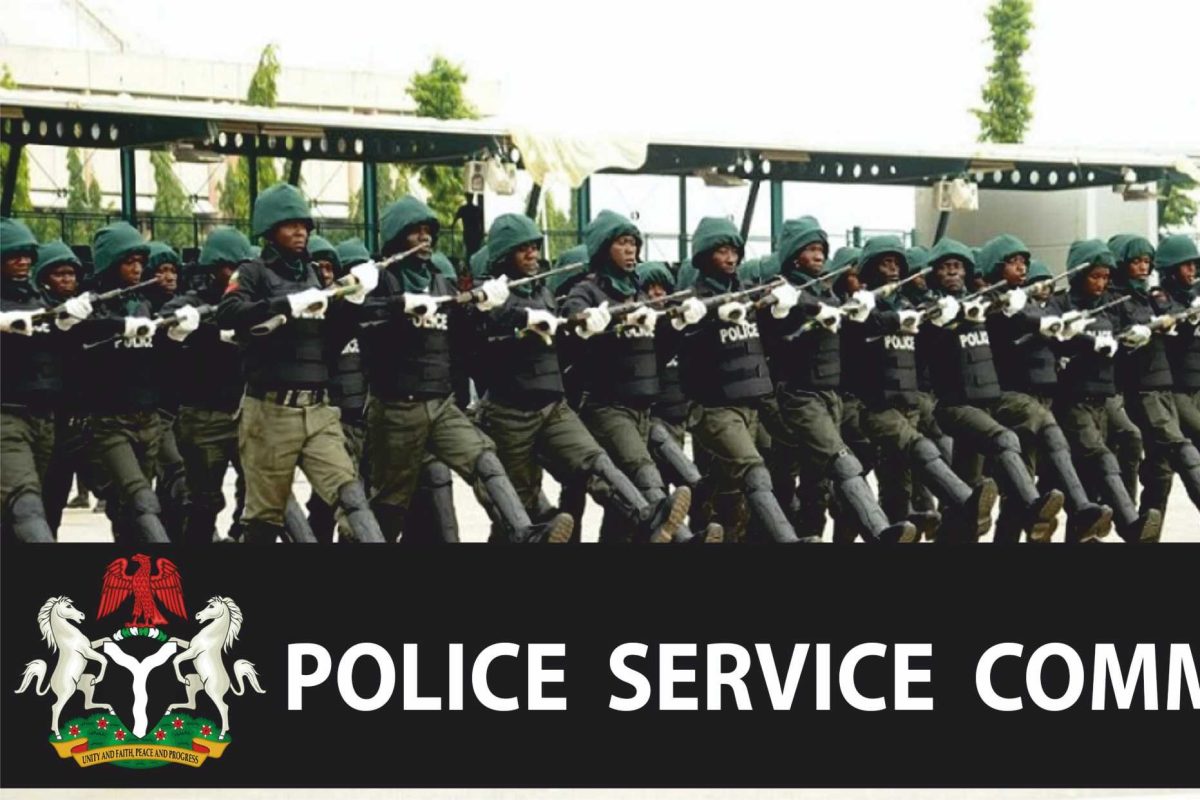
The latest redeployment places senior officers in key investigative, intelligence, operational and zonal commands. But the real test will be whether the reshuffle delivers measurable improvements in public safety and police accountability.
Nigeria’s Inspector-General of Police, Olatunji Disu, has ordered a major redeployment of 13 Assistant Inspectors-General of Police (AIGs) and two Commissioners of Police (CPs), reshaping leadership across critical departments, specialised formations and zonal commands.
The changes affect some of the most strategically important institutions within the Nigeria Police Force, including the Force Criminal Investigation Department (FCID), Force Intelligence Department, Department of Operations, Police Air Wing, Maritime Command and Border Patrol Force.
The postings were communicated through a police wireless message issued by the Force Secretariat in Abuja. The message, dated November 15, 2026, was circulated to zonal, state and specialised commands and described the changes as requiring implementation with immediate effect.
The development was reported by Punch and Nigeria Info on Monday, November 16.
But beyond the movement of senior officers, the more important question is what the changes are expected to achieve in a country where insecurity, complex criminal investigations and public confidence in law enforcement remain major national concerns.
Full List: 13 AIGs and Their New Positions
The redeployment covers four zonal commands, several Force Headquarters departments and specialised police formations.
Zonal commands
- AIG Enyinnaya I. Adiogu – Zone 4 Command, Makurdi.
- AIG Ibrahim Maikaba Balarabe – Zone 7 Command, Abuja.
- AIG Ohagwu Felix Ndukwe – Zone 17 Command, Akure.
- AIG Regina Cosmas Udoette – Zone 16 Command, Yenagoa.
Force Headquarters, Abuja
- AIG Clement Robert – Force Criminal Investigation Department (FCID).
- AIG Olusegun Eyitayo Omosayin – Department of Training and Development.
- AIG Afolabi Wilfred Olutokunbo – Department of Operations.
- AIG Martin O. Nwogoh – Police Air Wing.
- AIG Ibrahim Gotan – Force Intelligence Department.
Specialised formations and commands
- AIG Betty Enekpen Otimeyin – Maritime Command, Lagos.
- AIG Ugobueze Ogbodo – FCID Annex, Enugu.
- AIG Taylor Lennox Olarenwaju – Coordination (COOP) Office, Lagos.
- AIG Shetima Jauro Mohammed – Border Patrol Force, Abuja.
The list and destinations are contained in the wireless message reproduced in reports published on November 16.
Two Commissioners Receive Higher-Duty Assignments
Two Commissioners of Police have also been assigned to senior responsibilities at the Force Headquarters.
CP Gabriel Onyilo Elaigwu has been posted to the Armament Department under the Department of Operations, while CP Abbas Sule has been deployed to INTERPOL, Abuja.
Both appointments are described as higher-duty assignments.
The wireless message contains a specific instruction concerning their ranks:
“Officers on higher duty post should not wear the rank.”
The directive means the two commissioners are to retain their substantive CP rank insignia while performing the responsibilities attached to their new positions.
Their assignments should therefore not be confused with confirmed promotions to the rank of Assistant Inspector-General of Police. Punch Newspapers+1
Why the FCID and Intelligence Appointments Matter
Some of the most consequential decisions in the reshuffle concern the institutions responsible for converting intelligence into criminal investigations and, ultimately, prosecutions.
The Force Criminal Investigation Department is particularly important because the Nigeria Police Force identifies it as its highest investigative arm. Its responsibilities include investigating and prosecuting serious and complex criminal cases within and outside Nigeria.
The deployment of AIG Clement Robert to the FCID and AIG Ugobueze Ogbodo to its Enugu annex places senior leadership in two important parts of the national investigative structure.
The challenge will be ensuring that investigations are thorough, evidence is properly preserved and cases are presented in ways that can withstand judicial scrutiny.
Equally important is the deployment of AIG Ibrahim Gotan to the Force Intelligence Department.
The department’s responsibilities include gathering, evaluating and disseminating criminal intelligence, including information relating to organised criminal networks and cross-border criminal activities.
The effectiveness of intelligence operations, however, cannot be measured simply by the number of intelligence reports produced.
The more important questions concern how quickly actionable information reaches operational officers, whether it leads to effective crime prevention and whether resulting arrests produce credible evidence for prosecution.
Maritime Security, Border Protection and Police Mobility
The redeployment also touches three areas with wider national security implications.
AIG Betty Enekpen Otimeyin’s posting to the Maritime Command in Lagos places her within a formation operating in an important economic and commercial environment.
Nigeria’s maritime security challenges affect coastal communities, shipping, port operations and the wider economy. The effectiveness of policing in this area has implications beyond conventional law enforcement.
Similarly, AIG Shetima Jauro Mohammed’s deployment to the Border Patrol Force places senior leadership within a formation associated with border security operations.
Nigeria’s extensive land borders create difficult enforcement challenges involving illegal movements, arms trafficking, smuggling and transnational criminal networks.
The appointment of AIG Martin O. Nwogoh to the Police Air Wing also underscores the importance of specialised operational capabilities.
Aircraft and other aerial resources can support surveillance, reconnaissance, rapid deployment and operations in locations where conventional ground response may be difficult.
These appointments will be meaningful only to the extent that personnel, equipment, operational coordination and institutional accountability support the responsibilities of the officers involved.
What the Police Act Says About the Reshuffle
The redeployment comes within the administrative and command responsibilities established under the Nigeria Police Act 2020.
Section 7 gives the Inspector-General of Police full command and operational control of the Force.
Section 9 also empowers the IGP to determine police manpower distribution, taking into account the country’s security situation and population, after consultation with the Police Service Commission.
Importantly, Section 10 provides for the delegation and devolution of police powers to zonal, state, area, divisional and police-post levels to promote quicker responses to public safety needs.
The Act also distinguishes between appointments and operational assignments.
Under Section 11, the Police Service Commission appoints AIGs and DIGs on the recommendation of the Inspector-General. Section 12 provides for the appointment of Commissioners and allows the IGP to deploy commissioners not assigned to state commands to head departments and operational units.
The distinction is important because a change of duty post does not automatically constitute a promotion.
The higher-duty assignments given to the two commissioners must therefore be understood separately from the formal process of advancement in police rank. policeaffairs.
The Questions the Reshuffle Must Answer
For Nigerians, the central issue is not necessarily how many senior officers have been transferred. It is whether the new deployment structure will improve the delivery of policing services.
The Force Headquarters now has senior officers assigned to investigative, intelligence, operational, training and aviation responsibilities.
Yet the operational value of those appointments will depend on coordination between departments and the ability of zonal commands to translate national directives into effective local responses.
There are several indicators against which the new leadership arrangements should eventually be assessed.
The FCID should be measured by the quality and speed of investigations, evidence-based prosecutions and progress in resolving complex criminal cases.
The intelligence department should demonstrate that actionable information is being translated into effective operations while respecting the law and fundamental rights.
Maritime and border formations should be assessed against their ability to disrupt criminal networks, protect vulnerable communities and improve operational coordination.
The training department should demonstrate that professional development produces better investigative skills, improved conduct and more effective public engagement.
These are measurable responsibilities, not simply administrative expectations.
The wireless message announcing the redeployment does not provide detailed explanations for the individual postings or publish performance targets against which the affected officers should be assessed.
That information would help Nigerians understand the strategic thinking behind the reshuffle.
A New Structure Is Not Yet a Security Achievement
The redeployment represents a significant administrative adjustment within the senior leadership of the Nigeria Police Force.
It places experienced officers in positions covering some of the Force’s most sensitive operational and institutional responsibilities.
But a reshuffle, regardless of the seniority of the officers involved, cannot by itself resolve the structural challenges facing Nigerian policing.
The country needs professional investigations, reliable intelligence, effective command structures, adequate operational resources and a police institution that commands public confidence.
The real achievement of this exercise will not be the number of officers who receive new postings.
It will be whether Nigerians experience safer communities, more credible investigations, quicker police responses and greater accountability.
Ultimately, the success of IGP Disu’s latest reshuffle will be determined not by the ranks on the officers’ shoulders, but by the results delivered to the people they are expected to protect.
Follow us on our broadcast channels today!
- WhatsApp: https://whatsapp.com/channel/0029VawZ8TbDDmFT1a1Syg46
- Telegram: https://t.me/atlanticpostchannel
- Facebook: https://www.messenger.com/channel/atlanticpostng


Join the debate; let’s know your opinion.