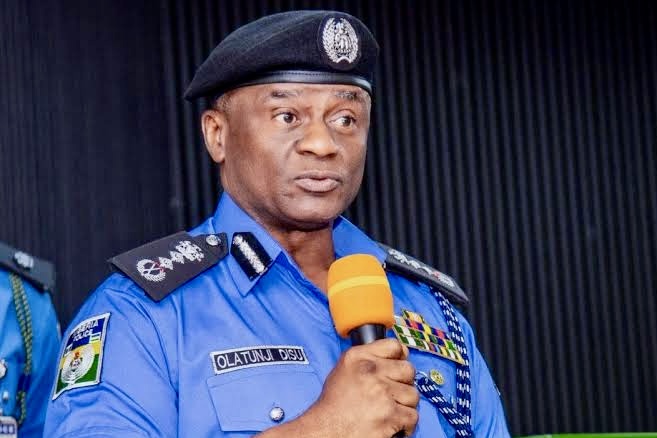
IGP Olatunji Disu has escalated the search after 10 victims were rescued, but conflicting casualty figures and the location of the attack raise questions security agencies must answer.
The rescue is only half the story
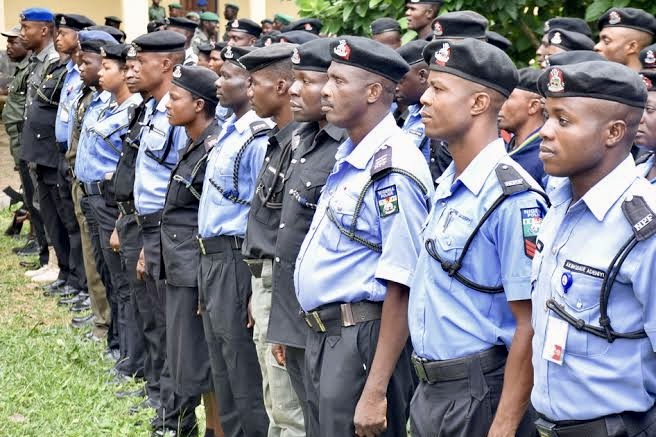
The Nigeria Police Force has moved the full weight of its operational command into Imo State after armed men intercepted two buses carrying prospective National Youth Service Corps members and other passengers on the Owerri-Onitsha Road on 1 October.
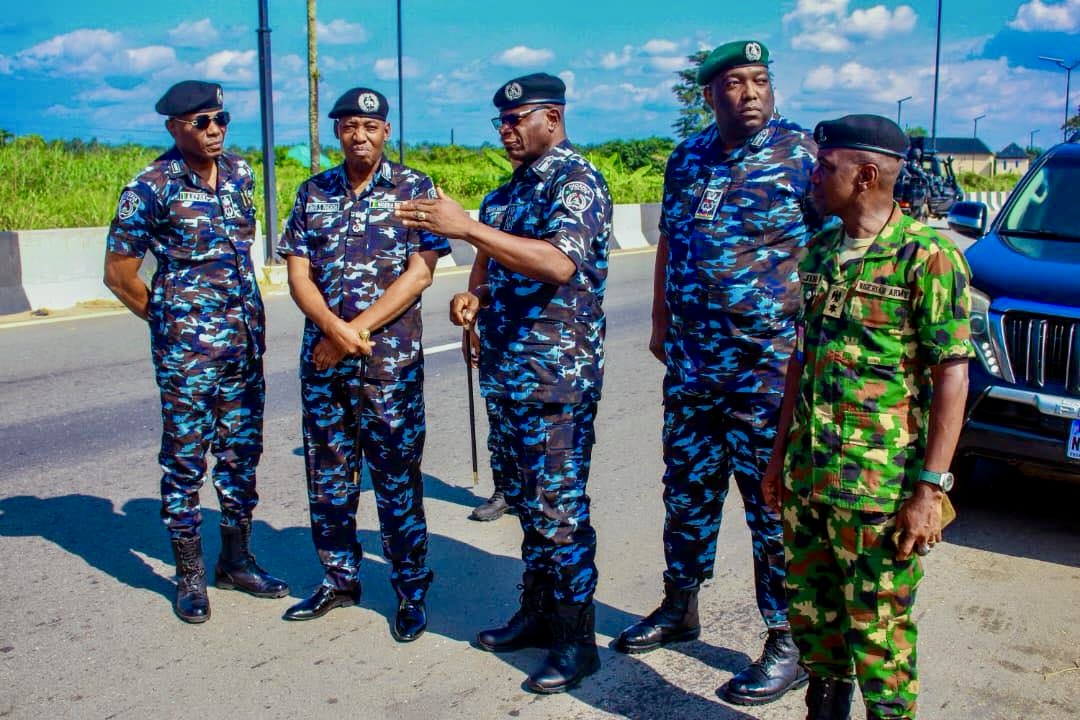
Inspector-General of Police Olatunji Disu deployed Deputy Inspector-General of Police in charge of Operations, Shehu Umar Nadada, alongside senior commanders, to direct the search-and-rescue operation.
The move came after 10 victims were rescued and the two buses recovered. The police said tactical teams, operational assets and sister security agencies were pursuing the abductors through intelligence-led operations.
Yet the most important question is no longer simply how quickly the police can rescue those still missing.
It is how two passenger buses carrying young Nigerians heading for national service were allowed to become an easy target on a major inter-state highway in the first place.
The answer remains unclear.
And that uncertainty is important.
The attack occurred at about 6:30am around Umunoha in Mbaitoli Local Government Area, according to the Imo State Police Command. The two buses had travelled from Ibadan and were heading towards Uyo in Akwa Ibom State and Bende in Abia State respectively.
The police later said 10 victims had been rescued.
“The rescued victims are in safe hands and are being attended to,” the command said, adding that the exact number abducted was still being verified.
That caveat is important because the widely circulated figure of 20 abducted people initially became associated with 20 NYSC members.
The later Defence Headquarters account is more precise.
It said the two buses carried 30 passengers in total. Twenty people were abducted, while 10 were subsequently rescued unharmed, including eight identified prospective corps members.
On that accounting, 10 people remained unaccounted for after the initial rescue operation.
That is materially different from saying that 20 prospective corps members were kidnapped.
For families waiting for a phone call, that distinction is not semantics.
The numbers changed. So did the story
The first reports from the scene presented the incident largely as an abduction of 20 NYSC members.
The police account was more cautious. It confirmed that prospective corps members were among those taken but initially declined to give a final number.
Then the military account supplied a different breakdown: 30 people on the two buses, 20 abducted and 10 rescued, with eight of the rescued identified as prospective corps members.
The difference exposes one of the immediate challenges of a mass-abduction response.
The authorities need a definitive passenger manifest.
They need the names of everybody who boarded each bus in Ibadan.
They need to know how many passengers alighted or remained in the vehicles.
They need to reconcile information supplied by transport operators, relatives, NYSC officials, police investigators and the rescued passengers.
Until that happens, the public is left with several numbers describing the same attack.
There is another discrepancy that requires clarification.
The Imo Police Command and several major reports locate the attack around Umunoha in Mbaitoli. But reports citing the Defence Headquarters place it at Umonuwa village in Ezinihitte Mbaise.
Those are not interchangeable descriptions.
Umunoha is a recognised community in Mbaitoli Local Government Area. Official electoral records also place Umunoha within Mbaitoli.
The apparent difference could be a reporting or geographic-description error, or could reflect nearby locations along the same corridor.
It should nevertheless be resolved officially.
In a kidnapping investigation, the precise location of an ambush can determine which police division, military formation, surveillance resources, local intelligence network and jurisdictional records become relevant.
The most uncomfortable detail came before the abduction
The NYSC had already issued a security warning for the 2026 Batch C Stream One mobilisation.
The orientation course began on 30 September and was scheduled to run until 20 October. Registration was to close on 2 October.
The NYSC Director-General, Brigadier Olakunle Nafiu, specifically urged prospective corps members to avoid night travel and use designated motor parks.
The warning was not new policy.
After eight prospective corps members were abducted in Zamfara in 2023 while travelling to an NYSC orientation camp, the NYSC leadership again warned prospective corps members against night journeys because of the security risk.
There is a striking difference between those earlier circumstances and what happened in Imo.
The Imo buses were attacked at about 6:30am.
The Guardian reported that some of the young graduates had left Samonda in Ibadan at about 9am the previous day and stopped overnight in Imo before continuing their journey the following morning.
That means the familiar advice to avoid night travel does not fully answer the security problem exposed by this incident.
The question now becomes whether route security can protect travellers during the hours immediately after dawn, when highways are active but large numbers of security personnel cannot physically cover every vulnerable stretch.
A highway that has appeared in previous security reports
The Owerri-Onitsha corridor is not appearing in the national security conversation for the first time.
In July 2024, four police officers and a PoS operator were reportedly killed during an attack on a police checkpoint along the Owerri-Onitsha road near Irete in Imo State. The incident illustrated the vulnerability of even established security positions on the corridor.
Local reports have also recently described other kidnapping incidents along sections of the route. Some of those accounts contain claims about ransom payments that have not been independently verified, so they should not be treated as established facts.
The more important point is the recurrence of security concerns on a transport corridor that links major commercial centres in the South-East.
The latest attack therefore deserves to be examined as more than a single criminal event.
It should be examined as a route-security problem.
The pattern emerging across Nigeria
The Imo attack came only weeks after another highway incident involving NYSC members.
On 26 August, armed attackers reportedly blocked two buses travelling through Ofu Local Government Area of Kogi State. The police later announced the rescue of 11 victims, including the drivers of the two buses, while saying efforts continued in relation to those still missing.
That incident and the Imo attack share an important feature.
The victims were not hiding in isolated rural settlements.
They were travelling.
They were using commercial vehicles.
And their journeys followed known routes to government-designated orientation camps.
That predictable movement creates an obvious investigative question: are criminals increasingly exploiting the movement of large groups of prospective corps members during mobilisation periods?
The available evidence does not yet establish a coordinated criminal network targeting NYSC travellers.
It does establish that NYSC-related road journeys have repeatedly featured in kidnapping incidents.
That is enough to demand preventive analysis.
The IGP’s response is now a test of intelligence, not just manpower
The deployment of DIG Shehu Umar Nadada is significant because the police response has moved beyond the immediate Imo Command.
The IGP has also deployed the Commissioner of Police in charge of Federal Operations, the Commissioner of Police overseeing the Police Mobile Force and other senior commanders to support the operation.
The operation is being conducted alongside other security agencies.
That architecture gives investigators access to a wider intelligence and operational network.
But more personnel alone will not answer the most difficult questions.
Investigators will need to establish how the attackers identified the buses.
How did they stop two vehicles carrying dozens of people?
How long did the attack take?
Who raised the first alarm?
How quickly did security personnel receive the distress call?
Where were the attackers able to move the abducted passengers?
Was there advance intelligence about criminal activity in the area?
Were there recent incidents that could have indicated a developing threat?
Were the buses travelling together or separately?
And why were the attackers able to disappear before the victims were recovered?
Those questions are more important to long-term security than the official number of tactical teams deployed after the attack.
The abandoned buses could become crucial evidence
The recovery of both buses gives investigators something that many kidnapping investigations lack: a physical scene and potentially recoverable evidence.
The vehicles may help reconstruct the attack.
Passenger statements can establish the sequence of events.
Drivers and surviving passengers can provide descriptions of the attackers, weapons, language, clothing and escape direction.
Telecommunications records may help investigators reconstruct communications around the time of the attack, subject to lawful investigative procedures.
The authorities can also compare the precise location of the attack with previous incident reports along the route.
Such reconstruction could reveal whether the assailants operated opportunistically or were exploiting a known vulnerability.
At this stage, there is no public evidence establishing who the attackers were or what group they belonged to.
Some early reports used ethnic or occupational descriptions for the suspects, but security authorities have not publicly established those identities. Such descriptions should therefore not be treated as confirmed.
Ten rescued is good news. It does not close the case
The rescue of 10 victims is the strongest development in the operation so far.
The Defence Headquarters account said 10 passengers, including eight prospective corps members, were rescued unharmed. The rescued prospective corps members were reportedly handed over for debriefing and assistance.
But the same account says the joint search for the remaining abductees continued.
The police response is also continuing.
The affected stretch of the expressway has been reopened, while security personnel remain deployed in the area. The police have asked members of the public to submit credible information and said such information would be treated confidentially.
The police have also said they are working with the NYSC Directorate to contact the families of affected corps members.
That communication will be critical.
In previous kidnapping cases involving prospective corps members, families have sometimes been forced to assemble fragmented information from social media, relatives, transport companies and security agencies.
A verified list should be one of the first products of the investigation.
Not rumours.
Not estimates.
Not competing headlines.
Names.
The real security lesson is not about the forest
It is tempting to view highway kidnappings as a simple problem of criminals hiding in surrounding vegetation.
That is only part of the equation.
A highway abduction requires knowledge.
Someone has to identify the traffic pattern.
Someone has to choose the location.
Someone has to know where vehicles are likely to slow or stop.
Someone has to calculate the response time.
Someone has to provide an escape route.
The investigation therefore needs to look beyond the forest into the information environment surrounding the road.
That includes transport operations, travel patterns, local intelligence, communications and the timing of security patrols.
The most useful question is not only where the abductors took the victims.
It is how the abductors knew they could take them.
NYSC safety advice needs a wider operational response
The NYSC’s warning against night travel remains relevant.
But the Imo incident suggests that personal travel advice cannot substitute for route protection.
The victims had a reason to travel.
They had reporting deadlines.
Their journeys followed the start of a nationwide orientation exercise.
The national service scheme cannot realistically tell thousands of graduates to use highways while leaving the security burden largely on individuals.
A safer system would require better coordination between the NYSC, transport operators and security agencies during high-volume mobilisation periods.
This could include advance route-risk assessments, verified passenger manifests, rapid communication channels and closer intelligence sharing around major transport corridors.
Those are policy questions for the authorities to examine, not conclusions that can yet be drawn from one incident.
But the timing of the Imo attack makes the issue difficult to ignore.
What happens next will define the operation
The IGP has promised that the search will continue until the mission is concluded.
DIG Nadada has similarly assured the public of the police commitment to securing the safe rescue of the abducted persons.
The police statement said:
“The Nigeria Police Force is committed to securing the safe rescue of the 20 abducted persons and will sustain the operation until the mission is successfully concluded.”
The command also appealed to Nigerians to remain calm and vigilant.
“All information received will be treated with strict confidentiality,” the police said.
Those promises now face their hardest test.
As of 3 October 2026, the latest publicly reported military figure located by Atlantic Post remains 20 people abducted, 10 rescued and 10 still to be accounted for, while the Police Command’s public statement has continued to describe the total number abducted as subject to verification.
The operation should ultimately produce more than rescued passengers.
It should produce answers.
Why this location?
Why these buses?
Why this time?
Why was the attack possible?
And what will change on the Owerri-Onitsha corridor after the last victim is brought home?
The real measure of this operation will not be the number of senior officers deployed to Imo.
It will be whether the next bus carrying young Nigerians towards an NYSC camp reaches its destination without becoming another moving target.
Follow us on our broadcast channels today!
- WhatsApp: https://whatsapp.com/channel/0029VawZ8TbDDmFT1a1Syg46
- Telegram: https://t.me/atlanticpostchannel
- Facebook: https://www.messenger.com/channel/atlanticpostng