The Democratic Republic of the Congo is confronting a rapidly escalating Ebola crisis that has already become the largest Ebola outbreak ever recorded in the country, with the latest government figures showing 6,041 confirmed cases and 2,911 deaths.
The figures, covering data compiled through 29 August 2026, put the fatality rate at approximately 48.2 per cent. A further 1,366 patients have recovered, while 619 people remain hospitalised or in isolation, according to figures reported by the Congolese authorities. The epidemic has spread through 60 health zones in six provinces: North Kivu, South Kivu, Ituri, Tshopo, Haut-Uélé and Bas-Uélé.
What makes the emergency particularly alarming is not simply the number of deaths. It is the speed at which transmission has expanded, the geographical reach of the outbreak, the continuing security crisis in eastern Congo, and the absence of a licensed vaccine or specific treatment for the Bundibugyo virus, the strain responsible for the outbreak.
United Nations Secretary-General António Guterres has issued one of the starkest assessments yet.
“The Ebola outbreak in the Democratic Republic of the Congo is the fastest-spreading Ebola epidemic ever recorded.”
He warned that the outbreak is “growing faster and wider than the response to contain it” and urged the international community to intensify its intervention.
From Local Outbreak to National Emergency
The outbreak was officially declared on 15 May 2026, after laboratory testing confirmed Bundibugyo virus disease in Ituri Province. At the time, the outbreak was initially concentrated in the Mongbwalu health zone. WHO subsequently documented a dramatic geographical expansion.
By 30 July, WHO recorded 3,605 confirmed cases and 1,587 deaths across five provinces. By 12 August, confirmed infections had increased to 4,665, with 2,184 deaths across 54 health zones. By 26 August, the tally stood at 5,794 confirmed cases and 2,786 deaths in 60 health zones.
The latest Congolese figures indicate that the outbreak has now crossed the 6,000-case threshold.
That acceleration is central to the public-health emergency.
The current epidemic has already surpassed the scale of Congo’s previous major Ebola outbreak of 2018–2020, which produced 3,481 cases and 2,299 deaths.
It has not, however, surpassed the 2014–2016 West African Ebola epidemic, which remains the largest Ebola outbreak globally, with more than 28,600 infections and 11,325 deaths.
The distinction matters. What Congo is experiencing is unprecedented in the country’s own history, while the wider international comparison remains the West African catastrophe.
The Deadlier Problem: The Virus Is Moving Faster Than Containment
One of the most worrying features of the outbreak is the widening gap between transmission and response capacity.
The UN’s humanitarian coordinator in Congo, Bruno Lemarquis’ deputy? Actually, recent UN briefing material quoted humanitarian chief Bruno Lemarquis’? Current reporting instead attributes the key August warning to UN resident coordinator Bruno Lemarquis? The latest public briefing cited David McLachlan-Karr/UN humanitarian officials? To avoid conflating officials, the clearest verified warning comes from UN humanitarian official Jean-Pierre Harneis, who described the outbreak as growing “exponentially”.
Harneis warned that the epidemic was spreading across an area “bigger than France” and that the response was struggling to keep pace.
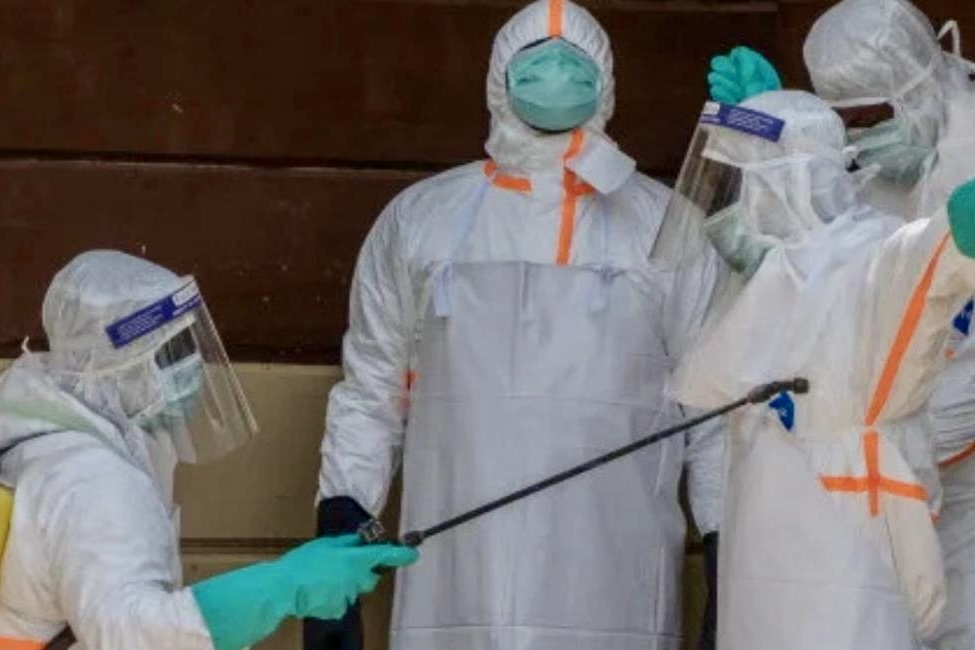
He also disclosed that, by August, 160 healthcare workers had contracted Ebola and 43 had died, demonstrating that the response itself was becoming a source of further human loss.
That is more than a statistic.
Every infected nurse, ambulance driver, laboratory worker, burial-team member or community volunteer represents a disruption to the machinery required to stop transmission.
War Has Become an Ebola Multiplier
The geographical centre of the outbreak is also one of the most difficult environments in the world in which to run an emergency health operation.
Eastern Congo has endured decades of armed conflict, displacement and the presence of numerous armed groups. In affected territories, insecurity can make roads inaccessible, force communities to flee repeatedly and prevent medical teams from travelling freely.
WHO has identified humanitarian crisis, insecurity, dense populations and intense population and trade movementsas major complicating factors.
The consequence is a vicious cycle.
Conflict drives people away from their homes. Displacement increases population movement. Population movement makes contact tracing more difficult. Missed contacts create opportunities for silent transmission. New cases then emerge in places where health teams may have little warning or limited access.
WHO reported that the outbreak had expanded into six provinces by late August, with newly affected health zones in North Kivu and Bas-Uélé adding fresh geographical challenges.
For authorities, every new health zone represents another network of households, markets, roads, religious communities, schools and healthcare facilities that must be monitored.
The Frontline Is Running Out of Patience
The Ebola response has also been undermined by a crisis that would be shocking under normal circumstances: frontline health workers have protested over unpaid wages and allowances while risking their lives treating Ebola patients.
Health workers in Bunia and other parts of Ituri have staged strikes and demonstrations over unpaid wages and bonuses. Some workers said they had gone weeks or months without receiving expected payments.
One worker described the situation bluntly:
“We are not being paid and we want the government to provide solutions as soon as possible.”
Another frontline worker told reporters that they faced enormous pressure while being exposed to infection and potentially exposing their families.
The dispute is not merely an industrial-relations problem.
In an epidemic in which speed determines survival, a strike at a treatment centre can translate into delayed diagnosis, reduced infection-control activity, weakened surveillance and slower treatment.
This makes worker welfare a direct public-safety and epidemic-control issue.
The question confronting Congo is therefore uncomfortable: how effectively can a country contain a fast-moving epidemic when some of the people expected to contain it are struggling to receive the wages owed to them?
The Vaccine Problem
Perhaps the most dangerous misconception surrounding the current Ebola outbreak is the assumption that Ebola vaccination can simply be rolled out in the same manner as during previous epidemics.
It cannot.
The virus behind this outbreak is Bundibugyo virus, not the Zaire ebolavirus for which the licensed Ervebo vaccine was developed.
WHO states that there is currently no licensed vaccine specifically for Bundibugyo virus disease and no approved specific treatment.
This is crucial because Ervebo has played an important role in previous Ebola responses.
The vaccine is licensed for Ebola virus disease caused by Zaire ebolavirus, but WHO says there is insufficient evidence to establish that it protects against Bundibugyo virus.
That scientific gap has forced researchers and authorities into a more experimental phase.
WHO’s technical advisory group has recommended that Ervebo be prioritised for a controlled research study during the current epidemic. At the same time, clinical research is under way to identify effective treatments for Bundibugyo disease.
A WHO-backed treatment trial, known as the PARTNERS trial, began enrolling patients on 2 July. By late August, it had enrolled more than 250 confirmed cases, according to WHO.
This represents one of the most important scientific battles of the crisis: whether investigators can turn experimental interventions into reliable tools before transmission accelerates beyond the capacity of existing containment systems.
Congo Begins Vaccinating Frontline Workers
Despite the uncertainty surrounding cross-protection, Congo began vaccinating frontline health workers in late August using Ervebo under a controlled approach.
Reuters reported that vaccination of healthcare workers began on 27 August, with doses being deployed as part of efforts to protect personnel exposed to the epidemic.
WHO, meanwhile, has recommended that such use be evaluated through research rather than treated as though the vaccine were already proven against Bundibugyo virus.
The distinction is vital for public communication.
There is an Ebola vaccine. But there is not yet a licensed vaccine proven to prevent the Bundibugyo disease currently devastating Congo.
Contact Tracing Is Breaking Under the Pressure
Ebola containment depends heavily on finding people who have been exposed to infected individuals and monitoring them for symptoms.
But contact tracing becomes exceptionally difficult when people move, disappear into displacement camps, cross informal borders or live in areas inaccessible to response teams.
The latest Congolese data put the contact-follow-up rate at around 82.4 per cent, meaning the system still has significant gaps.
Those missing contacts matter.
Africa CDC has previously warned that new infections were occurring among people who were not being monitored through contact tracing, allowing transmission chains to continue unnoticed.
That is precisely how a local outbreak becomes a regional emergency.
Airports, Roads and Logistics Are Also Under Pressure
Medical containment is impossible without logistics.
Healthcare workers must be transported. Samples must reach laboratories. Personal protective equipment must move into affected communities. Patients requiring advanced treatment must be transferred. Vaccines, medicines and other medical supplies must reach frontline facilities.
Doctors Without Borders has warned that transport restrictions and disruptions have complicated these operations. The organisation has expanded its treatment capacity, including opening a treatment centre in Beni in North Kivu.
MSF emergency coordinator Albert Stern said:
“Early diagnosis and treatment as soon as the first symptoms appear significantly increase people’s chances of survival.”
The organisation has said it has about 1,400 staff supporting the Ebola response in Congo and treatment centres with a combined capacity of roughly 400 beds.
The logistics challenge therefore extends far beyond hospitals.
It involves roads, aircraft, security escorts, laboratories, telecommunications, cold chains, accommodation and the basic ability of medical teams to reach people before the virus reaches them.
The Human Cost Is Being Lost Behind the Numbers
Perhaps the most powerful warning against treating the outbreak merely as a statistical exercise comes from Professor Pierre Akilimali, incident manager of Congo’s Ebola response.
He has argued that the statistics conceal a much more painful reality.
“Behind every case is a person and behind every person is a family.”
Akilimali also acknowledged the uncertainty surrounding the trajectory of the epidemic, warning that forecasts about when the outbreak might peak remain speculative.
That uncertainty is itself an investigative finding.
Authorities can estimate trends. Scientists can model transmission. Epidemiologists can analyse contact networks.
But no responsible official can yet say precisely when this epidemic will peak.
And that leaves policymakers facing a dangerous possibility: an outbreak growing faster than the systems designed to measure and contain it.
Uganda’s Success Offers a Lesson — and a Warning
There is, however, one important piece of good news.
Uganda has officially ended its 2026 Bundibugyo Ebola outbreak after completing the required 42-day period without a new confirmed case. WHO and Africa CDC welcomed the declaration.
Uganda recorded 20 cases and two deaths, and authorities attributed the outbreak to infections linked to cross-border transmission from Congo.
The Ugandan experience demonstrates that aggressive surveillance, rapid identification of cases, contact follow-up and coordinated intervention can interrupt transmission.
But it also demonstrates something else: Ebola does not respect borders.
A patient does not need a passport to cross an international boundary.
Neither does the virus.
Why the Congo Outbreak Matters Beyond Congo
The immediate crisis is Congolese, but its public-health implications are regional.
Six provinces are already affected, including areas close to international borders. The outbreak has previously spilled into Uganda, and WHO has continued to emphasise cross-border surveillance and preparedness.
The central risk is not that every neighbouring country will automatically experience a major epidemic.
The risk is that sustained transmission creates repeated opportunities for infected people to cross borders before they are identified.
That is why WHO has classified the event as a Public Health Emergency of International Concern, citing the severity of Bundibugyo disease and its potential for international spread.
The Funding Question
The most sophisticated treatment centre in the world cannot function without money.
The current response requires continuous financing for staff, laboratories, protective equipment, transport, surveillance, community engagement, treatment facilities and research.
WHO has repeatedly highlighted the need for additional resources, while humanitarian officials have warned that the response is operating in exceptionally difficult conditions.
Guterres’ warning about a “virus of indifference” carries particular weight because the crisis is occurring far from the political centres that traditionally dominate international attention.
His message was blunt:
“We know how to contain Ebola and save lives. The world must urgently step up action.”
That is now the central test.
Not whether the world knows what to do.
It does.
The question is whether enough resources, staff, political commitment and international attention will arrive quickly enough.
An Epidemic Running Against the Clock
The latest figures paint a deeply troubling picture: 6,041 confirmed infections, 2,911 deaths, a fatality rate of roughly 48.2 per cent, 60 affected health zones and six provinces.
But the numbers alone do not capture the danger.
The epidemic is expanding geographically.
Healthcare workers have been infected and killed.
Frontline workers have protested over unpaid wages.
Armed conflict restricts access.
Displacement complicates contact tracing.
Transport and logistics remain fragile.
And the virus responsible does not have a licensed vaccine specifically approved for its prevention.
At the same time, there are grounds for cautious hope.
Patients are recovering. Treatment centres are being expanded. Clinical trials are under way. Frontline vaccination research has begun. Uganda has demonstrated that Bundibugyo transmission can be stopped. WHO, Africa CDC, Congo’s government and international humanitarian organisations remain engaged.
But the margin for error is shrinking.
The central lesson from Congo’s escalating Ebola crisis is brutally simple: delay has a price.
And at 6,041 cases and 2,911 deaths, that price is already approaching 3,000 human lives.
Follow us on our broadcast channels today!
- WhatsApp: https://whatsapp.com/channel/0029VawZ8TbDDmFT1a1Syg46
- Telegram: https://t.me/atlanticpostchannel
- Facebook: https://www.messenger.com/channel/atlanticpostng