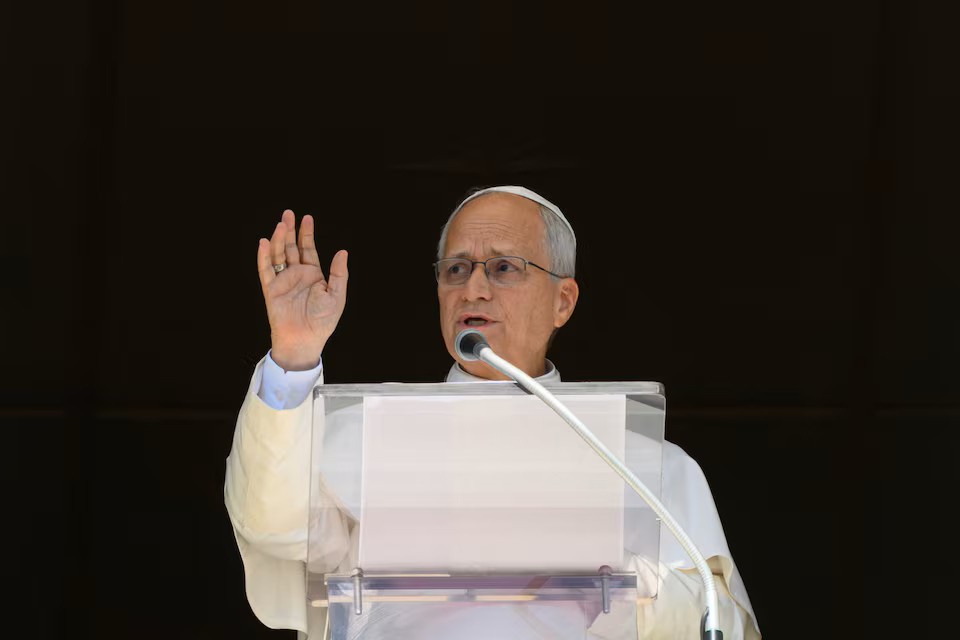
The 71-year-old pontiff is recovering after surgeons removed the lower lobe of his right lung. Although his recovery is progressing normally, the cancer’s stage and whether it has spread remain unknown.
ROME — Pope Leo XIV is recovering after successful lung surgery in Rome, but a medical update confirming lung cancer has introduced a new layer of uncertainty into the health of the leader of the world’s Catholic Church.
The 71-year-old pontiff underwent surgery on Tuesday, October 13, at the Agostino Gemelli University Hospital, where doctors removed the lower lobe of his right lung after tests identified a suspicious growth.
The Vatican initially announced that the operation to remove a small, localised lung nodule had been successful. Subsequent medical information confirmed that the growth was lung adenocarcinoma, a common form of lung cancer.
The latest development presents two realities. The operation was completed without complications, and the Pope’s immediate recovery is progressing normally. But the diagnosis has raised questions about the cancer’s extent, whether additional treatment will be required and the implications for his demanding schedule.
Pope Leo’s Cancer Diagnosis: What the Vatican Has Confirmed
The Holy See Press Office confirmed on Tuesday evening that the operation had been completed successfully.
“The procedure was successfully completed within the expected time and in the planned manner,” the Vatican said, adding that the Pope had returned to his hospital room.
However, the medical details that followed proved more consequential than the initial announcement.
According to the medical bulletin, tissue examined during the operation confirmed lung adenocarcinoma, which doctors had suspected from earlier examinations.
The surgical team, led by Professor Stefano Margaritora, head of thoracic surgery at Gemelli Hospital, used a video-assisted technique to remove the lower lobe of the Pope’s right lung. The operation lasted approximately 90 minutes, although the Pope remained in the operating room for about three hours.
Doctors reported no complications. He regained consciousness normally and returned to his room following a period of observation.
The decision to remove an entire lobe rather than simply extract a small nodule was significant. The procedure was intended to achieve a complete removal of the affected tissue.
Nevertheless, the successful completion of surgery does not, by itself, establish that the cancer has been completely eradicated or provide a definitive prognosis.
A Calm Night, Normal Recovery and Encouraging Signs
The first signs after surgery have been positive.
On Wednesday morning, the Holy See Press Office reported that the Pope had spent a calm night in hospital.
“The night passed calmly for the Pope,” it said, adding that further information would follow.
A subsequent medical update provided more detail about his progress.
Blood tests and a chest X-ray showed results within the expected range for the operation. Pope Leo also underwent respiratory physiotherapy, began walking around his hospital room and resumed eating normally, including breakfast and lunch.
These are encouraging indicators of immediate post-operative recovery. They are not, however, a substitute for the additional examinations required to determine the full extent of the cancer.
The Vatican has said the Pope is expected to remain in hospital for approximately one week.
His public engagements have been cancelled through October 20.
The Biggest Unanswered Question: Has the Cancer Spread?
The immediate medical question is no longer simply whether the operation succeeded. It is what further examinations will reveal about the disease.
Lung adenocarcinoma is a common form of lung cancer. Its implications vary according to the tumour’s characteristics, size, location and whether cancer cells have spread beyond the original site.
The Vatican has confirmed the diagnosis but has not publicly disclosed the cancer’s definitive stage or established whether lymph nodes or other parts of the body are affected.
Further examination of the removed tissue is expected to provide additional information.
This distinction matters because the Pope previously described the nodule as having been detected “at a very early stage”. That description concerns the discovery of the growth; it should not automatically be interpreted as a confirmed clinical stage of the cancer.
The distinction is essential to responsible reporting.
A localised cancer that has been completely removed may have a substantially different outlook from a cancer that has spread. Without the necessary medical findings, a definitive prognosis would be premature.
The Vatican has not announced whether the Pope will require chemotherapy, immunotherapy, radiotherapy or any other additional treatment.
For now, the available evidence supports cautious optimism about his immediate recovery, not a definitive conclusion about the longer-term outcome.
What the Pope Told Catholics Before Surgery
Pope Leo personally announced the discovery of the lung nodule during his Sunday Angelus address at the Vatican on October 11.
He explained that the finding emerged from recent medical examinations and that his doctors had recommended surgery.
The pontiff said the growth was detected early and was well localised. He also made clear that he intended to follow his doctors’ advice.
He concluded his announcement by thanking the faithful for their support: “I thank you for your spiritual closeness and entrust myself to your prayers.”
Catholics across different countries responded with prayers and messages of goodwill in the days before the operation.
The Pope was seen smiling and waving as he arrived at Gemelli Hospital on Tuesday, hours before the surgery.
His decision to disclose the planned procedure personally gave Catholics advance notice of the health concern, even though the subsequent medical bulletin provided the more specific cancer diagnosis.
The sequence also illustrates why the distinction between a suspected growth, a confirmed cancer diagnosis and a fully established prognosis is important.
Each represents a different stage of medical knowledge. None should be treated as interchangeable with the others.
Will Pope Leo’s South America Visit Go Ahead?
The diagnosis has also raised questions about the Pope’s international schedule.
Pope Leo is due to undertake a major pastoral visit to Uruguay, Argentina and Peru from November 6 to 17.
The trip is particularly significant for Peru, where he served for years as a missionary and bishop and where he retains strong pastoral connections.
The Vatican had not formally announced the cancellation of the visit as of Wednesday, October 14.
However, Peru’s President, Keiko Fujimori, acknowledged that the pontiff’s recovery could require changes to the itinerary.
The trip involves extensive travel and multiple engagements. Whether it proceeds as planned will depend on his recovery, further medical findings and the advice of his doctors.
The immediate priority remains his health rather than the preservation of an existing timetable.
A hospital stay of approximately one week does not necessarily mean that the pontiff will be ready for a demanding international tour shortly afterwards.
Why This Health Update Matters Beyond the Vatican
The Pope’s diagnosis has implications beyond the religious community because of the reach of the office he holds and the global attention surrounding his health.
His condition is personal, but it is also a matter of considerable public interest to Catholics and others who follow the leadership of the Holy See.
The episode also highlights the difficulty of communicating evolving medical information about a major public figure.
On Sunday, the public knew about a lung nodule and an upcoming operation. By Tuesday evening, the Vatican had confirmed a successful procedure. By Wednesday, further medical reporting had established the diagnosis and described the early stages of recovery.
These announcements provide progressively more detailed information, but they do not answer every question.
The responsible approach is to distinguish what doctors have confirmed from what remains unknown.
The current facts are encouraging: the surgery was successful, no complications were reported, the Pope spent a calm night in hospital and his immediate recovery is progressing normally.
The unresolved facts are equally important: his definitive cancer stage, the extent of the disease and the possible need for further treatment have not been publicly established.
Those answers will matter more to his long-term medical outlook than the word successful alone.
For now, Pope Leo XIV remains under medical care at Gemelli Hospital, with further examinations expected as his recovery continues. His doctors’ next findings will help determine what happens beyond the operating theatre.
Follow us on our broadcast channels today!
- WhatsApp: https://whatsapp.com/channel/0029VawZ8TbDDmFT1a1Syg46
- Telegram: https://t.me/atlanticpostchannel
- Facebook: https://www.messenger.com/channel/atlanticpostng
Join the debate; let’s know your opinion.