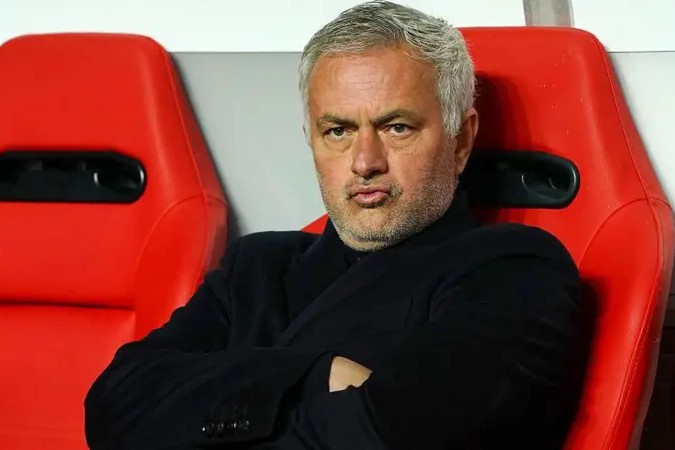
José Mourinho has challenged the timing of Vinícius Júnior’s four-match La Liga suspension, asking why Spanish football authorities announced the decision about two hours before Real Madrid’s Champions League meeting with Roma. The punishment rules the Brazilian winger out of the next El Clásico against Barcelona.
José Mourinho has opened another front in Real Madrid’s increasingly tense relationship with Spanish football authorities, questioning the timing of the announcement that will sideline Vinícius Júnior for four crucial La Liga matches.
The Portuguese manager did not concentrate his criticism on the length of the punishment. Instead, he demanded an explanation for why the decision became public approximately two hours before Real Madrid’s Champions League fixture against AS Roma on Wednesday, 14 October.
Speaking to Movistar Plus before the European match, Mourinho said: “You should ask the Committee why it didn’t publish the sanction this morning or tomorrow morning. Why do it two hours before a match that is important for Real Madrid, which is a Spanish club?”
His objection was clear. Why announce a significant domestic disciplinary decision just before a major European fixture involving the affected club?
The timing, Mourinho suggested, deserved scrutiny. But whether it was merely the result of the disciplinary timetable or something more calculated remains unproven.
Why Vinícius Has Been Banned for Four Matches
The controversy follows an incident during Real Madrid’s 1-0 victory over Villarreal on Saturday, 10 October.
Vinícius appeared to have scored after coming off the bench, only for the goal to be disallowed following a VAR review. The review showed the Brazilian pulling the hair of Villarreal defender Nathan Saliba during the attacking move.
Referee Isidro Díaz de Mera subsequently showed Vinícius a straight red card.
The dismissal did not end the drama. The forward protested angrily, and teammates intervened as he continued to challenge the decision.
The Spanish Football Federation’s disciplinary committee subsequently imposed a four-match suspension.
Two matches were imposed for violent conduct away from the direct contest for the ball. A further two were added for his protests towards the match officials.
The decision has therefore punished both the incident that triggered the red card and the behaviour that followed it.
That distinction matters. Mourinho has questioned the timing of the announcement, but the incident itself and the disciplinary reasoning behind the suspension are separate issues.
El Clásico Loses One of Its Biggest Attractions
The immediate sporting consequence is enormous.
Vinícius is expected to miss Real Madrid’s La Liga fixtures against Sevilla on 18 October, Barcelona on 25 October, Racing de Santander on 1 November and Valencia on 7 November.
The most damaging absence could be the trip to Barcelona for El Clásico.
Vinícius has become one of Real Madrid’s most dangerous attacking players, using his pace, dribbling and direct running to stretch defences and create opportunities in decisive matches.
His availability for the Barcelona showdown would have offered Mourinho another major attacking weapon in a fixture where individual moments can determine the result.
Without him, Real Madrid must find an alternative way to threaten Barcelona’s defence. Opponents also lose the challenge of containing one of the club’s most unpredictable forwards, but the Brazilian’s absence does not automatically make Madrid less dangerous.
The squad’s depth and the performance of the players selected to replace him will determine how costly the suspension becomes.
Why Mourinho Is Focused on the Clock
Mourinho’s intervention raises a legitimate question about communication and transparency in football discipline.
Spanish sports reporting indicates that disciplinary decisions are commonly published on Wednesdays, although the precise publication time can vary. The timing of the announcement, rather than the day itself, is what has provoked the manager’s objection.
The distinction is important.
The decision came from the disciplinary committee of the Royal Spanish Football Federation, known as the RFEF, rather than the separate refereeing committee. The disciplinary body is responsible for imposing the punishment; Mourinho has challenged when the ruling was made public.
No publicly presented evidence has established that the announcement was deliberately timed to destabilise Real Madrid ahead of its European match.
That means the controversy should not be mistaken for proof of institutional bias. It is a dispute over timing that deserves a clear explanation, not a conclusion about officials’ motives unsupported by evidence.
Mourinho has made his position unmistakable: the timing was questionable, and he believes the committee should explain itself.
Champions League Escape, La Liga Consequences
Although the suspension removes Vinícius from four domestic fixtures, it does not automatically prevent him from playing in European competition.
The punishment applies to La Liga, leaving the Brazilian available for Real Madrid’s Champions League commitments, including the meeting with Roma, subject to any separate disciplinary decision.
That gives Mourinho some immediate tactical breathing room. It does little, however, to solve the longer-term problem of preparing for four league matches without one of his leading attackers.
The schedule creates a striking contrast: Vinícius remains available to help Madrid in Europe while being barred from the domestic matches that include the season’s first Clásico.
For supporters, the timing of Mourinho’s protest may become another chapter in the familiar debate over how Spanish football governs its biggest club and its most closely watched players.
But the lasting question is not simply whether the manager was angry.
It is whether football authorities can explain the timing of consequential decisions clearly enough to prevent reasonable questions from becoming another combustible controversy.
For Vinícius, the immediate task is to learn from the incident and return to domestic action when eligible. For Mourinho, the focus now shifts to navigating a demanding schedule without him.
And for Real Madrid, losing the Brazilian against Barcelona is a sporting setback. The row over when the suspension was announced has become a separate battle over trust, transparency and timing.


Join the debate; let’s know your opinion.