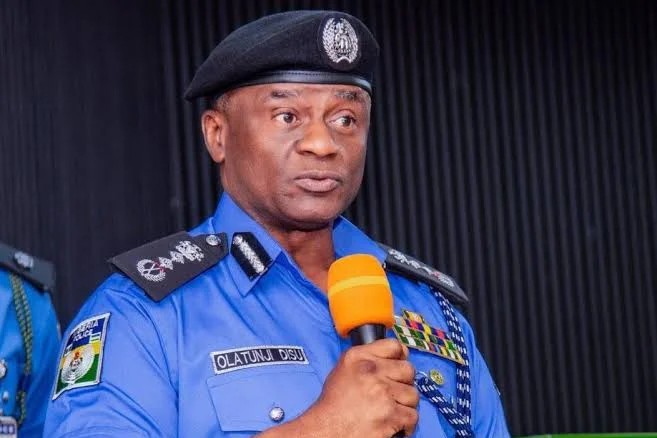
Deck: The Inspector-General of Police says officers will make Nigerians proud during the 2027 elections. But the real test will be whether the Force can guarantee political neutrality, protect voters and demonstrate that electoral offences lead to consequences.
Nigeria’s Inspector-General of Police, Olatunji Disu, has given voters a firm assurance ahead of the 2027 general elections: the conduct of police officers before, during and after the polls will make Nigerians proud of the Force.
But for millions of Nigerians whose confidence in public institutions has been tested by disputed elections, political violence and allegations of security operatives taking sides, reassurance alone will not settle the question of whether the police can be trusted when political power is at stake.
Disu says the Nigeria Police Force has reviewed its experiences from recent elections and brought together lessons from both successes and failures. The challenge is to turn those lessons into measurable improvements that voters can see, political parties cannot manipulate and independent observers can verify.
Speaking to journalists in Port Harcourt on Tuesday, 13 October 2026, after the launch of a book documenting the history of pioneering female police officers, the IGP disclosed that the Force had convened a meeting involving commissioners of police and other senior officers to prepare for the forthcoming elections.
He said the Force was examining its previous performances to improve its conduct during what he described as a major election.
“We have had two or three elections recently, and you can see the police did very well, and we did too,” Disu said.
“We have now brought all these experiences together, where we did well and where we did not do well, so that we can perform better in this big election that everybody is looking up to.”
He then made a direct pledge to Nigerians.
“I give you my word. Nigeria Police will do so well, and we will make Nigeria Police so proud, and we will make Nigerians proud.”
It is a strong statement from the head of the country’s police force. It also creates a standard against which his leadership can be judged.
The 2023 election record still demands answers
The central question is not whether the police leadership wants a successful election. It is whether the measures being put in place will prevent the failures, intimidation and weak enforcement that have undermined confidence in previous electoral cycles.
The European Union Election Observation Mission’s final report on Nigeria’s 2023 general elections provides an important benchmark.
The mission documented political violence, attacks on candidates and concerns about the response of security agencies. It observed that security personnel were sometimes insufficiently present or responded inadequately to violence, particularly during state-level campaigns.
The report also raised a problem that extends beyond arrest figures.
According to the mission, official information about responses by the Inter-agency Consultative Committee on Election Security to campaign violence was largely missing. Police arrests were reported, but the public received little information about prosecutions.
The mission cited a police announcement of 781 arrests connected to electoral offences and noted that it remained unclear how many resulted in sanctions. It concluded that investigations and arrests often failed to produce effective prosecutions and punishments.
These findings do not establish that the same failures will recur in 2027. Nor do they erase any improvements the police may have made in subsequent elections.
They do, however, explain why the next election demands more than assurances of professionalism.
A credible assessment of police performance must examine what happens after an officer receives a complaint, after a political rally is attacked, after a voter is allegedly intimidated or after an arrest is announced.
Were complaints investigated? Were suspects charged where the evidence justified prosecution? Were officers accused of misconduct investigated? Were the outcomes made public?
Without answers, arrest statistics and official declarations risk becoming measures of activity rather than evidence of accountability.
Disu has already identified the standards he must meet
The IGP’s latest assurance follows an earlier call for greater preparedness and neutrality.
At the 2026 Conference and Retreat for Senior Police Officers in Owerri in September, Disu outlined priorities for election security, including early intelligence gathering, intensive training, inter-agency coordination, improved communications, engagement with communities and strict political neutrality.
He warned politicians and their supporters against recruiting thugs, engaging in vote-buying, moving arms unlawfully, intimidating voters and threatening electoral officials.
The police chief also warned that personnel who took sides, harassed voters, colluded with political actors or abused their powers would be investigated and appropriately sanctioned.
Commissioners of police were directed to make their official contact numbers available to the public.
These commitments provide a practical framework for assessing the promise made in Port Harcourt.
A police command that announces its readiness but fails to respond promptly to complaints about intimidation has not met the standard. An officer who protects one political camp while harassing another cannot be described as professional simply because no major violence occurs in the officer’s area.
Equally, a force that arrests alleged perpetrators but cannot explain the subsequent progress of cases leaves a critical part of election security unaccounted for.
Political neutrality must be demonstrated in the treatment of competing parties, not merely declared in meetings.
What Nigerians should be able to see before election day
The Independent National Electoral Commission’s published calendar schedules the presidential and National Assembly elections for 16 January 2027, followed by governorship and State House of Assembly elections on 6 February 2027.
That timetable leaves the police with a clear window to demonstrate preparedness before the first ballots are cast.
The most useful evidence will be operational, not rhetorical.
First, officers deployed to electoral duties need clear instructions on neutrality, voter protection, the handling of political violence and the lawful exercise of arrest powers. Those instructions should translate into consistent conduct across states, rather than depend entirely on the preferences of individual commanders.
Second, the public needs accessible channels for reporting intimidation, assault, unlawful detention and alleged partisan policing. The commitment to publish commissioners’ contact numbers is a start, but accessibility is meaningful only when complaints receive timely attention.
Third, the Force should be prepared to explain how it responds to allegations involving its own personnel. An investigation into suspected police misconduct must not end with a vague announcement that the matter has been referred to an internal unit.
Fourth, post-election reporting should distinguish arrests from completed investigations, prosecutions and sanctions. Publishing consolidated outcomes would help voters and observers assess whether the authorities are enforcing electoral rules or simply announcing enforcement activity.
Finally, the police must protect voters, journalists, electoral officials, accredited observers and political participants regardless of their party affiliations. A peaceful polling unit is not proof of neutrality if voters were intimidated elsewhere or if certain groups were denied equal protection.
These are proposed accountability benchmarks, not claims that the police have failed to implement every measure. Their purpose is to make the IGP’s promise testable before the national vote.
Dame Okuyiga’s book offers another lesson for the police
Disu made his remarks after the launch of a book by 96-year-old Dame Stella Okuyiga, a retired Deputy Commissioner of Police and one of the first 20 female officers recruited into the Nigeria Police Force in 1955.
The publication records the experiences of a generation of women who entered an institution in which their opportunities and responsibilities were shaped by the conventions of their time.
Disu said the book would preserve institutional knowledge and help younger officers understand the history of the Force.
“Mama is 96 years old, and she has taken her time to put all her experience, institutional knowledge that she has down in the book for us to be able to study it for the generations coming, for women police in the next generation to have something to look up to,” he said.
He added: “We in the police, we are starting up the history of not leaving our own, not forgetting our own.”
The IGP also pledged that the Force would acquire copies of the book for police training institutions.
“We are going to ensure that we get copies of this book for all police training institutions, for all police officers to go through to see what it was like to be police officers.”
The author’s contribution is significant because institutions cannot improve without preserving the experiences of those who served within them.
The same principle should apply to election security. The Force needs to document not only its successes but also operational failures, complaints against officers, lessons from disputed incidents and the measures taken to prevent repetition.
Institutional memory has little value if it preserves achievements while overlooking mistakes.
Speaking at the launch, Okuyiga said the book represented a lasting part of her life and service.
“This book launch today is an important day in my life because the book itself is there. But I still live on my life. I still live on because this book will be in libraries all over the world, and they’ll be reading it.
“So I’m so happy that with all that is happening today, I will continue to live forever.”
Rivers State Governor Siminalayi Fubara, represented by the Secretary to the State Government, Dr Dagogo Wokama, launched the publication with a reported ₦20 million contribution.
The real measure of Disu’s promise
Nigeria’s 2027 election will test more than the police’s ability to deploy personnel and maintain order. It will test whether officers can resist political pressure, protect citizens impartially and ensure that alleged electoral offences receive proper investigation and follow-through.
The IGP has publicly acknowledged that previous elections produced both lessons and shortcomings. He has also outlined priorities that place neutrality and accountability alongside operational preparedness.
That gives the public a legitimate basis for asking what has changed, how progress will be measured and what consequences will follow when officers violate those standards.
The police do not determine electoral winners. Their responsibility is to protect the space in which Nigerians can vote freely, candidates can compete lawfully and electoral officials can perform their duties without intimidation.
Disu says he gives Nigerians his word.
The more important question is whether voters will see that promise reflected in police conduct at campaign rallies, on election day and throughout the counting and aftermath.
By the close of the 2027 election cycle, Nigerians should be able to judge the Force not by the confidence of its announcements but by the safety of voters, the neutrality of its officers and the transparency of its response to wrongdoing.
That is how the police can make Nigerians proud.
And that is the standard against which the IGP’s promise should be measured.
Follow us on our broadcast channels today!
- WhatsApp: https://whatsapp.com/channel/0029VawZ8TbDDmFT1a1Syg46
- Telegram: https://t.me/atlanticpostchannel
- Facebook: https://www.messenger.com/channel/atlanticpostng



Join the debate; let’s know your opinion.