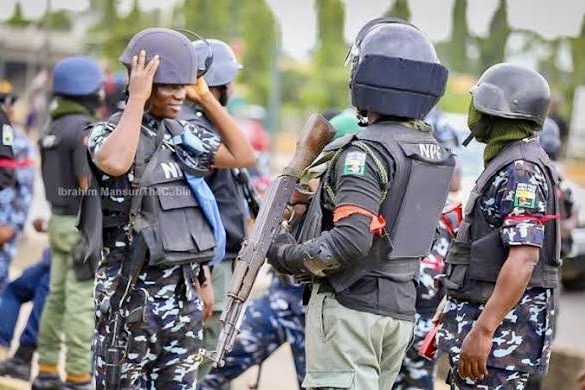
Lance Corporal Rotimi Olamilekan’s dismissal from the Nigerian Army has become more than a personal tragedy. It has started a tough national debate. The discussion involves military discipline, free speech, and detention standards. There is also a focus on the gap between the sacrifices of frontline troops and the comfort of political elites. These elites’ families are rarely seen near the battlefield.
According to his account, Olamilekan was not punished for theft, insubordination in combat, or dereliction of duty. He says he was targeted for a video. In the video, he urged ministers, governors, senators, lawmakers, and local government chairmen to send their sons into the army. He wanted them to share the burden of fighting terrorism. That message may have been blunt, emotional and politically inconvenient. It was also a question that many Nigerians have asked in private for years.
His allegation is stark. He says he was arrested from his duty post. He was moved between detention facilities. They kept him in handcuffs on both hands and legs. He was denied proper contact with his family. He was fed poorly. He was eventually dismissed after what he describes as a charge process that did not allow him to defend himself properly.
If his account is accurate, the real scandal is not only the dismissal itself. It is the method.
A soldier’s speech can be restricted. That is true in every serious military. But punishment must still be lawful, proportionate and procedurally fair. A democracy does not stop being a democracy because a man wears camouflage.
What Olamilekan Says Happened
Olamilekan says his case began with a video posted on social media. In it, he spoke in anger and grief about repeated battlefield losses. His central point was simple. If ordinary soldiers are dying in the bush, then political leaders should not treat war as only a burden for the poor. War should concern everyone.
He says he was stationed in the North-East for nearly five years. This includes about four years and nine months in one remote location.
He also says he was transferred through Maiduguri and Abuja. He was held for over a month in the Abuja SIB. He returned again and was then dismissed after charges were read out.
He described the experience as humiliating and degrading, saying he was “handcuffed like a criminal” and fed poorly for weeks. He also said his phone was taken, leaving him cut off from family and legal help.
These are serious allegations. They deserve a proper independent response, not only from the Army but from institutions that claim to defend constitutional order.
Why This Case Matters Beyond One Soldier
Nigeria’s Constitution protects freedom of expression. The Armed Forces of Nigeria also acknowledge, in their own social media policy, that personnel retain the right to free speech. However, that right must be exercised with caution. This is because of the military’s operational needs and institutional reputation.
That is the heart of the matter. The Army is not arguing from a vacuum. It is arguing from a doctrine of discipline, hierarchy and operational control. But that doctrine cannot become a shield for arbitrary punishment. This is especially true when the speech at issue is a political protest about sacrifice, fairness, and recruitment.
The question is whether Olamilekan crossed a lawful line or whether the Army reacted harshly to an embarrassing truth.
In many democracies, service personnel are not free to say anything they like. But they are also not supposed to be disappeared into opaque detention or punished without visible due process. That distinction matters.
How Advanced Militaries Handle Similar Cases
The United States is often the clearest example of a military system with strict discipline. It is also wrapped in written rules and reviewable procedure.
The U.S. Army states that soldiers still represent the Army when on social media. They must obey the Uniform Code of Military Justice even when off duty.
The broader U.S. military framework also protects free speech as a constitutional value, while allowing restrictions that preserve order, cohesion and readiness.
That means an American service member who posts something inflammatory, disrespectful or operationally risky may face discipline. But the process is usually anchored in codified rules, counsel, record keeping and formal review.
The speech itself is not treated as a crime in the abstract. The system asks what rule was broken, what harm was caused and what punishment fits.
The United Kingdom takes a similar but not identical route. The Ministry of Defence says the use of social media is accepted and should be encouraged when used appropriately.
In other words, the issue is not whether service personnel may speak at all, but how they speak, what they reveal and whether they undermine discipline or security.
Spain offers another useful comparison. Spanish law recognises that members of the armed forces enjoy fundamental rights and public freedoms, but says limits must be proportionate and respectful of the essence of those rights.
It also stresses military discipline, hierarchy, unity and political neutrality. Spain even has an Observatory of Military Life, a body designed to analyse issues affecting service members’ rights and conditions.
That is the wider international lesson. The strongest militaries do not rely only on repression. They rely on rules, internal complaint channels, legal remedies and visible institutions that can absorb dissent before it becomes a crisis.
The Nigerian Gap
Nigeria has the language of rights on paper. It also has the language of discipline. What it often lacks is the bridge between the two.
The Army’s own social media policy acknowledges free speech but warns that online communication can affect reputation and operations. That is reasonable. Yet the Olamilekan case suggests a deeper problem.
If a soldier can be arrested, moved across several locations, kept in prolonged restraint and then dismissed without public clarity on the legal basis, the issue is no longer social media etiquette. It becomes a test of military justice.
There is also a class question that cannot be ignored. Olamilekan’s remarks struck a nerve because they reflected what many ordinary Nigerians already believe. The children of the poor fight the war, while the children of the powerful stay safely away from it.
That perception, whether fully fair or not in every individual case, damages morale. It weakens trust in recruitment.
It feeds the sense that the war against terrorism is being waged by one class on behalf of another.
A soldier who voices that anger should not necessarily be praised for tone. But neither should he be punished in a way that deepens the very alienation he tried to expose.
Due Process Must Be Visible, Not Assumed
The most troubling part of Olamilekan’s account is not the dismissal alone. It is the alleged denial of family contact, legal access and humane treatment while he was in custody. In any serious jurisdiction, those are the points that invite scrutiny first.
A military institution may argue that operational secrecy or discipline justified the detention. Even then, basic safeguards remain essential. There should be written charges, prompt notice, access to defence, a fair hearing and a clear route of appeal. Without that, the Army may win the immediate case and lose the larger war for legitimacy.
If Nigeria wants a disciplined military and not a frightened one, it must be able to distinguish between disobedience, disclosure of sensitive information, and political speech that merely embarrasses the powerful.
What This Case Says About Nigeria’s War
The war against insurgency is not fought only with rifles and drones. It is also fought with morale, justice and belief in the institution. A soldier who feels abandoned by the state is already carrying an invisible wound.
Olamilekan’s story, whether every detail is later confirmed or not, is a warning. A military that expects sacrifice from the poor must also be prepared to answer difficult questions from within its own ranks. If not, it risks building obedience on resentment.
Nigeria does not need a weaker army. It needs a fairer one.
And if the state truly wants loyalty, it must first show that loyalty is not a one-way demand placed only on the sons of the poor.
Research basis for the comparative section
The comparison with the U.S., UK and Spain is based on the U.S. Army’s social media guidance, which says soldiers remain bound by the UCMJ even off duty, the UK Ministry of Defence social media guide, and Spanish law recognising military rights subject to proportionate limits, discipline, hierarchy and neutrality.
Follow us on our broadcast channels today!
- WhatsApp: https://whatsapp.com/channel/0029VawZ8TbDDmFT1a1Syg46
- Telegram: https://t.me/atlanticpostchannel
- Facebook: https://www.messenger.com/channel/atlanticpostng