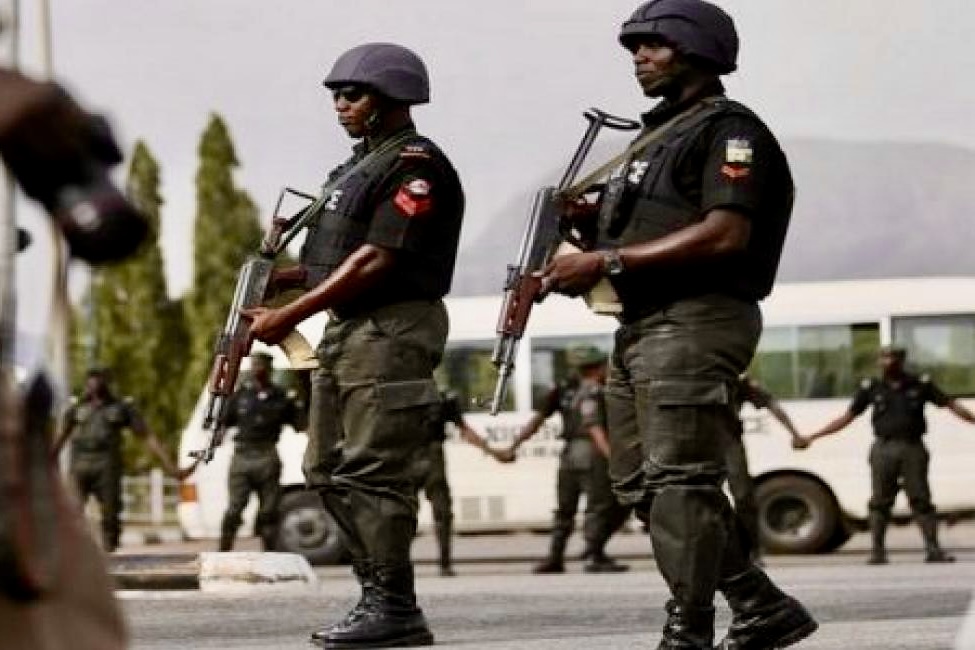
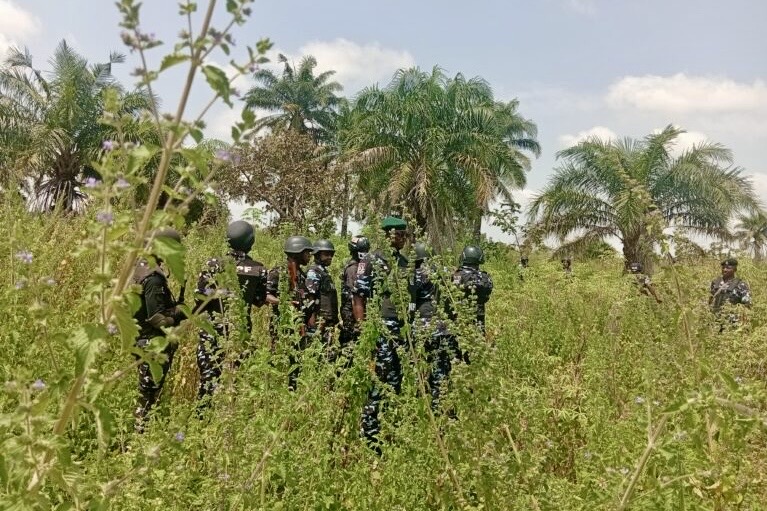
On Monday, the Defence Headquarters announced a finding. Its probe of 16 officers, who were arrested in October 2025 for indiscipline, found “cases to answer” on coup-plotting.
The completed report was sent up the chain of command. Those implicated will face arraignment before court-martial panels under the Armed Forces Act.
Military officials emphasised the process will uphold accountability, fairness and due process as mandated by military law.
In October 2025, the DHQ initially said the 16 arrests were for breaches of service regulations. Media reports alleged the officers held secret meetings to topple the Tinubu government. These officers ranged from Captain to Brigadier General.
Those reports even tied the cancellation of the October 1 Independence Day parade to an alleged coup plot.
The former Director of Defence Information, Brigadier-General Tukur Gusau, dismissed the initial story as “false and mischievous”. He stated that the parade was cancelled for administrative reasons. He also added that the inquiry was a routine disciplinary matter.
The Armed Forces of Nigeria (AFN) at that time reassured the public of its loyalty to the constitution. They declared “Democracy is forever.” They urged citizens to trust the internal investigation.
The Federal Government backed the military’s stance. Information Minister Mohammed Idris said Abuja had “no reason to doubt” the DHQ’s account. He commended the AFN’s role in maintaining security.
Major-General Samaila Uba, now Director of Defence Information, reiterated that the actions against the officers are “purely disciplinary” measures. These measures aim to preserve order and effectiveness within the ranks.
He emphasised that the AFN remains “resolute in maintaining the highest standards of professionalism, loyalty, and respect for constitutional authority”.
President Bola Tinubu warned that media hype over coup rumours can undermine Nigeria’s fragile economy. In late October, his spokesman Bayo Onanuga told Arise News:
“When a country is looking for investment and the media are shouting ‘coup attempt,’ it scares investors away.”
Unverified reports, he argued, can “destroy the country’s reputation and economy.” He urged journalists to wait for facts before running sensitive security stories.
Indeed, analysts note that Nigeria’s economic recovery depends heavily on stability. Even rumours of a coup are seen as a kind of economic sabotage. Market watchers warn that such uncertainty has immediate effects:
Investor flight and market sell-off: The mere whisper of a coup can trigger rapid capital outflows. Foreign portfolio investors tend to sell Nigerian equities and bonds at any hint of instability, draining foreign exchange reserves.
Foreign Direct Investment (FDI) stalls: Long-term projects are shelved as risk premia rise. New investments often require political stability; coup rumours make potential returns uncertain, leading firms to defer or cancel plans.
Currency pressure: Panic over political risk fuels demand for dollars. Businesses and individuals hoard hard currency to hedge against chaos. This behavior causes the naira to weaken on both official and parallel markets.
Policy paralysis: The government risks losing focus on needed reforms. Leaders become preoccupied with crisis management, delaying fiscal and monetary policies that hinge on public confidence .
Press and security analysts say this pattern has played out repeatedly. One security expert observed that Nigeria’s long history of military intervention (e.g. the coups of 1966 and 1970s) has taught investors to be wary:
“Political certainty is the most vital ingredient for a thriving, investment-led economy,” and rumours of a coup instantly poison the climate.
In this light, government and military officials alike have stressed restraint. Onanuga warned that a growing appetite for sensationalism “has implications for our economy.” It may also affect our stability. He called for patience until the investigation yields concrete findings.
Reactions and Analysis: Political opponents and civic leaders have responded with scepticism and calls for transparency.
The New Nigeria Peoples Party spokesperson Ladipo Johnson said Nigerians “deserved to know what actually happened.” He urged the military to disclose the charges against the detained officers.
A Labour Party official criticised the military’s “two mouths.” First, they denied a coup. Then, they confirmed it. He demanded that full facts be made public.
In general discourse, many citizens voiced anxiety over yet another security shake-up. Some framed it against wider regional trends, noting that West Africa has seen a spate of coups in recent years.
A 2026 economic outlook report points out Nigeria is now “virtually surrounded” by countries with recent coups (Guinea-Bissau, Benin, etc.), which “raise fears about the country’s vulnerability”.
Analysts highlight that almost half of Nigerians surveyed see “heightened insecurity and civic unrest” as the top risk. This risk could affect sustaining economic growth in the coming year.
Historical and Economic Context: Nigeria’s return to democracy in 1999 followed decades of military rule. Nonetheless, the shadow of past coups still looms. Unlike many neighbours, Nigeria has not had a successful coup since 1993. Yet, even unverified coup talk can have outsized effects.
Security remains a key constraint on growth. The IMF warned that any deterioration in security “could impact growth and food insecurity”. Prior to this episode,
Nigeria’s economy was emerging from a downturn – it grew roughly 3–3.5% in 2024 and 2025 – but remains fragile, with inflation still in the 20s and high unemployment.
Experts caution that renewed political uncertainty could stall this recovery by spooking investors. One commentariat piece expressed it this way: “The fragility of Nigeria’s democratic project is nowhere more exposed than in the response of its economy to political uncertainty.”
Despite the controversy, the military has reiterated its commitment to civilian government. In official statements, the AFN appeals for calm. It calls on all peace-loving citizens to continue to provide necessary support to the security agents.
The armed forces have vowed to try those found culpable while reaffirming their loyalty to President Tinubu as Commander-in-Chief.
For now, the trials will test the military justice process. The broader challenge will be ensuring that this crisis, once resolved, does not erode confidence in Nigeria’s economy. It must also not erode confidence in the political system.
Key Takeaways: – The DHQ has acknowledged that some of the 16 officers were detained since October 2025. These officers did plot to overthrow the government.
Those officers will be formally charged and tried by military courts under the Armed Forces Act. The government labels this a security and disciplinary matter, insisting the military remains loyal to civilian rule.
Economists and security analysts warn that coup rumours alone can damage investor confidence and economic stability. Transparent handling of the case is seen as essential to reassure markets.
Opposition and civil groups have demanded full disclosure of facts to guarantee due process, reflecting a broader push for accountability. The situation will bear on Nigeria’s image as it seeks foreign investment and sustained growth.
Follow us on our broadcast channels today!
- WhatsApp: https://whatsapp.com/channel/0029VawZ8TbDDmFT1a1Syg46
- Telegram: https://t.me/atlanticpostchannel
- Facebook: https://www.messenger.com/channel/atlanticpostng