Nigeria’s Defence Headquarters has now formally acknowledged that allegations of plotting to overthrow President Bola Tinubu’s government are in the disciplinary findings. These findings are against detained officers. Trials will proceed under military justice procedures.
A sharper and more destabilising narrative is circulating in parallel. This narrative suggests that the true detention net is far wider than the military has admitted publicly.
A report by SaharaReporters claims at least 35 military personnel are being held in connection with the alleged plot. These include senior commissioned ranks across the Army, Navy, and Air Force. There are also non commissioned officers and one operative linked to a paramilitary organisation.
The outlet further alleges that most detainees are from the North. A small number of Southerners are named. Families have raised concerns over access, health, and legal representation.
The immediate national security question is obvious. How deep did an alleged conspiracy run, and how close did it get to operational reality.
Nigeria is attempting to steady its reform-bruised economy. However, the country also faces a second question. Markets and employers quietly price this question every day.
Can the state manage a sensitive security crisis without adding a premium of uncertainty to investment, hiring, and capital flows.
This report sets out what is known, what is claimed, and what remains unverified. It also explains why the gap between “16” and “35” is more than a numbers dispute. It is a live test of transparency, civil military control, and the credibility that underpins economic stabilisation.
Key Takeaways for Business, Jobs, Tech and Money
Nigeria’s risk story is shaped as much by process as by outcomes. Investors look for clear timelines, lawful procedure, and predictable institutions.
A widening information gap exists between official statements and credible reporting. This gap can raise perceived political risk even before any verdict is reached.
Civil military tensions, real or exaggerated, can translate into tighter financial conditions, slower private investment, and postponed hiring decisions.
The state’s handling of detainee welfare will matter for domestic legitimacy. Access to counsel and fair trial safeguards are important for Nigeria’s international reputation.
What the Defence Headquarters Has Said, And What It Has Not Said
The Defence Headquarters position, as publicly communicated, centres on a defined cohort of officers. These officers were originally detained for alleged indiscipline and breaches of service regulations. Their arrests became public in October 2025.
The latest update clarifies previous uncertainties. It acknowledges that allegations of plotting to overthrow the government were among the findings linked to some under investigation. The military says implicated officers will be arraigned before a military judicial panel.
Two details stand out.
First, the military’s framing is still carefully bounded. Public messaging focuses on “sixteen officers” and on internal process, investigation concluded, report forwarded, trials to follow.
Second, the Defence Headquarters has not publicly provided the names of the accused. They have not specified the offences to be prosecuted. The number within the sixteen to face coup-related charges is unknown. They have also not shared the expected trial timeline. Additionally, it is unclear whether any parallel suspects, witnesses, or auxiliary detainees are being held under separate authority.
That silence leaves space for speculation. In a sensitive national security case, some operational confidentiality is understandable. But when the case is already in the public domain, the cost of “no detail” rises sharply. A separate outlet is publishing granular claims about a larger detention pool.
The SaharaReporters Claim, A Wider Dragnet and an Ethno Regional Tilt
SaharaReporters alleges the actual number detained is at least 35, not 16. They provide a breakdown by rank. This includes a Brigadier General, Colonels, and Lieutenant Colonels. It also includes Majors, Captains, and an Air Force Wing Commander equivalent. Additionally, there is a Navy Lieutenant Commander equivalent, Squadron Leaders, and a group of non-commissioned officers.
The report claims 33 of those detained are Northerners. Two Southerners were named. These include one Army Captain reportedly from Osun State and one Air Force Squadron Leader reportedly from Bayelsa State. It further alleges a paramilitary linked operative is among those held.
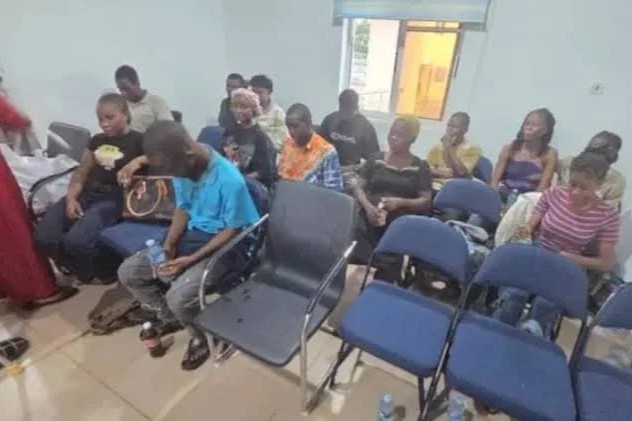
The publication also reports allegations of coercion and poor detention conditions. Detainees are falling ill. Families are being denied access to lawyers and relatives. There are claims of incommunicado detention and transfers between facilities without notification.
These are serious allegations. They are also, at this stage, largely unverified publicly beyond the reporting outlet and unnamed sources. The Defence Headquarters spokesperson is reported as not responding to calls or messages in the immediate wake of the claims.
Still, the significance is not confined to whether every detail is accurate. The claims are plausible enough and detailed enough. This forces a credibility contest between the official narrative and a competing account. Many Nigerians, shaped by long institutional memory, may find this competing account easier to believe.
Why “16” Versus “35” Matters, Plausible Explanations and the Credibility Gap
There are several plausible explanations for the divergence that do not require a conspiracy.
One possibility is categorisation. The Defence Headquarters statement may refer strictly to commissioned officers under a defined disciplinary case file. Other personnel are detained as suspects in a separate track. They might also be held as witnesses or managed under different investigative authority.
A second possibility is sequencing. Authorities may intend to prosecute a first batch. They might continue investigations into others if the alleged plot involved facilitation networks. Communications or financing trails can take longer to establish.
A third possibility is institutional compartmentalisation. The Defence Intelligence Agency may be conducting an intelligence-led process. It initially detains a broader pool. Meanwhile, the Defence Headquarters communication team only confirms the subset that has reached a formal disciplinary threshold.
But even if one of these explanations is true, the public facing problem remains. When the state provides a narrow figure, it invites the perception that the institution is managing optics rather than facts. This happens if it doesn’t clarify that other detentions may exist under separate legal cover.
That perception is costly in three ways.
It weakens deterrence. If the public believes the military is minimising the scale, they may assume the institution is also minimising accountability.
It weakens legitimacy. If families’ concerns about access and welfare are not addressed transparently, public sympathy can shift. This shift can favor detainees, even in a case involving alleged treasonous intent.
It weakens economic confidence. Policy makers can be doing the right macroeconomic work. However, political risk premiums can still rise. This happens if institutions look opaque at the moment of stress.
The Legal Track, What a Military Judicial Panel Signals
The Defence Headquarters says trials will proceed before a military judicial panel. They will operate under service regulations and the Armed Forces Act framework. In principle, that indicates the system is treating the case as subject to military law and internal discipline.
For business and governance watchers, the crucial issue is not simply that trials will happen. It is whether the trials are seen as credible.
Credibility rests on a few basics.
Clear charges and jurisdiction. Nigerians will want to know whether accused personnel face purely service offences. They will also want to know if the offences amount to treason-related conduct under military law. Additionally, Nigerians are interested in understanding how those categories are defined.
Reasonable timelines. Prolonged detention without clear progression fuels suspicion and politicisation.
Procedural fairness. Access to counsel, ability to prepare a defence, and humane detention conditions are not just human rights concerns. They are legitimacy concerns that shape whether the outcome is accepted.
Civilian oversight signals. Even when the process is military, the government’s broader tone matters. A disciplined, transparent posture reassures markets. A triumphalist or ethnically tinged posture inflames risk.
The Timipre Sylva Thread, Politics Enters the Room
The case has carried political undertones since late 2025. Reports emerged of a military visit or raid at the Abuja residence of former Minister of State for Petroleum Resources, Timipre Sylva. Sylva has publicly denied involvement and framed attempts to link him to the matter as politically motivated.
For national security, any credible allegation of political sponsorship, financing, or facilitation raises the stakes. It broadens the investigative lens beyond barracks grievances.
For markets, the political dimension is equally sensitive. Investors do not need to believe a politician funded a plot to price risk. They only need to believe that elite factional conflict is escalating. They might also think that security agencies are being pulled into political signalling. Alternatively, investors might worry that the state could overreach and trigger instability within an already pressured elite settlement.
The more the case looks like a pure disciplinary and counterintelligence operation, the easier it is to contain. The more it looks like a political dragnet, the harder it is to stabilise public trust.
Nigeria’s Coup Memory and the Regional Context
Nigeria’s post 1999 democratic era sits on top of a long and traumatic history of coups and attempted coups. That history shapes how citizens interpret secrecy, detentions, and official phrasing.
Even in civilian rule, the military remains a large institution. It operates under strains that include deployment fatigue. There is also internal promotion competition and the moral injury of fighting multiple security crises at once.
Nigeria’s counterinsurgency campaigns, internal security operations, and regional stabilisation roles stretch the force.
Add the regional climate. West Africa and the Sahel have seen a wave of military takeovers and attempted coups in recent years. That reality changes the psychology of what is considered possible.
Nigeria is not Niger or Mali. However, it is not immune to contagion of ideas. This is particularly true if officers believe political authority is weak. Problems may also arise if they perceive reforms as punishing the rank and file.
This does not mean a coup is imminent. But it explains why the government’s communication discipline matters. In a region where coups have become thinkable again, credibility gaps become accelerants.
The Economic Stakes, How a Security Shock Hits Money and Jobs
Nigeria is trying to keep reforms on track amid a delicate social contract.
Inflation, after a major statistical rebasing and changing price dynamics, has shown a downward trend in the latest official readings. The Central Bank has also signalled a policy path that attempts to balance disinflation with growth support.
Yet the labour market remains structurally fragile. Wage employment is a small share of total work, while youth employment pressures remain a persistent risk to stability.
Private sector employers, especially in manufacturing, services, logistics, and technology, hire when they can model risk. When they cannot, they pause.
A coup plot allegation, even one that fails, can hit the economy through five channels.
Sovereign risk premium. Investors demand higher yields when political risk rises. That increases government borrowing costs and can crowd out private credit.
Currency pressure. Perceived instability can trigger dollar demand as a hedge, tightening liquidity and undermining confidence.
Investment deferrals. Foreign and domestic investors delay decisions when they cannot predict political trajectory.
Project disruption. Defence sector reshuffles, procurement pauses, and security redeployments can slow infrastructure delivery and supply chain stability.
Consumer confidence. Households already under strain cut spending when fear rises, hurting SMEs and job creation.
Even if none of these channels produces a dramatic headline move, the cumulative effect can be material. Nigeria’s economic story is not just about growth rates. It is about confidence that the rules, and the state itself, will hold steady.
The Technology and Information War Dimension
One under discussed aspect is the information ecosystem.
In security crises, the battle over narrative often runs ahead of the battle over facts. Anonymous sourcing, partial leaks, and strategic silence combine to create a fog that social media fills instantly.
That matters for Nigeria’s business environment. Rumour is a tax. It raises the cost of capital in invisible ways.
A responsible state response does not require revealing operational details. It requires providing enough verified structure to reduce wild variance in public belief.
What that could look like, without compromising security, is a limited fact set. Confirm the number of persons detained in relation to the case. Separate this count into those formally charged, those under investigation, and those held as witnesses.
Confirm detention oversight standards and access rules. Provide a procedural timeline. Confirm whether civilians are involved and under what jurisdiction.
Without that, Nigeria risks allowing unofficial channels to become the default public record.
What to Watch Next
A formal arraignment date. The longer it takes, the more suspicion grows, regardless of guilt or innocence.
Clarity on detainee numbers and categories. This is the core credibility issue now.
Any court filings or charge sheets. These will reveal whether the case is about coup planning. Alternatively, it could be about disciplinary breaches being framed as a coup narrative.
Civilian political spillover. Watch whether the case becomes a tool in elite rivalry.
Market indicators. Watch local bond yields, FX demand signals, and corporate investment announcements for signs of a confidence dip.
Questions Readers Ask, Fast Answers
Are there 16 detainees or 35
Official communication references 16 officers. A separate report claims at least 35 military personnel are detained. The state has not publicly reconciled the numbers.
Has the military confirmed a coup plot
The Defence Headquarters has acknowledged that allegations of plotting to overthrow the government featured in findings against some detained officers.
Will there be a public trial
The military has indicated trials will proceed through a military judicial panel. It is not yet clear what portions, if any, will be accessible to public scrutiny.
Is there proof of political sponsorship
There are public denials by individuals named in media reports. Authorities have not publicly presented verified evidence.
Why should businesses care
Because political risk affects borrowing costs, investment timing, currency stability, and hiring decisions, even when no coup occurs.
Follow us on our broadcast channels today!
- WhatsApp: https://whatsapp.com/channel/0029VawZ8TbDDmFT1a1Syg46
- Telegram: https://t.me/atlanticpostchannel
- Facebook: https://www.messenger.com/channel/atlanticpostng