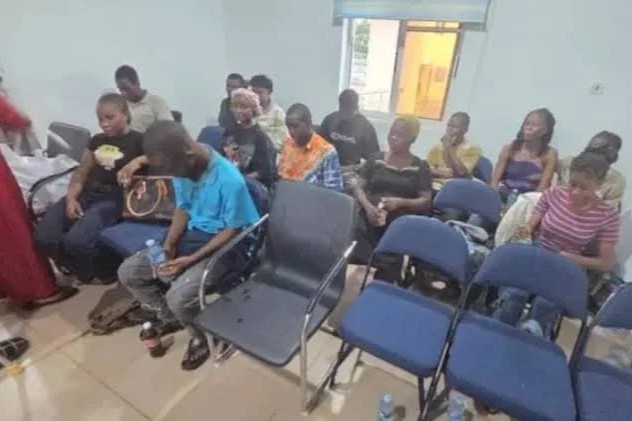
A shocking theft at a government hospital in Zamfara has ended with relief, but not without fresh alarm over how a 10-day-old baby could disappear from a medical facility and surface in a nearby hamlet three days later.
Police say the infant was recovered alive in Kogin Audu, in Kaura Namoda, and a 27-year-old woman, Asmau Nasiru, was arrested as investigators widened the case into suspected human trafficking and baby-factory activity.
The incident has thrown a harsh spotlight on hospital security in one of the North West’s most troubled states. According to the account now circulating from police and local reports, the newborn vanished from the General Hospital in Kaura Namoda, prompting tension among residents and immediate fears that the child may have been moved through a wider trafficking ring rather than taken in a simple opportunistic theft.
Investigators reportedly questioned hospital workers who were on duty when the baby went missing, a move that suggests police are treating the case as more than a routine abduction.
The breakthrough came on Thursday morning when operatives traced the missing infant to a nearby settlement and rescued the child unharmed.
The baby was later reunited with the biological parents, bringing an emotional end to the immediate search but opening a bigger inquiry into how the child left the hospital undetected, who had access to the ward, and whether the disappearance was aided by inside knowledge or weak controls at the facility.
Police said the suspect is already in custody and is being interrogated as the investigation continues.
Zamfara State Commissioner of Police, Ahmad Muhammad Bello, praised residents for the intelligence that helped crack the case and reaffirmed the command’s resolve to pursue criminal networks operating across the state.
In effect, the case has become a test of whether community tip-offs and rapid police response can disrupt what many residents fear may be a deeper pattern of organised child theft.
As Bello put it, the command remains committed to tackling “all forms of criminality” across Zamfara, with more details expected as the probe advances.
What makes the case particularly disturbing is the suspected trafficking dimension. The United Nations Office on Drugs and Crime says child trafficking is “the use of children for the purpose of exploitation in various ways”, and notes that illegal adoption is one of the recognised forms of exploitation.
UNODC also says trafficking thrives where poverty, insecurity and weak child protection make children easier targets, and that children remain among the most vulnerable victims.
That broader context matters because Nigeria continues to battle trafficking networks and so-called baby-factory cases. UNODC describes Nigeria as a source, transit and destination country for trafficking in persons, while NAPTIP’s current anti-trafficking framework runs through 2022 to 2026.
In early 2025, Nigerian authorities also reported fresh rescues linked to baby-factory operations in Abuja, showing that the criminal market for infants and pregnant women is still being actively confronted by the state.
For Zamfara, the case is likely to trigger uncomfortable questions beyond the rescue itself.
How long was the baby missing before the alarm became serious.
Why was the child able to leave the hospital without immediate detection.
Were there any gaps in ward monitoring, visitor control or staff accountability.
And, perhaps most importantly, was this a lone act or part of a supply chain that police have only just begun to uncover.
Those questions now sit at the centre of the investigation, and the answers will determine whether the arrest of one suspect marks the end of a frightening incident or merely the first step in exposing a much larger network.
Follow us on our broadcast channels today!
- WhatsApp: https://whatsapp.com/channel/0029VawZ8TbDDmFT1a1Syg46
- Telegram: https://t.me/atlanticpostchannel
- Facebook: https://www.messenger.com/channel/atlanticpostng